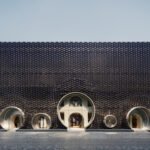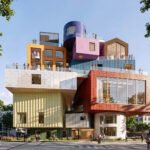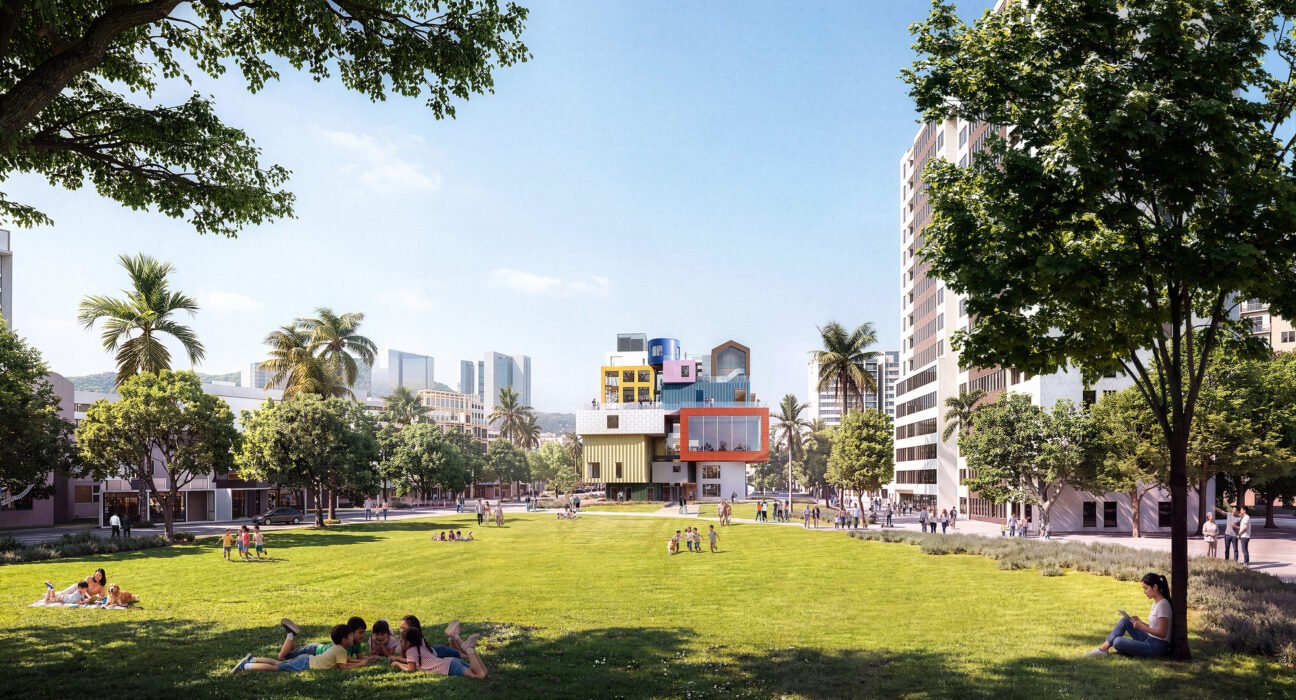
Architecture news rarely captures the imagination quite like a project that promises to rethink how dense cities can feel human, creative, and connected. MVRDV’s Bihailou Art Village in Shenzhen does exactly that, translating the intimacy of a traditional village into a bold vertical composition tailored to one of China’s most fast-evolving urban landscapes.
Set against the backdrop of Shenzhen’s relentless growth, the proposal presents a fresh vision for mixed-use cultural development. Rather than treating height as a purely commercial tool, the design uses stacking, terraces, and layered communal spaces to create a richer urban experience—one that aligns with the rising demand for luxury architecture, design-led living, and culturally rooted placemaking.
Architecture News: A Vertical Village for Contemporary Shenzhen
At the heart of this architecture news story is the idea of the “vertical village.” MVRDV appears to reinterpret the social logic of a traditional neighborhood—where public life unfolds across small streets, courtyards, and gathering points—by lifting those experiences upward into a high-density form.
For a city like Shenzhen, where land is scarce and development pressure remains intense, this approach is especially compelling. Instead of a single monolithic tower, the concept suggests a building that behaves more like an urban ecosystem. Different levels can function like streets in the sky, with art spaces, viewing platforms, circulation corridors, and communal zones creating a layered social environment.
This is significant not only as architecture news, but also as a broader statement about the future of luxury design in major global cities. Increasingly, premium developments are defined not just by finishes and exclusivity, but by atmosphere, cultural relevance, and the quality of shared experience.
Why the Bihailou Art Village Concept Matters
1. It humanizes density
Dense urban development often struggles with anonymity. A vertical village model can break down large building mass into more approachable, village-like clusters. This makes the architecture feel more navigable, social, and visually dynamic.
2. It supports creative communities
As an art village, the project points toward a hybrid model where exhibition, production, leisure, and everyday life coexist. That blend is increasingly influential in architecture news because it responds to how creative districts actually function: they thrive on overlap rather than separation.
3. It reflects luxury through experience
In the luxury architecture sector, value now extends far beyond square footage. Buyers, visitors, and investors are drawn to destinations that offer:
- Distinctive design identity
- Curated communal spaces
- Connection to culture and creativity
- Indoor-outdoor transitions
- Memorable skyline presence
Bihailou Art Village appears to speak directly to these expectations, making it relevant to audiences interested in luxury home, luxury decor, and luxury home decor trends shaped by architecture.
MVRDV’s Signature Design Approach
MVRDV has built an international reputation for architecture that is both conceptually strong and visually accessible. In this project, the firm’s likely emphasis on sculpted massing, porous circulation, and programmed terraces reinforces a recurring theme in contemporary architecture news: buildings should perform as social landscapes, not isolated objects.
The vertical village concept also lends itself to dramatic spatial moments. Think elevated courtyards, cascading greenery, framed city views, and art-integrated public zones. These elements are particularly resonant in the world of luxury design because they turn circulation into experience and structure into destination.
For design-conscious readers, that means the project is not just an urban proposal—it is a case study in how architecture can influence interior lifestyle trends. Terraced forms and shared platforms often inspire:
- Layered indoor-outdoor living spaces
- Sculptural staircases and split-level layouts
- Gallery-like interiors
- Natural material palettes balanced with contemporary finishes
- Custom lighting that emphasizes architectural depth
What This Means for Luxury Architecture and Home Design
One reason this piece of architecture news matters to luxury-focused audiences is that ideas pioneered in major cultural projects often influence residential design. The spatial values behind Bihailou Art Village—community, openness, flexibility, and experiential circulation—are already shaping high-end homes and boutique developments worldwide.
Expect to see the following ideas continue to gain traction:
Terraced living
Luxury homes increasingly embrace stepped volumes, rooftop gardens, and multi-level outdoor rooms that mimic the layered experience of urban village architecture.
Art-forward interiors
As cultural spaces become integrated into mixed-use architecture, residential interiors are also moving toward gallery-inspired layouts with generous walls, controlled daylight, and collectible design pieces.
Shared luxury amenities
In premium developments, the most desirable features are often communal: lounges, wellness floors, private gardens, screening rooms, and creative studios. The vertical village model strengthens this direction by making shared space central rather than secondary.
Contextual modernism
Projects like this suggest that contemporary architecture can still be rooted in local urban memory. That balance—between innovation and familiarity—is becoming a hallmark of successful luxury architecture.
Shenzhen as a Global Design Laboratory
Shenzhen continues to be fertile ground for ambitious experimentation, and this adds another notable chapter to the city’s evolving design story. As architecture news from China increasingly influences international discourse, Shenzhen stands out for embracing projects that merge cultural programming with urban intensity.
The Bihailou Art Village concept fits neatly into that narrative. It recognizes that future cities need more than efficient towers; they need buildings that create identity, support creativity, and foster public interaction. In that sense, the project is as much about urban sociology as it is about form.
For developers, designers, and homeowners alike, that message is powerful: luxury is no longer only private. It is also spatial generosity, cultural connection, and the ability to make a dense city feel personal.
Final Takeaway
This piece of architecture news highlights why MVRDV’s Bihailou Art Village has captured attention: it proposes a smarter, more expressive way to build upward without losing the social richness of village life. By combining art, density, and community into one sculptural vision, the project offers a compelling model for the future of luxury architecture, luxury design, and even the next generation of high-end living environments.
As cities continue to grow, the most important architecture news will come from projects that do more than add skyline drama—they will redefine how people connect, create, and live together. Bihailou Art Village appears poised to do exactly that.