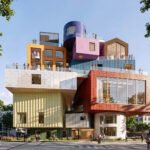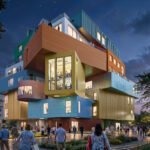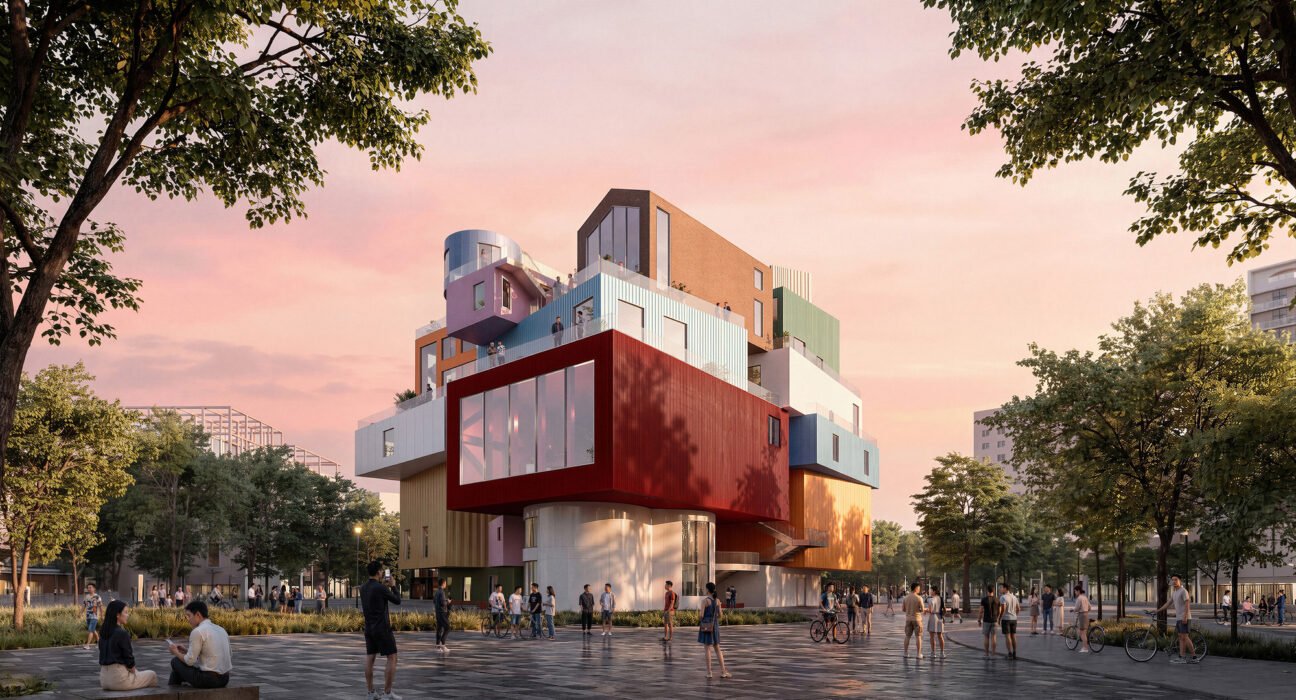
Architecture news rarely captures the imagination quite like a project that reshapes how city life can work. MVRDV’s Bihailou Art Village in Shenzhen does exactly that, proposing a bold vertical village that blends art, community, density, and design into a distinctly contemporary urban vision.
Set within one of China’s most dynamic cities, the scheme reflects a growing global interest in creating mixed-use environments that feel social, walkable, and culturally rich, even when they rise upward instead of spreading outward. For readers interested in luxury architecture, luxury home design, and elevated urban living, Bihailou Art Village offers a compelling case study in how architecture can turn density into a desirable lifestyle experience.
Architecture News Spotlight: What Is Bihailou Art Village?
In the latest architecture news, Dutch firm MVRDV has unveiled Bihailou Art Village in Shenzhen as an interpretation of the traditional village, translated into a vertical form. Rather than treating a tower or multi-level complex as a sealed object, the design imagines stacked neighborhoods, communal zones, and art-focused spaces that function like an urban village in the sky.
The concept is especially relevant in Shenzhen, a city known for rapid growth, technological ambition, and ongoing architectural experimentation. Here, the idea of a vertical village responds to familiar urban pressures:
- High land values and limited horizontal space
- Demand for mixed-use cultural destinations
- A need for stronger community interaction in dense environments
- Interest in innovative residential and creative work models
By drawing on village logic rather than conventional tower planning, the project suggests a more human-centered approach to density.
The Vertical Village Concept and Why It Matters
The phrase “vertical village” has become increasingly important in architecture news because it addresses one of the defining questions of contemporary urbanism: how do cities grow upward without losing the social quality of street life?
MVRDV’s proposal appears to answer that question by breaking down large-scale architecture into more approachable layers of activity. Instead of relying on anonymous floors stacked one above another, a vertical village introduces the feeling of small districts, terraces, pathways, gathering points, and visual connections between different functions.
From Tower to Community
Traditional high-rise development can often feel repetitive or detached. A vertical village reverses that logic by emphasizing shared experience. In design terms, that often means:
- Interconnected platforms and communal circulation
- Public and semi-public outdoor spaces
- A mix of creative, residential, retail, and cultural functions
- Architectural massing that creates identity at multiple scales
This approach aligns with broader shifts in luxury design, where exclusivity is no longer defined only by privacy and materials, but also by access to culture, curated amenities, and meaningful spatial experiences.
An Urban Model for Creative Living
Because Bihailou Art Village centers around art and community, it also reflects a wider move toward creative districts that combine living, working, exhibiting, and gathering. That mix is increasingly attractive in both luxury architecture and luxury home conversations, especially for buyers and residents who want more than a standalone residence.
In this sense, the project functions as both a cultural hub and a lifestyle statement. It suggests that future premium urban environments may be measured not just by square footage, but by how seamlessly they integrate inspiration, convenience, and social life.
Design Lessons for Luxury Architecture and Luxury Home Trends
Although Bihailou Art Village is an urban development concept, its design thinking has clear relevance for luxury architecture and luxury home decor trends. The project reinforces several ideas that are becoming central across high-end residential design.
1. Community Is the New Amenity
One of the most striking takeaways from this architecture news story is that shared space is becoming a premium feature. In luxury developments, buyers increasingly value:
- Private terraces connected to social zones
- Art-driven common areas
- Indoor-outdoor transitions
- Spaces for wellness, creativity, and flexible work
These features move beyond traditional amenity lists and create environments that feel curated and alive.
2. Mixed-Use Design Adds Lasting Value
Luxury design is increasingly tied to convenience and experience. Projects that combine residences with galleries, studios, cafés, and public-facing cultural uses can offer a richer daily rhythm. This is especially relevant in global cities, where residents expect architecture to support a sophisticated, layered lifestyle.
For luxury home developers, the lesson is clear: the future lies in designing places, not just properties.
3. Visual Identity Matters at Every Scale
MVRDV is known for expressive forms and bold urban concepts, and Bihailou Art Village appears to continue that tradition. Strong architectural identity matters because memorable buildings stand out in crowded skylines and establish cultural relevance. In the luxury market, this can translate into stronger desirability, greater prestige, and long-term brand value for both the development and its residences.
Why Shenzhen Remains a Global Design Laboratory
No discussion of this architecture news item is complete without considering Shenzhen itself. The city has become one of the world’s most important sites for architectural innovation, thanks to its speed of development, openness to experimentation, and appetite for future-focused urban solutions.
Shenzhen is uniquely positioned for projects like Bihailou Art Village because it brings together:
- Dense metropolitan growth
- A thriving creative and technology economy
- Ambitious public and private investment
- An international design culture
That combination makes it fertile ground for new interpretations of how people live, work, and connect in compact urban settings.
For followers of luxury decor and luxury home design, Shenzhen’s architecture scene also offers early clues about future global trends, from mixed-use vertical communities to art-led residential placemaking.
What Bihailou Art Village Signals for the Future
The significance of this architecture news story goes beyond one project. Bihailou Art Village represents a broader architectural direction in which density is not treated as a compromise, but as an opportunity for social richness, cultural exchange, and elevated design.
As cities continue to grow, architects and developers will need to create buildings that do more than maximize floor area. They will need to foster identity, support community, and deliver environments that feel inspiring at ground level and above it. That is where the vertical village model becomes especially powerful.
For luxury architecture, the message is equally important: future prestige will come from thoughtful integration, not just spectacular form. The most desirable spaces will be those that combine artistry, functionality, and a genuine sense of belonging.
In the end, this architecture news reveal positions MVRDV’s Bihailou Art Village as more than an eye-catching concept. It is a vision of how urban density can become beautiful, communal, and culturally alive — a lesson that could shape the next era of luxury design worldwide.