
Architecture news rarely captures the imagination quite like a project that rethinks how people live, create, and gather in fast-growing cities. MVRDV’s Bihailou Art Village in Shenzhen does exactly that, proposing a bold “vertical village” that blends density, culture, and community into one striking urban concept.
Positioned within one of China’s most dynamic metropolitan landscapes, the project reflects a larger shift in contemporary design: buildings are no longer just containers for activity, but curated ecosystems for living, making, and connecting. For readers interested in Luxury Architecture, Luxury Design, and elevated urban lifestyles, Bihailou Art Village offers a compelling glimpse into the future of high-density creative living.
Architecture News Spotlight: What Is Bihailou Art Village?
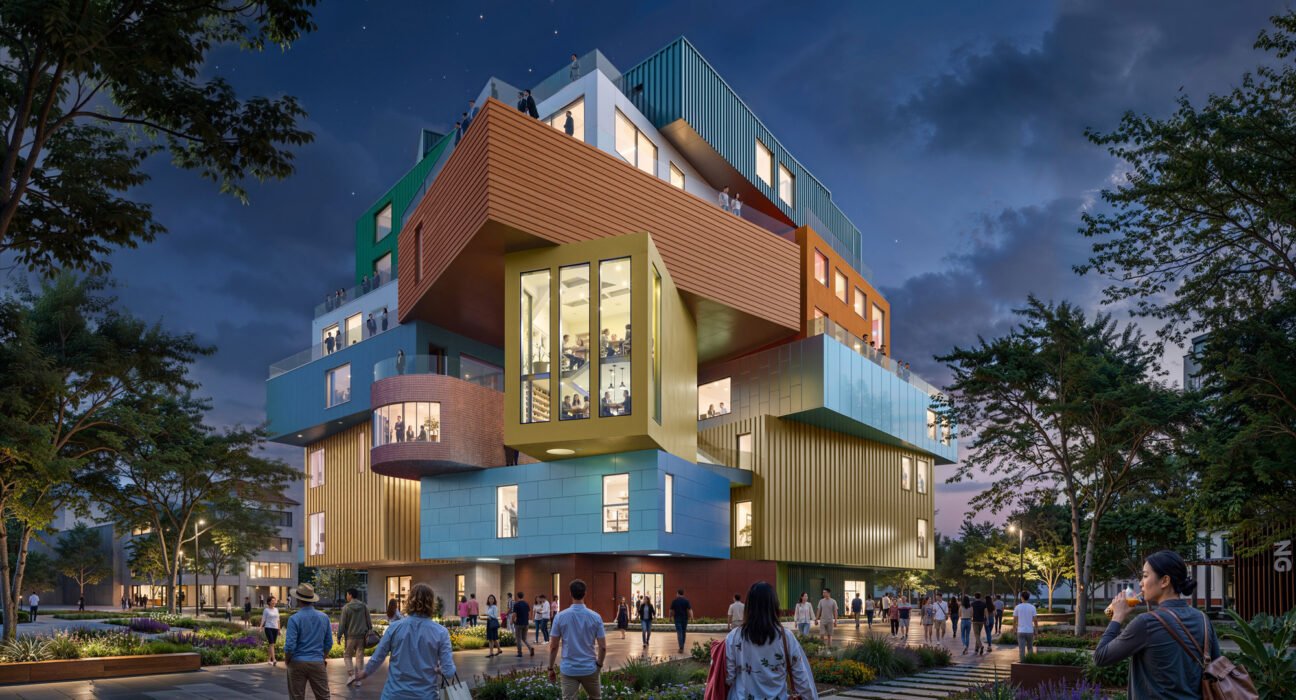
Bihailou Art Village is MVRDV’s interpretation of the traditional village model translated into a vertical, city-ready form. Instead of spreading homes, studios, public space, and cultural amenities across a horizontal site, the scheme stacks them into a layered architectural environment. The result is a mixed-use destination that aims to preserve the intimacy of village life while embracing the realities of Shenzhen’s limited land and rapid urban development.
This approach is particularly relevant in today’s architecture news cycle, where architects and developers are increasingly searching for alternatives to isolated towers and anonymous residential blocks. The vertical village model introduces a more social and human-centered framework, one where circulation, terraces, communal zones, and programmed public spaces help shape daily experience.
A New Take on Density
High density often carries negative associations: overcrowding, reduced privacy, and disconnected communities. Bihailou Art Village challenges that assumption by treating density as an opportunity for interaction and layered experiences. Instead of a single monolithic tower, the design language suggests a more fragmented and village-like composition, likely creating visual variety and spatial richness.
That distinction matters. In luxury-led urban design, value is no longer defined only by square footage or skyline views. Increasingly, it is measured by:
- Access to shared amenities
- Quality of outdoor and semi-outdoor space
- Sense of community and cultural identity
- Integration of art, work, and residential life
- Memorable architectural character
These are the qualities that make projects like this stand out in global architecture news coverage.
Why the Vertical Village Idea Matters in Shenzhen
Shenzhen is an ideal setting for experimentation. As a city known for innovation, speed, and transformation, it presents both the pressure and the possibility that define 21st-century urbanism. Land is scarce, population growth remains intense, and there is constant demand for buildings that do more than serve a single function.
Within this context, the vertical village becomes more than a visual concept. It becomes a strategic urban response. By combining artistic production, residential life, and public engagement, Bihailou Art Village points toward a model that is efficient yet experiential.
Blending Culture, Home, and Public Life
One of the most interesting aspects of the project is its artistic identity. An art village is not simply a residential development with gallery-like finishes; it implies a place where creativity is embedded into the daily rhythm of the architecture. That may include studios, exhibition spaces, workshops, gathering areas, or adaptable interiors that support cultural programming.
For audiences drawn to Luxury Home and Luxury Home Decor, this has important implications. The future of upscale urban living may depend less on private excess and more on meaningful curation. Homes within creative, design-forward communities can feel more valuable because they offer:
- Proximity to culture and creative exchange
- Architectural distinction over generic luxury
- Shared spaces designed with hospitality-level quality
- A stronger connection between private life and public experience
This is the kind of design thinking that keeps MVRDV firmly in the center of architecture news conversations worldwide.
MVRDV’s Design Philosophy and Its Luxury Appeal
MVRDV is known for imaginative, future-focused work that often challenges conventional typologies. The firm’s projects regularly explore density, public space, sustainability, and visual identity in ways that are both conceptual and highly practical. Bihailou Art Village appears to continue that tradition by treating the building as a three-dimensional neighborhood rather than a standalone object.
That philosophy resonates strongly with the luxury market. Today’s sophisticated buyers and design enthusiasts are seeking environments with narrative, not just polish. They want spaces that feel intentional, layered, and culturally relevant. In that sense, Bihailou Art Village aligns with broader trends in Luxury Decor and Luxury Design, where craftsmanship, atmosphere, and storytelling matter as much as premium materials.
What Makes It Feel Luxurious Without Being Conventional
The project’s luxury appeal is likely to come from experience rather than ornament. Instead of relying on traditional signals of opulence, the design promises a more contemporary form of exclusivity:
- Architectural originality
- Thoughtful integration of indoor and outdoor space
- A curated creative environment
- Mixed-use convenience within a design-led setting
- A strong sense of place in a global city
In premium real estate and design circles, these qualities increasingly define aspirational living. This is why projects like Bihailou Art Village attract attention far beyond standard architecture news readership.
What Bihailou Art Village Signals for Future Urban Design
As cities continue to densify, architects will need to find ways to make compact living more desirable, more social, and more beautiful. The vertical village is one answer. It suggests that urban growth does not have to mean sterile repetition or disconnected towers. Instead, it can foster layered communities where art, domesticity, and civic life coexist.
For developers, designers, and homeowners watching emerging trends, the takeaway is clear: the next generation of landmark projects will likely prioritize mixed-use flexibility, cultural programming, and community-oriented planning. Those priorities are becoming central to both urban innovation and the high-end property market.
In the broader world of architecture news, Bihailou Art Village stands out because it addresses a fundamental challenge with imagination. It asks how a village can survive in a megacity, and answers with a structure that is vertical, vibrant, and deeply attuned to contemporary life.
Conclusion
MVRDV’s Bihailou Art Village is more than a striking concept for Shenzhen; it is a meaningful case study in how architecture can reconcile density with identity. By translating the intimacy of village life into a vertical format, the project offers a fresh blueprint for creative urban living that appeals to both cultural ambition and luxury sensibilities.
For anyone following architecture news, this proposal is a reminder that the most exciting projects today are not just taller or bolder—they are smarter about how people live together. In that sense, Bihailou Art Village may prove to be one of the most influential design ideas to emerge from Shenzhen’s evolving skyline.