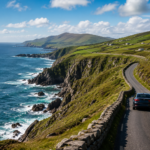


Ireland Travel is often sold on cliff-top views, cozy villages, and scenic drives, but the Wild Atlantic Way offers something even more compelling for curious travelers: a dramatic maritime history written into its shores. Along this legendary coastal route, shipwrecks tell stories of war, trade, survival, and disaster, adding a powerful layer of meaning to any luxury journey through western Ireland.
Stretching from Donegal to Cork, the Wild Atlantic Way is one of Europe’s most spectacular touring routes. Beneath the crashing waves and beyond the postcard-perfect landscapes lies a submerged archive of centuries past. For travelers seeking a richer Ireland Travel experience, these wreck sites reveal how the Atlantic has shaped the island’s culture, memory, and coastline.
Why Shipwrecks Belong on an Ireland Travel Itinerary
Luxury Travel in Ireland is no longer just about five-star manor houses and gourmet dining, though those certainly have their place. Today’s high-end traveler often wants depth, exclusivity, and unforgettable storytelling. Exploring shipwreck heritage along the Wild Atlantic Way delivers exactly that.
These sites connect visitors to:
- Irish maritime history spanning the Spanish Armada to World War II
- Remote coastal landscapes with exceptional natural beauty
- Local legends and memorials that deepen cultural understanding
- Unique adventure opportunities, from coastal walks to diving excursions
For anyone planning Ireland Travel with a taste for dramatic history, this route offers an extraordinary blend of scenery and substance.
10 Remarkable Shipwrecks on the Wild Atlantic Way
1. HMS Transylvania, County Donegal
Off Malin Head, Ireland’s northernmost point, lies the wreck of the HMS Transylvania, a former ocean liner converted into an armed merchant cruiser. It was sunk by a German U-boat in 1940, with 36 lives lost. This stretch of Donegal was strategically important during both World Wars, making it one of the most historically charged stops in Ireland Travel.
2. SS Empire Heritage, County Donegal
Torpedoed in 1944, the SS Empire Heritage is especially intriguing for divers. The wreck rests about 230 feet below the surface, and remarkably, one of its Sherman tanks remains visible on the seabed. It is a haunting underwater time capsule and one of the more unusual military wrecks off the Irish coast.
3. HMS Audacious, off Donegal
This British battleship never saw combat. In 1914, it struck a mine laid by a German vessel and sank off Donegal. The HMS Audacious reflects the hidden dangers of naval warfare and the strategic importance of Ireland’s Atlantic edge in the early 20th century.
4. SV Arethusa, County Mayo
Near Eagle Island in Mayo, the British bark SV Arethusa was attacked by a German submarine in 1917. The crew escaped safely before the vessel was deliberately blown up and sent to the ocean floor with a cargo of timber. It is a dramatic story of wartime decision-making and survival on the open sea.
5. SS Gairsoppa, offshore from Galway
The SS Gairsoppa is one of the most famous deep-sea wrecks linked to Ireland Travel. Torpedoed in 1941 while heading toward Galway, the ship sank with devastating loss of life, leaving only one survivor. Its fame grew further when a 2012 recovery mission retrieved millions of ounces of silver from the wreck, making it the largest deep-ocean precious metal salvage of its kind.
6. MV Plassy, Inis Oirr, County Galway
Perhaps the most visually accessible wreck on this list, the MV Plassy rests on the shore of Inis Oirr, the smallest Aran Island. Caught in a storm in 1960, the vessel ran aground, but every crew member was rescued by local islanders. Today, its rusting frame has become an iconic photo stop and a memorable detour for coastal Ireland Travel.
7. San Marcos de Portugale, County Clare
This 1588 wreck ties directly to the doomed Spanish Armada. Damaged in battle and attempting to return home, the ship was destroyed on a reef off Clare. The event left a lasting mark on the region, even inspiring the name Spanish Point. For travelers interested in early modern history, this is one of the most evocative places on the route.
8. MV Ranga, Dingle Peninsula, County Kerry
Wrecked in 1982 after losing power in a storm, the MV Ranga remains one of Kerry’s best-known maritime landmarks. Though part of the wreck was removed years later, the bow can still be visited. Combined with the wild beauty of the Dingle Peninsula, it makes for a striking Ireland Travel stop.
9. Sunbeam, Rossbeigh Beach, County Kerry
The schooner Sunbeam ran aground in 1903, but what makes this story especially fascinating is that shifting sands revealed the wreck again in modern times. Its reappearance turned it into a popular local walk and a reminder that the coast is always changing, constantly uncovering fragments of the past.
10. RMS Lusitania, County Cork
No shipwreck linked to Ireland Travel is more famous than the RMS Lusitania. Torpedoed by a German U-boat off the Old Head of Kinsale in 1915, the disaster claimed 1,198 lives. In nearby Cobh, memorials and graves preserve the human story behind the tragedy, making this one of the most moving heritage experiences in Ireland.
How to Explore These Sites in Style
For Luxury Travel visitors, shipwreck tourism along the Wild Atlantic Way can be immersive without sacrificing comfort. Consider pairing coastal exploration with premium stays and curated experiences.
- Book a chauffeur-driven route through Donegal, Mayo, Clare, Kerry, and Cork
- Choose boutique seaside hotels or historic country houses near key stops
- Arrange private guides for maritime history walks and island visits
- Add a boat tour or diving charter where conditions and access allow
- Balance rugged daytime excursions with fine dining and spa stays
This approach transforms Ireland Travel into something more layered: scenic, intelligent, and deeply memorable.
Tips for Planning a Shipwreck-Themed Ireland Travel Route
If you want to build an itinerary around these sites, keep a few essentials in mind:
- Allow time: The Wild Atlantic Way is long, and the best experiences are never rushed.
- Check access: Some wrecks are visible from shore, while others are dive-only or offshore.
- Watch the weather: Atlantic conditions change quickly, especially in shoulder seasons.
- Prioritize context: Museums, memorials, and local guides add meaning beyond the view.
- Travel sustainably: Respect fragile coastal environments and heritage sites.
The best Ireland Travel itineraries combine iconic landscapes with stories that stay with you long after the journey ends. Along the Wild Atlantic Way, these shipwrecks do exactly that. They are reminders that beneath Ireland’s beauty lies a powerful maritime legacy—one that makes every coastal stop feel richer, more haunting, and more unforgettable.
If you want your next Ireland Travel experience to go beyond the usual highlights, follow the wrecks. You’ll discover not just where ships were lost, but how history still lives on Ireland’s edge.