Architecture news rarely captures the full breadth of what contemporary British design can be, but the 2026 RIBA Stirling Prize shortlist comes close. Marking the award’s 30th anniversary, this year’s selection highlights six projects that balance civic ambition, heritage care, sustainability, and finely crafted living environments—making it especially relevant for readers drawn to luxury architecture, luxury design, and elevated home experiences.
The Royal Institute of British Architects has chosen a shortlist that ranges from a forest-edge private residence to a major London transport-led public square. Together, the projects offer a snapshot of where high-end architecture is headed in the United Kingdom: toward adaptive reuse, thoughtful density, landscape integration, and spaces that feel both refined and deeply usable.
Architecture News from the 2026 Stirling Prize Shortlist
Established in 1996, the RIBA Stirling Prize honors the building judged to have made the greatest contribution to the evolution of architecture in the UK. The 2026 shortlist reflects that mission with impressive range. The six nominated projects are:
- House at Fairmead / Sergison Bates
- BEAM / Bennetts Associates
- Lion Green Road / Mary Duggan Architects with RUFF Architects
- Paddington Square / Renzo Piano Building Workshop with Adamson Associates
- Pembroke Mill Lane / Haworth Tompkins
- River Wing, Clare College / Witherford Watson Mann Architects
The winner will be announced on October 15 in London, but even before the final decision, this shortlist already stands as major architecture news for designers, homeowners, and developers watching the future of British architecture.
Why This Year’s Shortlist Matters
What makes the 2026 selection so compelling is not just prestige. It is the way these buildings demonstrate that luxury architecture today is less about spectacle alone and more about quality of experience. Several key themes stand out:
- Adaptive reuse over demolition, preserving embodied carbon and cultural memory
- Landscape-led planning, where outdoor space is treated as essential architecture
- Low-carbon material strategies, including timber, brick, lime plaster, and deep retrofit approaches
- Accessibility and permeability, improving how people move through buildings and cities
- Quiet refinement, with design value expressed through detail, light, and proportion
For readers interested in luxury home decor and luxury home planning, this is an important shift. The best new buildings are not simply polished; they are resilient, context-aware, and designed for long-term comfort.
The Six Shortlisted Projects at a Glance
House at Fairmead: A New Model for Luxury Home Living
Set beside Epping Forest, House at Fairmead is arguably the shortlist’s most intimate project. Designed as a family residence, it replaces standard hallway planning with interconnected rooms, thick walls, and deep thresholds that create both privacy and flow. The 4.5-meter-high living area becomes the emotional heart of the house, filled with natural light and anchored by a reclaimed greenheart timber column.
Its appeal lies in restraint. Clay block walls, lime plaster, brick, timber, and cement tiles form a tactile palette that feels timeless rather than trend-driven. For anyone following architecture news through the lens of luxury home design, this house shows how material depth and spatial intelligence can outperform excess.
BEAM: Cultural Reuse Done Right
In Hertford, BEAM transforms a 1970s theatre into a broader cultural destination. Instead of erasing the existing structure, Bennetts Associates retained and reworked it, then added brick-clad cross-laminated timber volumes for cinemas, studios, and community uses. The result is civic architecture with warmth, flexibility, and a lower-carbon mindset.
This project also reinforces a growing message in architecture news: adaptive reuse can be every bit as sophisticated as new-build design, especially when materials and urban relationships are handled with care.
Lion Green Road: High-Density Housing with Dignity
Located in Coulsdon, Lion Green Road delivers 157 homes across a topographically complex site. The development is organized as five pavilions connected by public paths, planting, gardens, and shared outdoor amenities. The planning strategy prioritizes daylight, dual-aspect apartments, natural ventilation, and a meaningful landscape experience.
In a market often dominated by housing quantity, this project stands out for quality. It is a strong example of luxury design values—light, air, movement, and greenery—being applied to a larger residential scheme.
Paddington Square: Infrastructure Meets Urban Elegance
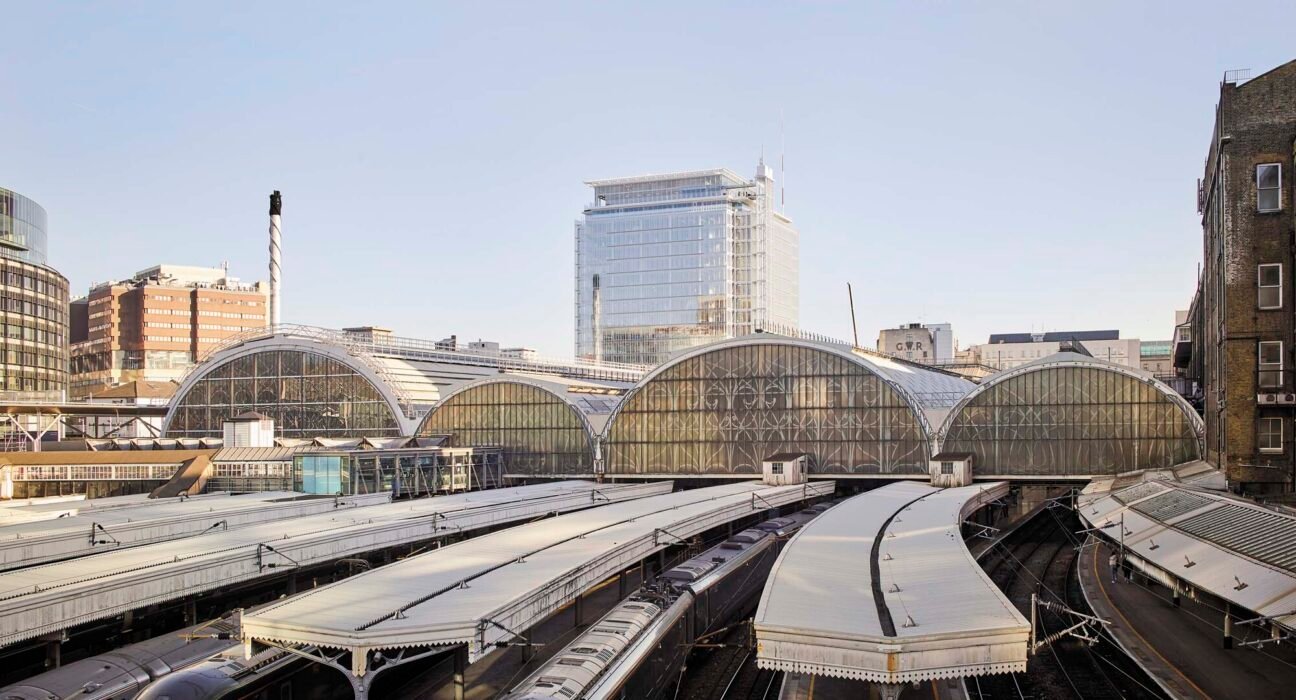
Perhaps the most high-profile project on the list, Paddington Square sits above one of London’s busiest transport interchanges. Renzo Piano Building Workshop and Adamson Associates have created a mixed-use development centered on a new public square, better pedestrian routes, and a publicly accessible rooftop realm.
The glass façade shifts with light, balancing transparency and reflection while maintaining a respectful dialogue with the neighboring Victorian station. As architecture news goes, this is the kind of project that signals how infrastructure can be transformed into a premium urban experience rather than treated as a purely functional backdrop.
Pembroke Mill Lane: Heritage and Innovation in Balance
Haworth Tompkins has reworked a constrained site in Cambridge through a combination of deep retrofit and carefully inserted new buildings. Historic structures are repurposed for academic and social life, while new accommodation and teaching spaces are connected through gardens, courtyards, and cloisters.
The sustainability strategy is especially notable, combining salvaged materials, improved thermal performance, triple glazing, photovoltaics, and air-source heat pumps. It is a refined demonstration that conservation and innovation can reinforce each other.
River Wing, Clare College: Precision Within History
At Clare College, Witherford Watson Mann Architects have inserted contemporary dining, circulation, and social spaces into a Grade I-listed setting. Working within heritage constraints, flood risk, and difficult access, the team introduced a laminated oak structure and a sequence of spaces that reconnect the college to the River Cam.
The project’s luxury lies in subtlety: timber-lined interiors, revealed historic surfaces, and carefully orchestrated movement. It is a reminder that exceptional design often emerges from precision, not scale.
What These Projects Reveal About Luxury Architecture in 2026
This year’s shortlist offers several lessons for architects, developers, and design-conscious homeowners:
- Luxury is increasingly experiential. Light, calm, spatial flow, and tactile materials matter more than overt display.
- Sustainability is now a design driver. Reuse, retrofit, and passive performance are shaping premium architecture.
- Public realm matters. Even the most high-end projects are being judged by how they contribute to streets, landscapes, and communities.
- Craft and context remain essential. The best buildings respond to place rather than impose a generic identity.
That is why this shortlist resonates beyond awards culture. It speaks directly to broader trends in luxury decor, luxury home design, and the future of urban living.
Final Take on This Architecture News Story
The 2026 Stirling Prize shortlist is more than a list of notable buildings—it is a powerful statement about where British architecture is going next. From the serene domestic intelligence of House at Fairmead to the civic complexity of Paddington Square, this architecture news story reveals an industry focused on beauty, sustainability, and enduring value.
For anyone tracking luxury architecture and design, the takeaway is clear: the most important projects of 2026 are not just visually striking. They are thoughtful, materially rich, and designed to improve how people live, gather, and move through the world.