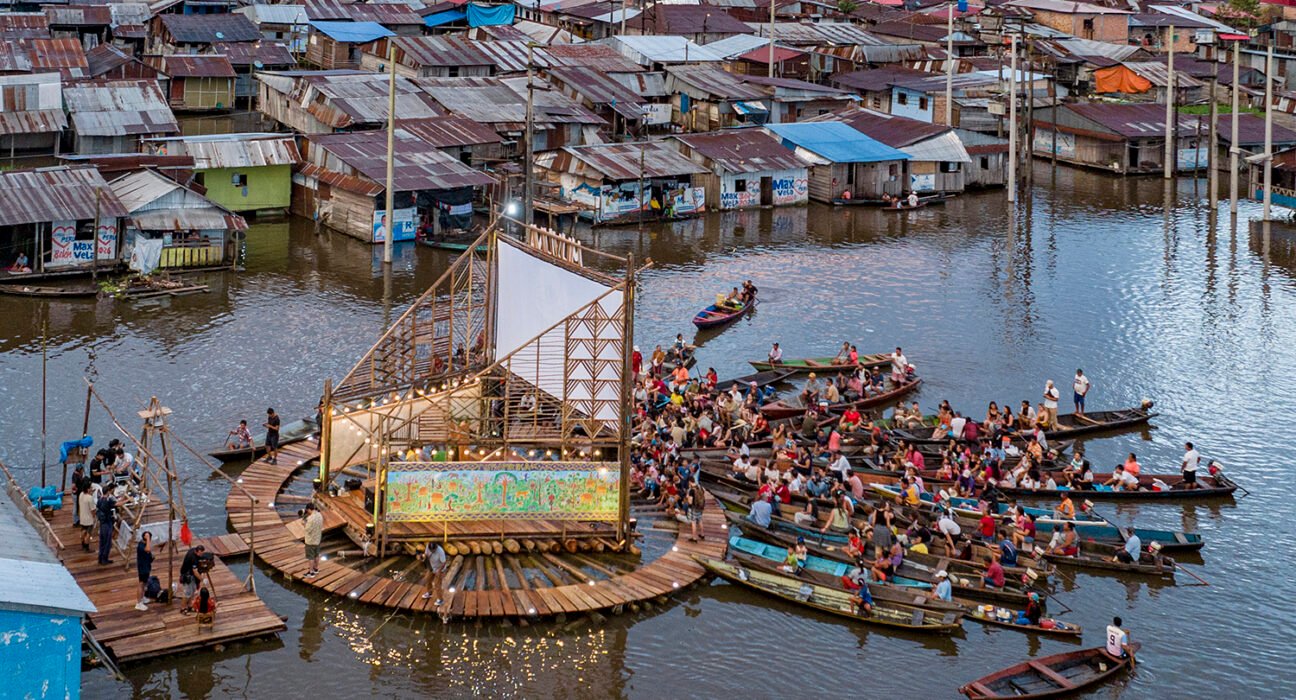
Architecture news rarely captures a shift in values as clearly as the XIV Bienal Iberoamericana de Arquitectura y Urbanismo. Set for Brasília from November 3 to 6, 2026, the next BIAU positions design not simply as form-making, but as a tool for protecting ecosystems, strengthening communities, and rethinking how we live.
For readers interested in luxury architecture, luxury design, and the future of refined living, this is more than a calendar announcement. It is a signal that high-level architectural discourse is moving toward a more holistic idea of quality—one where beauty, cultural depth, environmental intelligence, and civic responsibility are inseparable.
Architecture News From Brasília: Why the XIV BIAU Matters
The Bienal Iberoamericana de Arquitectura y Urbanismo, known as BIAU, has been one of the most important platforms for Ibero-American architecture since 1998. Promoted by Spain’s Ministry of Housing and Urban Agenda, the biennial takes place every two years in a different city across Latin America or the Iberian Peninsula, celebrating standout works in architecture, urbanism, and research.
The 2026 edition will be hosted in Brasília, a city whose architectural legacy needs little introduction. Conceived as a bold modern capital, Brasília remains one of the world’s great urban experiments—admired for its visionary planning, yet often debated for the tensions between ideology, scale, and everyday life. That makes it an especially fitting setting for a biennial centered on the theme Cuidar la Vida, or Caring for Life.
This year’s program is structured around four urgent themes:
- Water
- Vegetation
- Housing
- Communities
Together, they frame architecture as a living practice tied to environmental stewardship, social inclusion, and long-term resilience.
The Theme “Caring for Life” and Its Relevance to Luxury Design
One reason this piece of architecture news resonates beyond the professional circuit is that the biennial’s curatorial direction aligns with broader changes in luxury architecture and luxury home design. Today, true luxury is increasingly defined by meaningful experience, climatic comfort, craftsmanship, and a connection to place—not excess for its own sake.
At BIAU, the jury emphasized projects that work with natural systems rather than against them. Water and vegetation are treated as territorial infrastructures capable of restoring landscapes and improving living conditions. That perspective has major implications for premium residential design, hospitality, and high-end interiors, where biophilic strategies, passive cooling, and site-sensitive planning are becoming markers of sophistication.
In practical terms, the biennial reinforces several design priorities now shaping luxury home decor and architectural thinking:
- Landscape integration: Gardens, courtyards, and planted edges are no longer decorative extras but central spatial elements.
- Climate-conscious planning: Shade, ventilation, and thermal performance matter as much as aesthetics.
- Contextual materiality: Local, simple, and durable materials can feel more elevated than generic finishes.
- Community value: Even private projects increasingly engage with streetscapes, neighborhoods, and shared urban life.
Finalists Reflect a Broader Vision of Architecture
A key highlight in this architecture news update is the announcement of the finalists. In September 2026, organizers revealed 46 finalists selected from a larger pool of 174 proposals previously shortlisted in July. Those finalists include 34 projects and 12 publications, showing that BIAU values both built work and critical thought.
According to the jury’s direction, the selected projects stand out for their active relationship with local realities. Rather than imposing architecture as a detached object, many finalists respond to cultural patterns, economic conditions, and environmental challenges. In housing especially, the focus extends beyond the isolated dwelling to include the street, the neighborhood, and the wider urban landscape.
This matters because it reframes architectural excellence. Instead of rewarding spectacle alone, the biennial highlights projects that combine:
- Participatory processes
- Cultural sensitivity
- Educational and social impact
- Constructive simplicity
- Environmental responsiveness
For luxury-focused audiences, that is an important evolution. Prestige in design is increasingly linked to intelligence, restraint, and relevance.
What to Expect From the Four-Day Program
The event itself promises an ambitious public program across some of Brasília’s most iconic venues, including Teatro Nacional Cláudio Santoro, SESI Lab, the University of Brasília, Cine Brasília, and Index SCS. This makes the biennial as much a citywide cultural happening as an industry gathering.
Opening Day: November 3
The biennial opens with accreditation at Index SCS, followed by the official launch at the Teatro Nacional. The day will also include the Lifetime Achievement Awards honoring Gonçalo Byrne, Erminia Maricato, and Frederick Cooper Llosa, as well as an exhibition opening and a concert by the Brasília Symphony Orchestra.
Debates and Tours: November 4
The second day brings guided tours and thematic debates on water, vegetation, housing, and communities. These sessions, hosted at SESI Lab and the University of Brasília, will feature leading voices including Loreta Castro, Marcelo Rosenbaum, and Inês Lobo. An open conversation with Byrne at the Embassy of Portugal adds another layer of intellectual exchange.
New Territories and Cultural Programming: November 5
Thursday’s schedule includes a documentary screening and a debate about new territories and the transformations reshaping the relationship between architecture, landscape, and society. The conversation will be coordinated by Solano Benítez with Angelo Bucci, Fernando Pérez Oyarzún, and Fredi Casco. The day concludes with a public celebration featuring Brazilian singer Ellen Oléria.
Closing Sessions and Awards: November 6
The final day returns to the Teatro Nacional for curatorial presentations, lectures, panel discussions, and the awards for works and publications. It is expected to offer the clearest summary of the ideas likely to shape the next chapter of Ibero-American architecture.
Why Brasília Is the Ideal Host City
No piece of architecture news about BIAU 2026 is complete without recognizing Brasília’s symbolic importance. The city stands at the intersection of ambition and critique. It represents a belief in architecture’s power to transform society, while also reminding us that urban form alone cannot solve inequality or create belonging.
That tension makes Brasília a compelling backdrop for conversations about care, housing, ecology, and collective life. It invites participants to look at modernist heritage not as a finished story, but as a living field of questions.
For designers, architects, and luxury homeowners alike, the lesson is clear: the most relevant spaces of the future will not only look exceptional—they will support life more intelligently.
Conclusion
This edition of BIAU is more than a noteworthy item in architecture news; it is a sharp reflection of where the discipline is heading. By centering water, vegetation, housing, and communities, the XIV BIAU in Brasília suggests that the future of great design lies in care, context, and cultural meaning. For anyone tracking luxury architecture, luxury home trends, and the global evolution of urbanism, this is one event worth watching closely.