
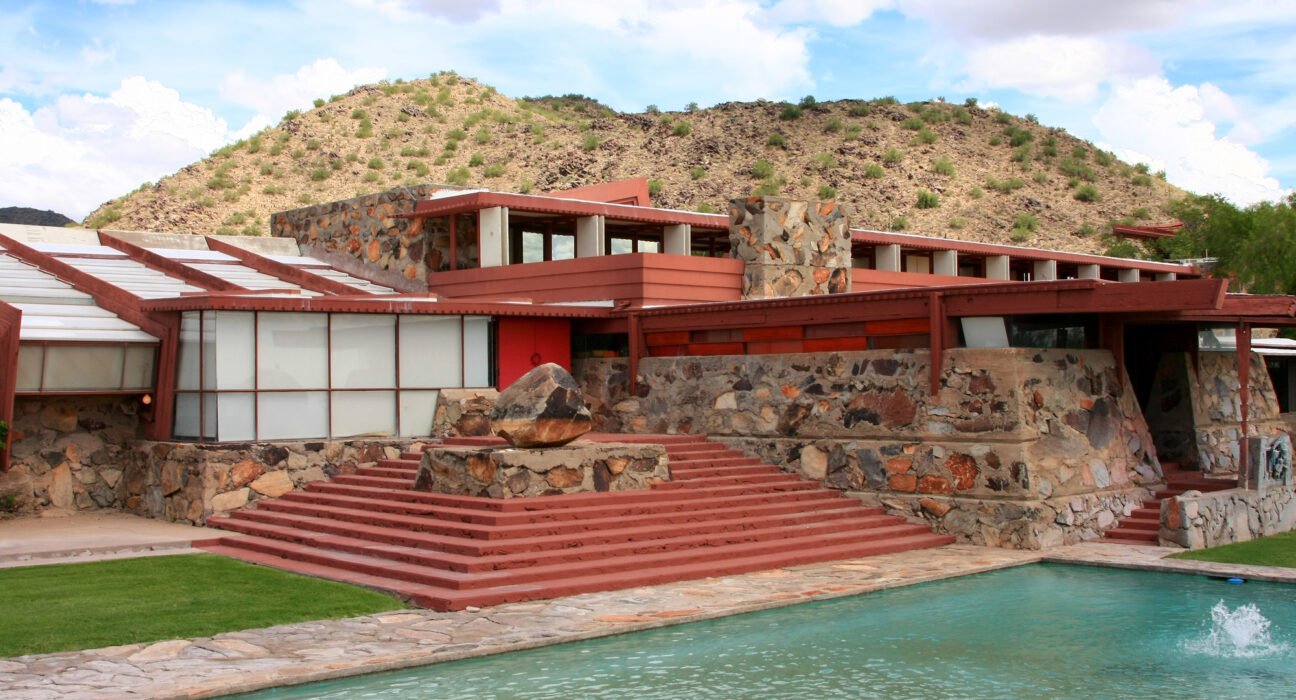
Architecture news rarely arrives with such a tragic and sobering turn. Taliesin West, Frank Lloyd Wright’s iconic desert residence and studio in Scottsdale, Arizona, has closed to the public indefinitely after a fatal accident during a guided tour, drawing renewed attention to the challenges of preserving historic architecture in extreme climates.
According to reported details, a visitor was struck by roofing debris that became dislodged during strong winds on October 16, 2026. The site, operated by the Frank Lloyd Wright Foundation, remains closed while authorities investigate the weather-related incident. For admirers of luxury architecture, heritage design, and Wright’s enduring influence on the American home, the closure marks a significant moment for one of the country’s most celebrated architectural destinations.
Architecture News: What Happened at Taliesin West
The incident occurred during a walking tour at Taliesin West, Wright’s former winter home and architectural campus in the Sonoran Desert. Scottsdale Fire Department officials reported that high winds caused roofing material to detach and strike a visitor. The victim was identified in reports as Rogério Renato Mateucci, 55, rector of the Pontifical Catholic University of Paraná in Brazil.
Weather alerts had been issued across parts of the Southwest that day, and the ongoing investigation is expected to determine the exact sequence of events. The Frank Lloyd Wright Foundation has confirmed the closure of the property and indicated that it will not release additional details until the official review is complete.
For those following architecture news, the event underscores a difficult reality: even globally recognized landmarks are vulnerable to environmental stress, aging materials, and the complex demands of public access.
Why Taliesin West Matters in Luxury Architecture
Taliesin West is far more than a tourist attraction. Completed in 1937 in the foothills of the McDowell Mountains, it served as Frank Lloyd Wright’s winter residence, design studio, and educational setting for his apprentices. Today, it stands as one of the most important works in American architectural history.
Its importance to luxury architecture lies not in opulence alone, but in the sophistication of its response to place. Wright designed the complex to belong to the desert rather than compete with it. The property is celebrated for:
- Its use of local stone and desert masonry
- Low-slung forms that echo the surrounding landscape
- Lightweight roof structures designed for climate responsiveness
- An indoor-outdoor approach to living that influenced luxury home design for decades
For design enthusiasts, Taliesin West remains a masterclass in how architecture can deliver beauty, environmental sensitivity, and an elevated lifestyle experience all at once.
The Design of the Roof and Its Preservation Challenges
One reason this story has resonated so widely in architecture news is that Taliesin West’s roofing system has long been central to the site’s identity. Wright originally conceived a lightweight, operable fabric roof supported by wood framing. The system was intended to control sunlight and airflow naturally, helping the building adapt to the desert’s seasonal extremes.
Over time, however, the structure evolved. As the site shifted from a seasonal retreat to a destination used year-round, the roof was altered to meet new functional and preservation demands.
Key changes over the decades
- Original design: Operable canvas-like panels that could open and close for light and ventilation
- Post-fire reconstruction: After a mid-1960s fire destroyed the Music Pavilion, rebuilt sections incorporated steel beams and translucent fiberglass roofing
- 1990s modifications: Fixed acrylic exterior panels and canvas interior panels were introduced
These adaptations helped maintain the site’s usability, but they also introduced a fundamental preservation dilemma: how do you protect a historic structure while staying faithful to the architect’s original intent?
Preservation, Climate, and the Future of Historic Design
Before the accident, the Frank Lloyd Wright Foundation had already been engaged in long-term preservation planning for Taliesin West. In 2026, the organization outlined efforts including environmental monitoring, energy modeling, and material prototyping to restore the spirit of Wright’s original roof concept using contemporary technology.
This is where the story becomes especially relevant for readers interested in luxury design and luxury home decor. Taliesin West has always embodied a design philosophy that feels remarkably current:
- Passive environmental control
- Natural ventilation
- Filtered daylight
- Materials rooted in local context
- A seamless relationship between architecture and landscape
Those principles are now central to many high-end residential projects, especially in warm-weather markets. In that sense, Taliesin West is not simply a preserved monument; it is an active reference point for contemporary sustainable luxury living.
A UNESCO Landmark With Ongoing Cultural Value
Taliesin West is part of the UNESCO World Heritage designation The 20th-Century Architecture of Frank Lloyd Wright, a group of eight major works across the United States. It also holds National Historic Landmark status, reinforcing its significance not only to architectural scholarship but also to American cultural heritage.
Its closure therefore has implications beyond tourism. The site has long hosted:
- Architectural tours
- Educational programs
- Design research initiatives
- Public engagement with Wright’s desert architecture
For followers of architecture news, the closure raises important questions about how heritage institutions can balance public access, visitor safety, and restoration integrity in an era of more volatile weather patterns.
What This Means for the Luxury Design World
In the luxury design space, Taliesin West remains deeply influential. Its layered textures, earth-toned palette, and climate-responsive planning continue to shape premium residential interiors and architecture. Many of today’s most refined desert homes borrow directly from ideas Wright explored there nearly a century ago.
Design professionals can take several lessons from this moment:
- Material honesty matters: Buildings perform best when materials suit the climate
- Preservation is ongoing: Iconic properties require constant research and adaptation
- Beauty and safety must coexist: Heritage value does not remove the need for modern risk management
- Context drives luxury: The most timeless homes respond to their environment rather than impose on it
That is why this architecture news story resonates well beyond Arizona. It touches on the future of luxury homes, adaptive preservation, and the responsibility that comes with stewarding design icons.
Conclusion
This architecture news story is, above all, a tragedy tied to one of America’s most revered architectural landmarks. Taliesin West’s indefinite closure following a fatal accident is a reminder that historic masterpieces are living environments, shaped by time, weather, and the realities of public use.
As the investigation continues, Taliesin West remains central to conversations about preservation, climate-responsive design, and the legacy of Frank Lloyd Wright. For anyone invested in luxury architecture, luxury home design, and the future of architectural heritage, this moment is both heartbreaking and instructive: great design must always be paired with careful stewardship.