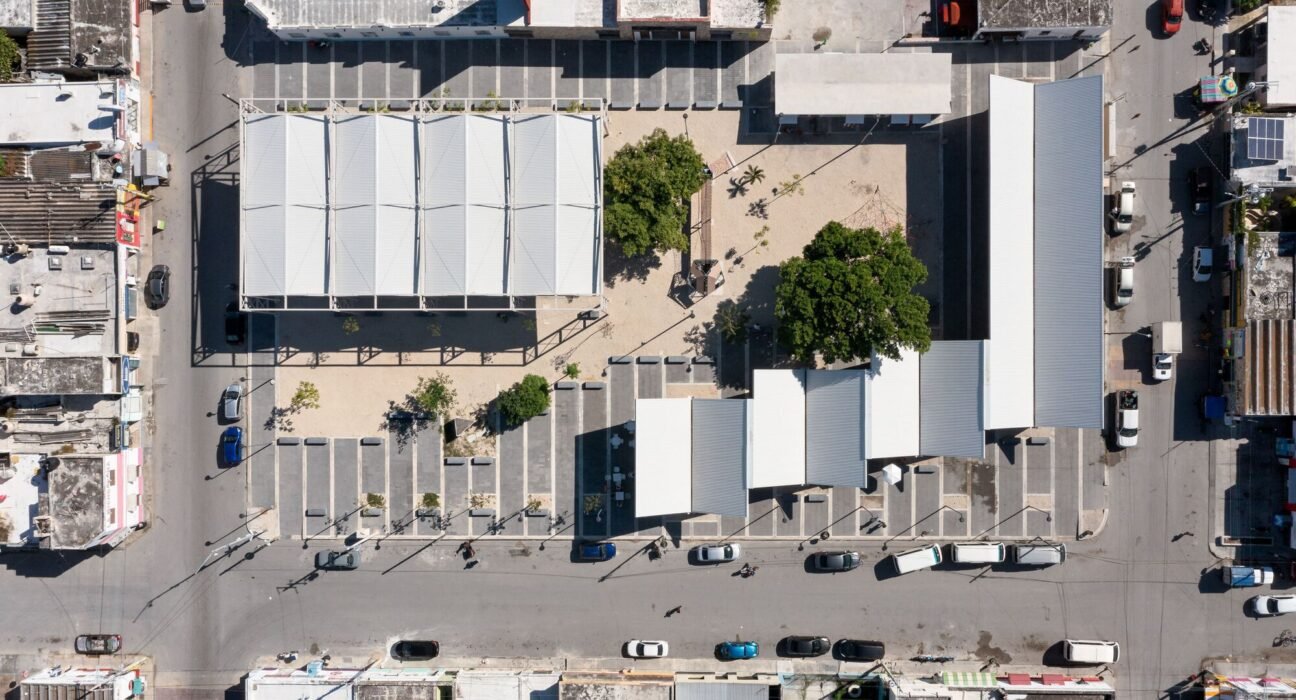
Architecture news often focuses on towers, museums, and luxury residences, but some of the most meaningful design innovation is happening in public marketplaces. In Mexico, a new generation of market architecture is transforming the traditional plaza into a refined civic core—blending heritage, climate intelligence, and contemporary spatial luxury.
These projects show how the market can be far more than a place of transaction. In the hands of today’s designers, it becomes a social condenser, a shaded urban living room, and an architectural framework for community life. For readers interested in luxury architecture, luxury design, and the cultural evolution of public space, these contemporary Mexican markets offer a compelling lesson in how timeless principles can be reinterpreted with elegance and relevance.
Architecture News from Mexico: Why the Market Plaza Matters Again
Recent architecture news from Mexico highlights a clear pattern: designers are returning to the marketplace as a central urban typology. This move is not nostalgic. Instead, it reflects a sophisticated rethinking of how architecture can support everyday rituals while elevating public life.
The roots of this idea run deep. Pre-Hispanic markets such as Tlatelolco organized trade within broad open squares structured by circulation routes and specialized zones for goods. The enduring tianguis tradition continued that logic through temporary stalls arranged in linear aisles across public plazas. Together, these models established a powerful architectural concept: commerce and civic space should not be separated.
Today’s market projects in Mexico reinterpret those principles with contemporary materials, improved environmental performance, and more deliberate public programming. The result is architecture that feels both grounded in history and distinctly modern.
Five Design Strategies Defining Contemporary Mexican Market Architecture
Across standout projects, several recurring strategies help explain why this typology is receiving so much attention in architecture news and design circles.
1. The central plaza as social anchor
Rather than treating circulation as leftover space, many new markets organize the entire project around a central courtyard or open plaza. This element acts as the heart of the building—offering room for gathering, orientation, rest, and local events.
In luxury design terms, this is an important move. Spatial generosity creates emotional value. A market with a well-proportioned civic core feels calm, legible, and memorable, turning routine errands into a richer public experience.
2. Aisles designed as urban streets
Another common strategy is the use of internal “streets” or clearly defined aisles that structure movement through stalls. This planning approach improves wayfinding and reinforces the market’s identity as a miniature city.
- Stalls are grouped by product type or use
- Movement feels intuitive rather than chaotic
- Vendors gain stronger visibility
- Visitors experience a clear rhythm of openness and enclosure
For architects, this organization creates a balance between flexibility and order—an essential quality in successful commercial architecture.
3. Climate-responsive architecture
One of the strongest lessons in current architecture news is that environmental intelligence is no longer optional. Mexican market design often responds to heat, sunlight, and airflow through passive means instead of relying heavily on sealed mechanical systems.
Common solutions include:
- Shaded courtyards and deep overhangs
- Permeable edges that encourage cross-ventilation
- High roofs that release rising heat
- Filtered natural light for comfort and visibility
These features are practical, but they also create beauty. Shadow, breeze, texture, and changing daylight contribute to an atmosphere that feels luxurious without excess.
4. Local materials with contemporary expression
Many of the most interesting projects pair regional materials with modern construction techniques. Stone, concrete, brick, metal, and timber are often used in ways that respect local building traditions while achieving a crisp contemporary language.
This is where luxury architecture and civic design intersect. True sophistication does not always depend on rare finishes or spectacle. It can emerge from craft, proportion, durability, and a strong sense of place.
5. Public space as everyday infrastructure
Perhaps the most important shift is philosophical. These markets are not conceived purely as retail containers. They operate as public infrastructure—spaces that support informal meetings, cultural exchange, neighborhood identity, and daily belonging.
That broader civic ambition is exactly why they stand out in architecture news. They show how architecture can deliver social value while still achieving formal clarity and design excellence.
What These Projects Reveal About Luxury Architecture and Design
For audiences drawn to luxury home decor, luxury interiors, and high-end architecture, market buildings may seem outside the usual frame. Yet these projects reveal several ideas that are highly relevant to luxury residential and hospitality design.
- Spatial hierarchy matters. The strongest projects use arrival sequences, open centers, and framed circulation to create a memorable experience.
- Material authenticity outlasts trendiness. Honest, tactile materials age better than decorative excess.
- Climate sensitivity enhances comfort. Passive cooling, shade, and ventilation are not just sustainable—they improve daily life.
- Community is a design value. The best spaces encourage interaction, pause, and shared use.
In that sense, contemporary market architecture in Mexico offers inspiration beyond the public realm. It suggests a more grounded definition of luxury: one based on atmosphere, context, and human connection.
Why Mexican Market Design Deserves Attention in Global Architecture News
The renewed interest in Mexican marketplaces is significant because it challenges a narrow idea of progress. Instead of erasing traditional spatial models, architects are adapting them to present-day needs. Courtyards replace generic circulation voids. Shaded plazas outperform purely air-conditioned interiors. Local material traditions become assets rather than limitations.
This is why such work deserves ongoing coverage in architecture news. It demonstrates that innovation can come from reinterpreting collective memory, not just inventing new forms. These market projects prove that public architecture can be culturally rooted, environmentally responsive, and visually refined all at once.
They also remind designers in every category—from luxury homes to civic buildings—that the most enduring spaces are often the ones that invite people to gather.
Conclusion
In the latest architecture news, contemporary Mexican market design stands out for all the right reasons. By reviving the plaza, organizing commerce through clear spatial “streets,” and embracing climate-smart materiality, these projects redefine the market as a civic centerpiece rather than a simple retail venue.
The key takeaway is clear: great architecture does more than house activity—it shapes community. And in Mexico’s newest market projects, the civic plaza returns as a model of design intelligence, cultural continuity, and everyday luxury.