

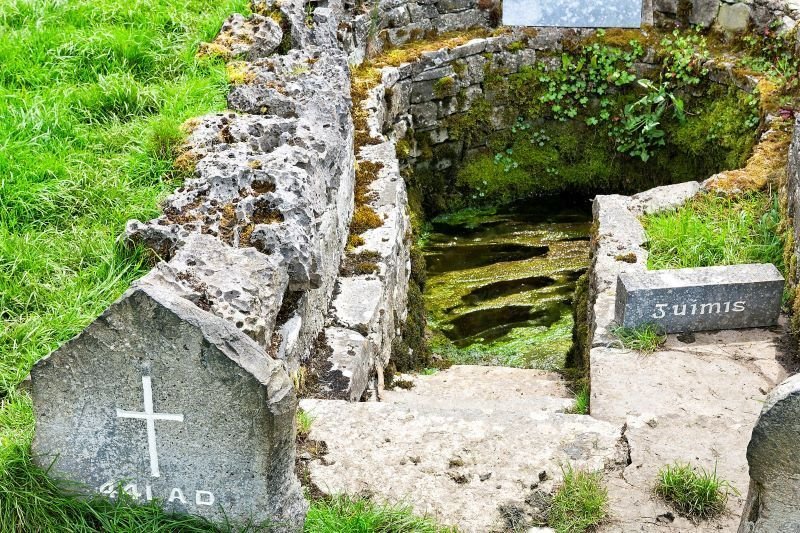
Ireland Travel is often framed around castles, cliff roads, and five-star manor stays, but some of the country’s most compelling destinations are far quieter. Ireland’s holy wells, especially those linked to St. Patrick, offer a rare window into the island’s spiritual history, folklore, and living traditions—making them a fascinating addition to any luxury itinerary.
Across the country, more than 3,000 holy wells are woven into the landscape. Long before Christianity took root, many of these springs and pools were revered as sacred places in pagan Ireland. Later, early Christian missionaries, including St. Patrick, blessed and repurposed them, creating a uniquely Irish fusion of ancient belief and Christian devotion. Today, these wells continue to attract pilgrims, heritage travelers, and curious visitors seeking something deeper than a standard sightseeing stop.
Ireland Travel and the enduring appeal of holy wells
For travelers interested in culture, history, and meaningful experiences, holy wells reveal a side of Ireland that feels both intimate and timeless. They are not grand monuments in the traditional sense. Instead, they are humble places—often tucked beside abbeys, under old trees, or along country roads—where legend and landscape meet.
Many wells dedicated to St. Patrick are associated with healing, blessing, and protection. Their appeal lies not only in miracle stories, but in the continuity of ritual. Visitors still leave offerings, say prayers, walk devotional rounds, and tie strips of cloth to nearby branches in hopes that illness or hardship will fade away with the weathering fabric.
Why these sites still matter
- They connect pre-Christian Ireland with later Catholic practice.
- They preserve local folklore, oral history, and regional identity.
- They offer a slower, more reflective style of Ireland Travel.
- They pair naturally with heritage hotels, abbey visits, and scenic drives.
The pagan roots and Christian transformation of Ireland’s sacred springs
One of the most striking aspects of Ireland’s holy wells is how clearly they reflect religious continuity. Sacred springs were important in pagan worship, and rather than disappearing, many were absorbed into Christian practice. St. Patrick appears repeatedly in these origin stories, often transforming a site associated with an older deity into a Christian landmark.
A well-known example is St. Patrick’s Well in Belcoo, County Fermanagh. Tradition holds that the site once belonged to Crom Dubh, a dark harvest god. According to legend, Patrick struck the pagan altar with his staff, breaking its power and consecrating the place anew. Stories like this reveal how Irish spirituality evolved by layering new meanings onto ancient landscapes rather than erasing them entirely.
Healing legends that shaped Ireland Travel traditions
Holy wells became famous for cures ranging from headaches and toothaches to eye complaints, nervous disorders, and even illnesses in livestock. Not every claimed remedy has been preserved in detail, but regional records and folklore offer vivid glimpses into how these waters were once used.
At St. Patrick’s Well in Clonmel, County Waterford, pilgrims were said to descend steps into the water in hope of miraculous healing. In Patrickswell, County Limerick, local tradition recorded the well as a remedy for sores and toothache, while the water was also sprinkled on crops and churns. In County Leitrim, accounts described water being applied to sore eyes or given to sick animals to drink.
These stories may sound extraordinary to modern ears, yet they formed an important part of rural Irish life. In that sense, Ireland Travel to holy wells is not just about seeing a site—it is about entering a worldview where land, water, faith, and survival were deeply intertwined.
Rituals visitors may still encounter at holy wells
Many holy wells are quiet, but they are not empty of practice. Traditional devotional customs continue in some places, especially on feast days and local pattern days. If you include one on your Ireland Travel route, you may notice small traces of ritual that have endured for generations.
Common traditions at Irish holy wells
- Prayer rounds: Pilgrims walk clockwise around the well while reciting prayers.
- Stone offerings: Small stones may be placed on cairns as part of a devotional sequence.
- Cloth ties: Ribbons, rags, or handkerchiefs are tied to nearby trees as symbols of healing petitions.
- Water blessings: Some visitors still touch or collect the water respectfully.
At Tullaghan in County Leitrim, for example, tradition records a formal pattern of prayers and stone-casting around two wells linked to St. Patrick: Tobair Phadhraig and Tobair na Bheartha. Such customs show how these sites functioned not merely as landmarks, but as active spiritual landscapes.
Notable St. Patrick’s wells to add to an Ireland Travel itinerary
If you are planning a luxury self-drive journey or bespoke cultural tour, several St. Patrick-associated wells are especially worth noting for their history or setting.
- Ballintubber, County Mayo: Near the historic abbey, ideal for pairing with a West of Ireland heritage route.
- Belcoo, County Fermanagh: Rich in legend and connected to older pagan tradition.
- Tullaghan, County Leitrim: Significant for preserved ritual practice and folklore.
- Nassau Street, Dublin: A surprising urban holy well site in the grounds of Trinity College.
- Downpatrick Head, County Mayo: Perfect for combining spiritual history with dramatic coastal scenery.
Other counties with notable St. Patrick’s wells include Carlow, Donegal, Down, Galway, Kerry, Kildare, Limerick, Longford, Meath, Roscommon, Sligo, and Tyrone. For high-end travelers, these sites work beautifully as contemplative stops between gourmet dining, private castle stays, and guided archaeological visits.
How luxury travelers can experience holy wells respectfully
Ireland Travel at the luxury level increasingly favors authenticity over excess, and holy wells fit that shift perfectly. These destinations are best approached with calm curiosity and respect for local belief.
Best practices for visiting
- Dress appropriately and avoid loud behavior.
- Do not remove offerings or disturb devotional objects.
- Stay on marked paths where possible.
- Ask locally about feast days or traditions before visiting.
- Pair your visit with nearby abbeys, heritage centers, or private guides for fuller context.
A well-curated journey might include a chauffeur-driven route through Mayo or Sligo, a stay in a historic country house, and a guided exploration of sacred sites, monastic ruins, and coastal viewpoints. In this way, Ireland Travel becomes both luxurious and layered—grounded in story, place, and memory.
Conclusion: why holy wells deserve a place in Ireland Travel
The holy wells of Ireland are far more than folklore footnotes. They are living cultural markers where pagan belief, Christian devotion, healing traditions, and local legend still flow together. For anyone seeking richer Ireland Travel experiences, the wells of St. Patrick offer something rare: silence, symbolism, and a direct link to the island’s oldest spiritual landscapes.
Add one or two to your next itinerary, and you may discover that Ireland’s most memorable luxury is not only found in grand hotels, but in sacred places hidden in plain sight.