
Architecture news rarely feels as consequential as an announcement that promises to reshape a historic city for generations. The unveiling of Bukhara Biennial 2027, with its focus on lasting public works and its first group of participating artists, positions this future event as more than a cultural gathering—it is a design-driven statement about permanence, public life, and the value of place.
Set against the extraordinary architectural heritage of Bukhara, the 2027 biennial is already attracting attention across the worlds of luxury architecture, luxury design, and global cultural development. Rather than centering on temporary installations alone, the event points toward a more ambitious model: public-facing works that can remain embedded in the city long after the biennial concludes. That approach makes this piece of architecture news especially significant for designers, collectors, urbanists, and homeowners who follow how high-level design influences everyday environments.
Bukhara Biennial 2027 and Why This Architecture News Matters
The announcement of Bukhara Biennial 2027 immediately stands out because it aligns contemporary artistic practice with a city renowned for layered history, craftsmanship, and monumental urban character. In a global landscape crowded with short-lived exhibitions, Bukhara’s commitment to enduring public works introduces a more civic-minded vision of what a biennial can achieve.
For readers interested in architecture news, the importance lies in three key ideas:
- Legacy over spectacle: lasting interventions can create meaningful cultural infrastructure.
- Historic context: contemporary works in Bukhara must respond to one of Central Asia’s most celebrated built environments.
- Cross-disciplinary influence: art, architecture, craft, urban design, and public space are brought into direct conversation.
This model resonates strongly with luxury architecture trends, where permanence, material integrity, and contextual sensitivity increasingly matter as much as visual impact.
A Theme Built Around Public Life and Enduring Design
Although full curatorial details will continue to emerge, the emphasis on lasting public works already defines the spirit of the biennial. This is important architecture news because it suggests a move away from event architecture that disappears after the crowd leaves. Instead, the biennial appears poised to invest in the civic realm through works that enhance shared spaces and deepen local cultural identity.
That philosophy mirrors broader shifts in contemporary design culture. Today, the most influential luxury design projects are often those that combine beauty with utility, narrative, and public value. Whether in a museum district, a luxury home landscape, or an urban plaza, the idea of creating something that endures carries increasing weight.
What lasting public works can mean in practice
In the context of a biennial, lasting works may include:
- Site-specific structures or pavilions with ongoing public use
- Craft-based architectural interventions
- Landscape and courtyard enhancements
- Functional gathering spaces for residents and visitors
- Public artworks integrated into the urban fabric
For followers of architecture news, this direction reinforces an essential principle: the best design leaves a legacy that extends beyond the opening night.
Bukhara’s Historic Setting Adds Depth to the Story
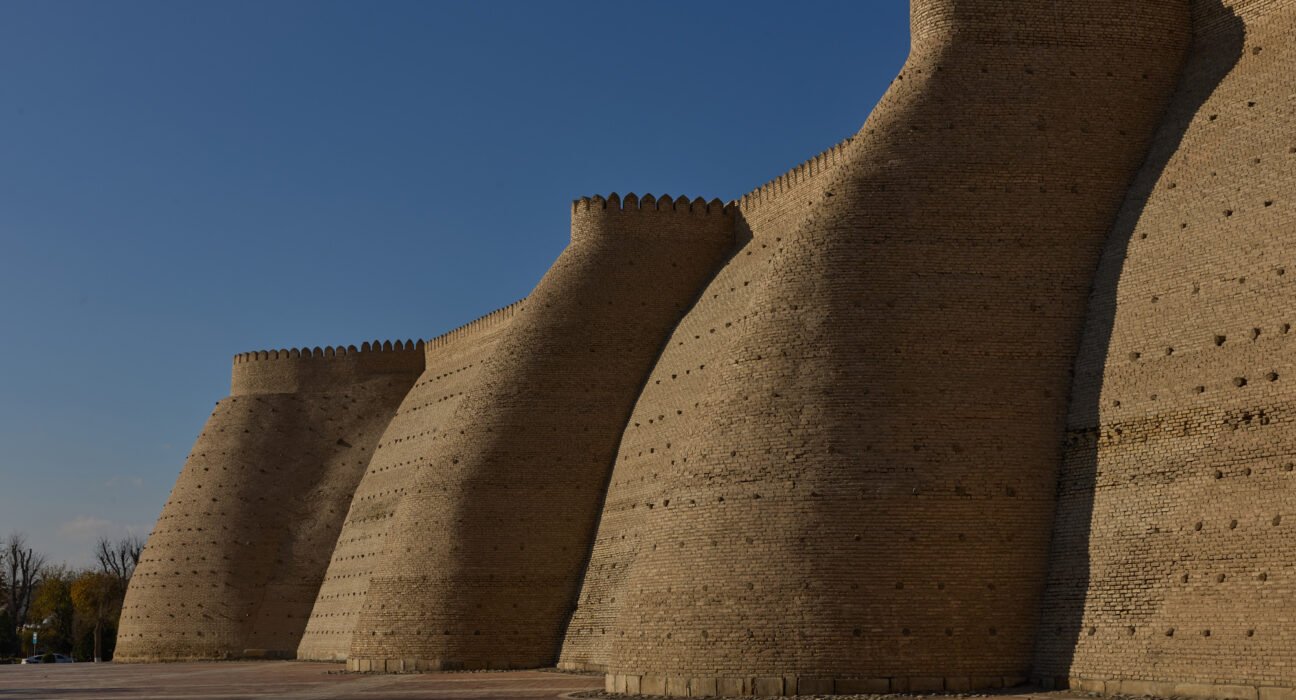
Any major cultural event in Bukhara carries exceptional architectural significance. The city’s historic identity, celebrated for its remarkable monuments, courtyards, brickwork, and urban texture, provides a setting where every new intervention must be measured against centuries of spatial intelligence. That tension between preservation and innovation is exactly why this architecture news is drawing international attention.
For the luxury home and luxury decor sectors, Bukhara also represents something deeply relevant: the enduring appeal of craftsmanship. Rich materials, hand-finished surfaces, ornamental traditions, and climate-responsive design all connect the city’s heritage to contemporary interior and architectural thinking. Designers searching for inspiration in arches, texture, natural light, and artisanal detailing will find this announcement especially compelling.
Lessons for luxury architecture and interiors
The values implied by the Bukhara Biennial 2027 announcement translate surprisingly well into residential and hospitality design. Among them:
- Design for longevity rather than novelty alone.
- Honor context by responding to local materials and traditions.
- Create communal beauty through spaces meant to be shared.
- Invest in craft as a marker of authenticity and luxury.
- Blend culture and function so aesthetic gestures have real purpose.
These ideas continue to shape the best architecture news coverage because they point to where design is heading, not just what is visually trending today.
The First Artists and the Biennial’s Cultural Ambition
The announcement of the first participating artists adds momentum and credibility to the project, signaling that Bukhara Biennial 2027 aims to assemble voices capable of responding meaningfully to site, history, and public engagement. While early artist lineups often generate headlines for prestige, the more interesting story here is how those practices may be translated into works with material and civic permanence.
That makes this architecture news relevant well beyond the art world. Architects, developers, curators, and luxury design professionals will be watching how the biennial balances international talent with local identity. The strongest outcomes are likely to come from collaborations that respect Bukhara’s architectural language while introducing new ideas about public use, sustainability, and contemporary expression.
In that sense, the biennial could become a benchmark for future global exhibitions—especially those staged in historic cities where the challenge is not simply to impress visitors, but to contribute something of enduring worth.
Why Bukhara Biennial 2027 Belongs on Every Architecture News Watchlist
There are many reasons this development deserves close attention in the months ahead. At a time when cities worldwide are rethinking the role of culture in public space, Bukhara Biennial 2027 offers a powerful alternative to disposable programming. It suggests that exhibitions can function as long-term urban investments, not just seasonal attractions.
For readers across luxury architecture, luxury decor, luxury home decor, and luxury design, this is also a reminder that the most refined environments are often rooted in continuity. A beautifully designed room, residence, courtyard, or public square gains meaning when it connects past and future with confidence.
Ultimately, this chapter in architecture news is about more than one event. It is about a broader design ethos—one that values heritage, permanence, craftsmanship, and the public realm. If Bukhara Biennial 2027 fulfills its promise, it may become one of the most important examples of how cultural programming can leave a lasting architectural legacy.