
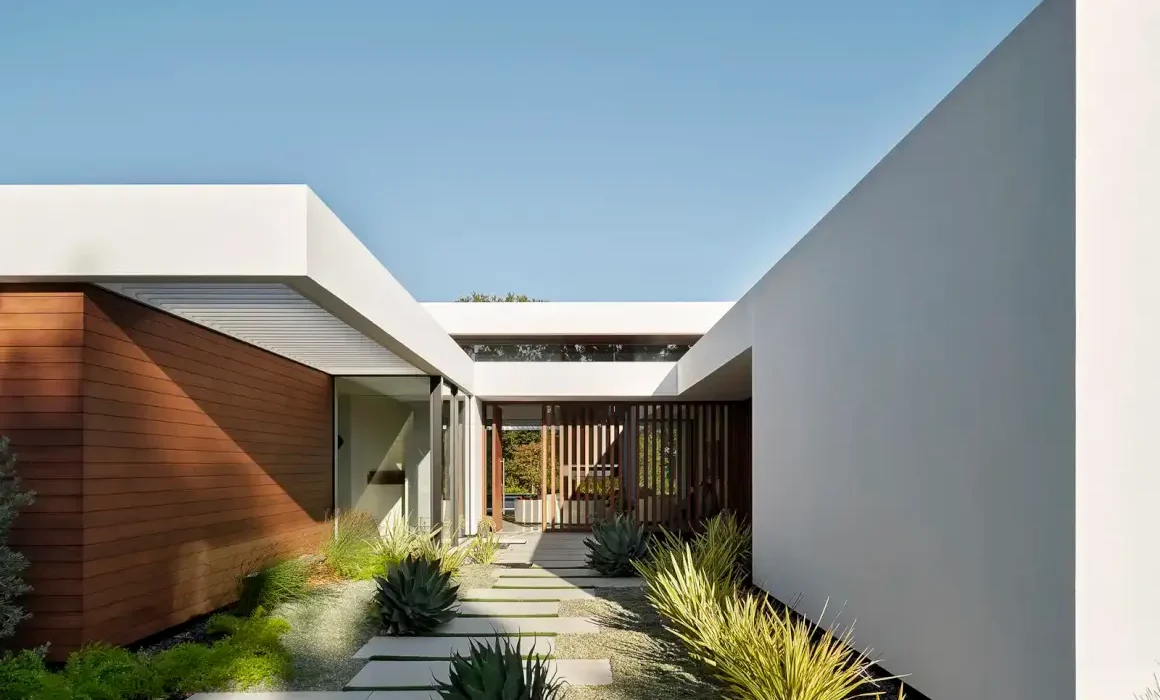
Set against a natural landscape and shaped by disciplined restraint, Mehta House shows how iconic architecture does not need excess to make a lasting impression. Designed by Swatt + Partners as a minimalist H-shaped retreat, this luxury residence demonstrates how proportion, light, privacy, and connection to the outdoors can elevate a home into a deeply memorable living experience.
For readers exploring the future of luxury homes, Mehta House offers more than visual appeal. It reflects a growing shift in high-end residential design: homes that prioritize serenity, site responsiveness, and elegant simplicity over ornament. In the world of luxury architecture, that approach is increasingly defining what true distinction looks like.
How Mehta House Redefines Iconic Architecture
When many people hear the phrase iconic architecture, they imagine dramatic towers, expressive facades, or instantly recognizable landmarks. Mehta House proves another path is possible. Its architectural identity comes from spatial intelligence and quiet confidence rather than spectacle.
The home’s H-shaped plan is central to its success. This layout creates a measured relationship between built form and open space, allowing the residence to frame views, organize circulation, and establish private and shared zones with unusual clarity. Instead of imposing itself on the landscape, the design works with it, turning the surrounding environment into an active part of daily life.
That strategy is especially relevant in luxury home design today, where buyers and design enthusiasts increasingly value homes that feel restorative, tailored, and timeless. In that sense, Mehta House stands as iconic architecture because it expresses an idea clearly: luxury can be calm, precise, and deeply rooted in place.
The Power of the H-Shaped Floor Plan
A layout that balances privacy and openness
The H-shaped configuration is not simply a formal gesture. It solves several design challenges at once:
- Privacy: Separate wings can accommodate bedrooms, guest quarters, or quiet retreats away from busier social spaces.
- Natural light: Multiple exposures help bring daylight deeper into the home.
- Cross-ventilation: Openings on different sides can improve airflow and comfort.
- Courtyard relationships: The form naturally creates outdoor rooms that feel sheltered and intimate.
These qualities make the plan especially attractive for luxury residences in natural settings. Rather than relying on sheer scale, the architecture creates richness through movement, framed vistas, and transitions between interior and exterior space.
Why the plan feels modern yet timeless
One reason Mehta House resonates is that its geometry feels contemporary without chasing trends. Clean lines, disciplined massing, and balanced proportions allow the house to avoid visual clutter. This is a hallmark of iconic architecture: the design remains memorable because every element appears intentional.
For homeowners interested in luxury decor and luxury design, that architectural foundation matters. Interiors tend to feel more sophisticated when the envelope itself is coherent, uncluttered, and responsive to light.
Minimalism as a Luxury Design Statement
Minimalism in high-end homes is often misunderstood as austerity. In projects like Mehta House, it functions instead as refinement. The absence of unnecessary embellishment allows materials, craftsmanship, and landscape views to take center stage.
That design language supports several qualities associated with premium living:
- Visual calm that reduces distraction and supports well-being
- Material integrity through honest expression of wood, stone, glass, and metal
- Spatial elegance created through proportion rather than decoration
- Enduring style that outlasts short-lived trends
In the context of iconic architecture, minimalism becomes powerful when it is paired with strong planning and a meaningful response to the site. That combination gives the home character without overstatement.
Connecting Luxury Homes to the Landscape
One of the most compelling aspects of Mehta House is its relationship to nature. The retreat-like concept suggests a home designed not just to occupy land, but to engage with it through views, daylight, and outdoor living areas. This approach aligns with broader movements in residential architecture, including biophilic design and wellness-focused planning.
Luxury homeowners increasingly seek spaces that foster a sense of retreat. Features that support this include:
- Expansive glazing that captures changing light throughout the day
- Protected courtyards and terraces for private outdoor living
- Indoor-outdoor transitions that feel seamless rather than abrupt
- Natural materials that echo the surrounding environment
These design choices help explain why homes like Mehta House are viewed as iconic architecture. They create emotional resonance. The building is not memorable only because of its shape, but because of how it makes daily life feel.
Lessons for Luxury Architecture and Decor Enthusiasts
Mehta House offers valuable inspiration for architects, designers, and homeowners alike. Whether planning a custom residence or simply refining a luxury interior, several takeaways stand out:
1. Strong architecture improves everything inside it
Great luxury decor begins with great spatial planning. Furniture, art, and finishes feel more elevated when rooms have natural light, clear sightlines, and balanced proportions.
2. Simplicity can be more exclusive than excess
Today’s high-end market increasingly favors restraint. A carefully edited home often feels more bespoke than one crowded with statement pieces.
3. Nature is a design asset
Views, gardens, courtyards, and outdoor rooms are essential components of modern luxury homes. They are not extras; they shape the lived experience.
4. Distinctive form should serve daily living
The best iconic architecture is not iconic for its own sake. It earns distinction by making life more comfortable, intuitive, and beautiful.
For related inspiration, readers may also explore features on luxury architecture trends, luxury home design ideas, and luxury decor inspiration to see how architecture and interiors work together.
Why Mehta House Matters Now
As residential design evolves, projects like Mehta House capture a growing desire for homes that are both sophisticated and restorative. They reflect a broader redefinition of prestige—one centered on space, privacy, craftsmanship, and environmental harmony.
That is what makes Mehta House such a persuasive example of iconic architecture. It does not rely on noise to command attention. Instead, it achieves distinction through clarity of concept, intelligent planning, and an elegant connection to nature.
For anyone interested in the future of luxury homes, the message is clear: the most compelling residences may be the ones that feel effortless, grounded, and deeply human. In that vision, iconic architecture becomes less about dramatic display and more about creating places people never want to leave.