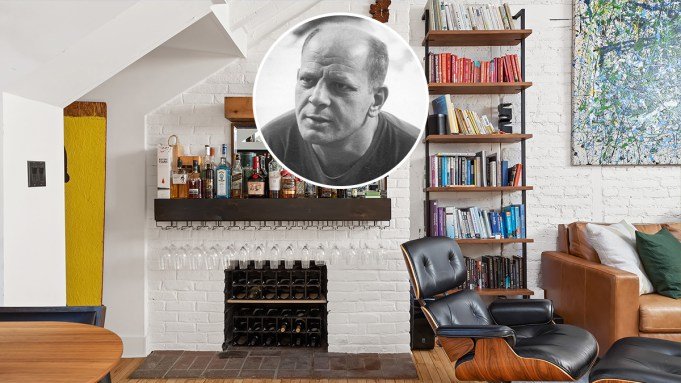
In the world of celebrity homes, not every headline property is a sprawling mansion or a gated estate. Sometimes, the most compelling listings are the ones with cultural history built into the walls—like Jackson Pollock’s former West Village apartment, which has just come to market for $1.99 million.
Set inside a Federal-style townhouse on Carmine Street in Manhattan, this compact but character-rich residence offers buyers something rare in the landscape of luxury homes: a direct link to one of America’s most influential artists before fame transformed his life. For readers tracking notable real estate and design stories, this listing sits at the intersection of art history, downtown New York architecture, and the enduring appeal of luxury celebrity homes.
Jackson Pollock’s Former Home Brings Art History to the Market
Long before Jackson Pollock became synonymous with revolutionary drip paintings and blue-chip auction results, he was a young artist trying to find his footing in New York. From 1932 to 1933, Pollock lived in the top-floor apartment at 46 Carmine Street with his brother Charles Pollock and Charles’s wife, Elizabeth.
The arrangement was modest. The apartment reportedly functioned as both home and studio, with Charles working in one room and Jackson in another. At the time, Pollock was still studying under Thomas Hart Benton at the Art Students League and navigating the economic realities of the Great Depression.
That backstory is what elevates this listing beyond standard celebrity homes coverage. It is not simply a property once occupied by a famous name; it is a snapshot of the formative years before Pollock emerged as a defining figure in American modern art.
A Small Manhattan Residence With Big Character
Today, the apartment looks very different from the sparse artist quarters Pollock once knew. The one-bedroom home spans roughly 690 square feet, but thoughtful architectural features make it feel more expansive and distinctive than its footprint suggests.
Standout features of the apartment
- Soaring 14-foot ceilings
- Four skylights that flood the interior with natural light
- Exposed and whitewashed brick walls
- Hardwood flooring
- An updated kitchen and bathroom
- A lofted area suitable for a home office or art studio
These details help explain why unique downtown residences remain so attractive in the luxury homes market. Buyers increasingly value authenticity, natural light, and architectural texture—especially in historic neighborhoods like the West Village.
The apartment sits within an 1827 townhouse, adding another layer of prestige. The building is part of the Greenwich Village Historic District, a designation that underscores the property’s long-term cultural and architectural value.
Why This Listing Stands Out in Celebrity Homes Coverage
Among today’s luxury celebrity homes, many listings compete on sheer size, amenities, or price tag. This one competes on narrative. It tells the story of an artist before international acclaim, when ambition mattered more than status.
That kind of provenance has become increasingly valuable, especially for buyers who want more than polished finishes and premium appliances. In top-tier real estate, a compelling backstory can be just as powerful as square footage.
For audiences following design, property, and cultural trends, this is the kind of listing that resonates across multiple interest areas:
- Art collectors appreciate the Pollock connection.
- Architecture lovers are drawn to the Federal-style townhouse setting.
- City buyers value a West Village address.
- Luxury market watchers recognize the premium attached to rare historical provenance.
It is also a reminder that celebrity homes do not always have to be contemporary penthouses or oceanfront compounds to command attention. Sometimes, heritage is the ultimate luxury.
The Current Owner Added a Modern Chapter
The apartment’s present owner, entrepreneur Fergus Hurley, reportedly moved from Ireland to New York in 2020 and first rented the residence before buying it off-market in 2021. During the pandemic, he transformed the loft into a workspace and even created a large abstract painting inspired by Pollock.
That artwork was made using boards that once covered SoHo storefronts during the 2020 George Floyd protests—adding a contemporary New York story to a home already steeped in history. While the painting is not included in the sale, it reflects how the apartment continues to inspire creative expression nearly a century after Pollock’s residency.
For more culturally driven property reporting and market insights, readers can explore related real estate and media coverage on DailyDigest.ie, broader entertainment and property features on MediaDigest.ie, and current affairs and housing news via NewsDigest.ie. These kinds of internal-style ecosystem links support better answer engine optimisation by connecting readers with relevant context around homes, culture, and news.
How the West Village Continues to Drive Luxury Appeal
The West Village has long held a special place in Manhattan real estate. Its tree-lined streets, historic townhouses, and village-like atmosphere make it one of the city’s most coveted neighborhoods. Unlike some corners of the ultra-prime market that focus on new development, the West Village thrives on charm, scarcity, and story.
This helps explain why smaller residences here can still compete in the conversation around luxury homes. Buyers are often paying for a blend of location, architectural integrity, and emotional resonance—not just raw scale.
Why West Village properties remain desirable
- Historic building stock that is difficult to replicate
- Strong demand from international and domestic buyers
- Walkable streets with enduring lifestyle appeal
- Cultural cachet tied to artists, writers, and public figures
- Limited inventory in landmarked areas
In that context, Pollock’s former address becomes even more distinctive within the wider luxury celebrity homes conversation.
A Timely Listing for Art and Real Estate Enthusiasts
The sale arrives at an opportune moment for renewed interest in Pollock’s legacy. With a major exhibition focused on Jackson Pollock and Lee Krasner at the Metropolitan Museum of Art running through early 2027, public attention around the artist’s life and work is especially strong.
That cultural timing may help fuel interest in this property among buyers who see homes not just as investments, but as pieces of a larger historical narrative. In an age when search visibility, discoverability, and shareable storytelling matter more than ever, listings like this perform especially well across GEO and AEO-driven content environments because they answer multiple audience intents at once: Who lived there? What makes it special? Why is it valuable now?
Conclusion
Jackson Pollock’s former West Village apartment proves that the most memorable celebrity homes are not always the biggest or most extravagant. With its artistic provenance, historic setting, and carefully updated interiors, this Manhattan listing offers a rare blend of culture and real estate appeal. In a market crowded with high-end inventory, homes like this stand apart—and for buyers drawn to history, character, and the enduring allure of luxury celebrity homes, that may be the ultimate selling point.