

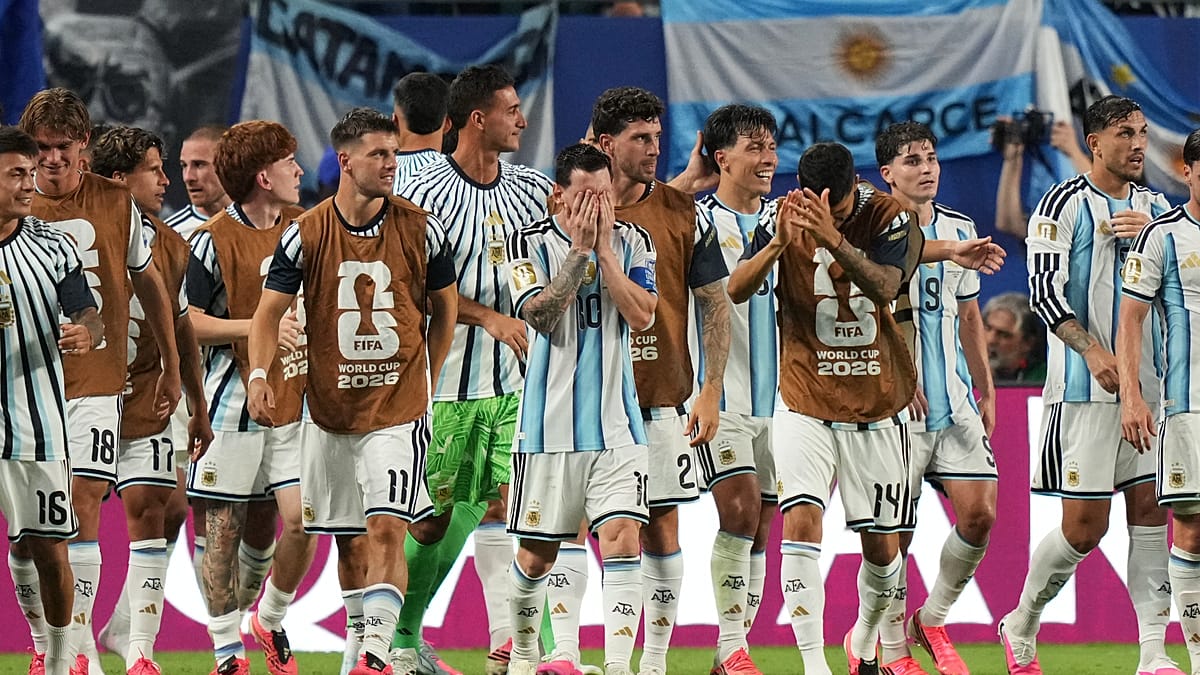
Few spectacles match the tension of knockout football, where every pass, rebound and mistake can reshape a nation’s hopes in seconds. Argentina World Cup scare became one of the tournament’s defining stories as the reigning giants were pushed to the brink by fearless newcomers Cape Verde before surviving a chaotic extra-time battle.
While the match belongs to sport, its structure felt almost architectural: pressure built in layers, momentum shifted like changing spatial sequences, and every moment carried dramatic weight. For readers interested in luxury architecture, luxury design and luxury interiors, this game offered an unexpected lesson in how staging, atmosphere and composition can turn an event into an unforgettable experience.
Argentina World Cup Scare: A Match Built on Rising Tension
The Argentina World Cup scare unfolded in Miami, where Lionel Messi’s side appeared in control before the contest transformed into a test of nerve. Argentina opened the scoring in the 29th minute when Messi finished calmly after superb control, a goal that suggested the favourites would eventually impose their authority.
Cape Verde, however, refused to follow the expected script. Deroy Duarte levelled in the second half with a low finish, shifting the emotional balance of the match and injecting belief into the underdogs. What followed was a gripping sequence in extra time:
- Lisandro Martínez restored Argentina’s lead with a fierce strike.
- Sidny Lopes Cabral answered with a stunning equaliser from the edge of the box.
- A late own goal off Diney Borges, following a Christian Romero header, ultimately sent Argentina through 3-2.
The Argentina World Cup scare was not simply about survival. It was about how a supposedly controlled encounter evolved into a high-intensity composition of risk, resilience and late drama.
The Underdog Performance That Redefined the Occasion
Cape Verde may have exited the competition, but they delivered one of the most memorable performances of the World Cup so far. Tournament newcomers often arrive with little expectation, yet their display against Argentina was bold, organised and fearless.
That quality mirrors the most admired work in luxury design: fresh voices can disrupt established hierarchies when they combine clarity, ambition and precision. Cape Verde’s tactical discipline, combined with moments of individual brilliance, elevated the match beyond a routine knockout fixture.
Key reasons their performance resonated included:
- Composure under pressure: They stayed competitive against elite opposition.
- Visual drama: Their equalising moments changed the emotional rhythm instantly.
- Narrative contrast: Football royalty was challenged by a debut nation with nothing to lose.
This is why the Argentina World Cup scare captured global attention. It gave audiences the rare mix of technical quality and raw unpredictability that defines great tournament nights.
Messi, Momentum and the Art of Big-Stage Control
Lionel Messi’s presence remains central to any Argentina story, and the Argentina World Cup scare once again highlighted how even the world’s best players must navigate volatile match environments. His opener showcased trademark control and anticipation, but the game around him became increasingly unstable as Cape Verde gained confidence.
In luxury interiors, the most impressive spaces are not necessarily those with the most decoration, but those with a commanding focal point. Messi functioned in a similar way: he anchored attention, set the tone early and provided Argentina with a sense of order amid rising disorder.
Why Argentina Still Advanced
Despite the scare, Argentina had enough high-level experience to manage the decisive moments. Their route to this stage, after wins over Algeria, Austria and Jordan to top Group J, suggested consistency. Against Cape Verde, though, they needed more than quality. They needed endurance.
Three factors proved decisive:
- Big-game experience in extra time
- Defensive persistence during repeated momentum swings
- Clinical reactions after conceding equalisers
The Argentina World Cup scare may raise questions about vulnerability, but it also reinforced the value of tournament maturity.
Egypt Edge Australia and Set Up a Heavyweight Last-16 Clash
Argentina’s reward is a round-of-16 meeting with Egypt in Atlanta after Mohamed Salah’s side beat Australia on penalties in Dallas. The Egypt-Australia game was tense rather than expansive, but it carried its own brand of pressure-filled drama.
Salah converted a cool Panenka in the shootout, underlining the technical confidence that separates elite forwards in defining moments. Australia, by contrast, suffered from costly misses as Harry Souttar blasted over and Lucas Herrington struck the bar. Egypt converted all four of their penalties to progress.
This sets up an intriguing next chapter after the Argentina World Cup scare. Egypt arrive organised, efficient and led by a player capable of deciding matches with one composed touch. Argentina progress with greater pedigree, but also with fresh reminders that knockout football punishes lapses instantly.
What to Watch in Argentina vs Egypt
The upcoming match could hinge on a few crucial details:
- Whether Argentina can regain defensive control
- How Egypt manages transitions around Salah
- Which side handles pressure better in key moments
- Whether fatigue from emotionally draining matches becomes a factor
Why This World Cup Story Resonates Beyond Sport
The Argentina World Cup scare stands out because it had all the qualities of exceptional storytelling: contrast, suspense, release and surprise. In visual and spatial design, memorable experiences are rarely flat. They rely on movement, rhythm and emotional layering. This match did exactly that.
There was also a broader tournament message in Miami: reputation alone guarantees nothing. Cape Verde’s near-upset, Egypt’s calm progress and Colombia’s 1-0 win over Ghana all pointed to a World Cup in which organisation and belief can narrow the gap between established powers and emerging challengers.
For global audiences, that unpredictability is the luxury element of modern sport. It creates rare, immersive moments that feel impossible to script and impossible to ignore.
Conclusion
The Argentina World Cup scare will be remembered as one of the most gripping knockout matches of the tournament, not only because Messi scored or because Argentina survived, but because Cape Verde made the contest unforgettable. With Egypt next, Argentina must respond quickly, tighten control and find a calmer structure if they want to continue their campaign. If this Argentina World Cup scare proved anything, it is that in football’s grandest setting, tension is part of the design and survival is never guaranteed.