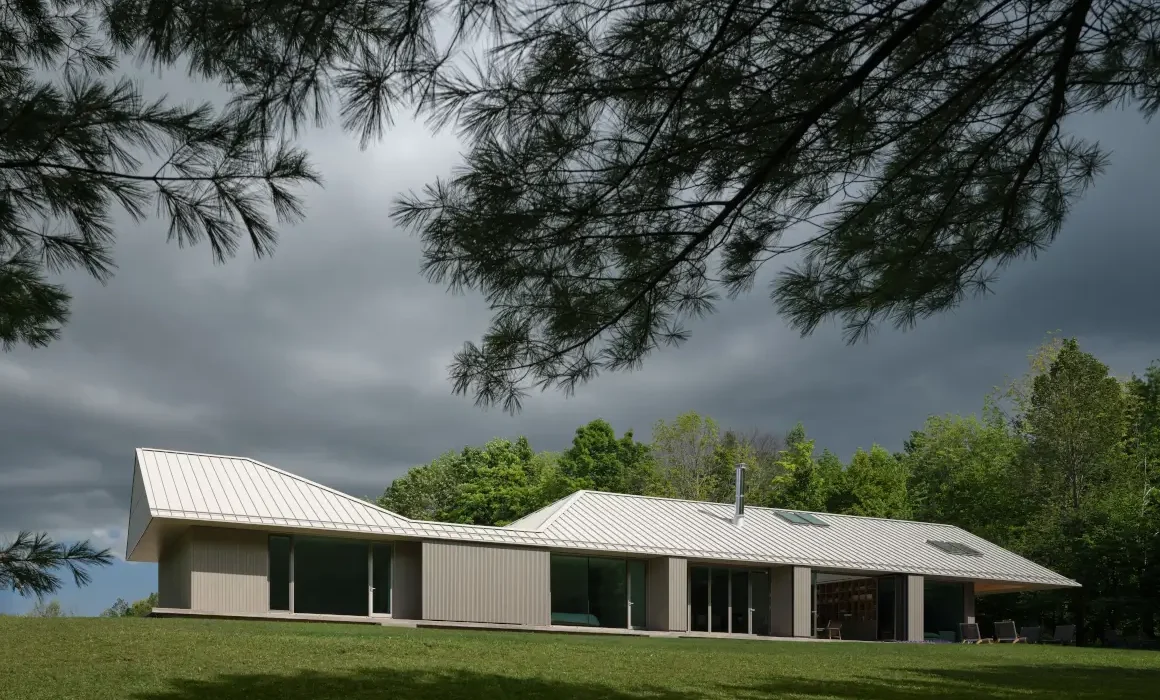
Great luxury homes do more than impress—they alter how we experience a place. Ridge House in rural Ontario is a striking example of iconic architecture, using a sculptural roof, restrained materials, and careful siting to make the home feel inseparable from the land around it.
Set within a natural ridge condition, this residence by Superkül rethinks the idea of the country retreat. Rather than dominate the site, the house appears to settle into it, creating a refined balance between bold form and environmental sensitivity. For readers exploring luxury architecture, luxury home design, and landscape-led living, Ridge House offers a compelling lesson in how contemporary design can feel both dramatic and deeply grounded.
Ridge House and the Power of Iconic Architecture
What makes a home memorable is not simply its size or price point. In the best cases, iconic architecture emerges from a clear concept executed with discipline. At Ridge House, that concept is expressed through a roofline that reads almost like an extension of the terrain itself.
The roof is not treated as a cap placed on top of a conventional structure. Instead, it becomes the defining architectural gesture—one that helps dissolve the visual boundary between house and landscape. This approach gives the home a sculptural identity while preserving the quiet character of its rural setting.
Key design qualities that elevate the project include:
- A low, land-responsive profile that reduces visual intrusion
- A sculptural roof form that unifies architecture and site
- Natural material expression suited to a countryside context
- Expansive glazing that frames views without overwhelming the composition
- A restrained palette that supports timeless luxury design
In this way, the project demonstrates how iconic architecture can be expressive without becoming excessive.
How the Sculptural Roof Blends the Home Into the Land
The roof is the home’s defining feature, but its success lies in what it accomplishes beyond aesthetics. It mediates scale, softens the building’s presence, and creates a visual rhythm that echoes the ridge and surrounding topography.
Rather than presenting a rigid, box-like volume, the roof introduces movement and continuity. That gesture helps the house appear embedded in the site, almost as though it has been shaped by the same forces that formed the land itself. This is where iconic architecture becomes experiential: the building is not only viewed, but felt as part of the environment.
A Landscape-First Design Strategy
Landscape-driven architecture often succeeds because it begins with observation. In rural luxury homes, this means responding to slope, vegetation, light conditions, and long-range views. Ridge House appears to embrace that strategy fully, allowing the architecture to follow the logic of the site rather than impose a disconnected formal statement.
This design approach aligns with current preferences in luxury real estate and high-end residential architecture, where clients increasingly value privacy, serenity, and environmental integration as much as visual distinction.
Why the Roof Form Matters in Luxury Home Design
In premium residential design, a roof can do far more than provide shelter. It can define spatial character, improve the building’s relationship to climate, and establish an instantly recognizable silhouette. Here, the roof likely contributes to:
- Reducing the apparent scale of the residence
- Creating dynamic interior volumes beneath its geometry
- Guiding water, light, and seasonal performance
- Giving the home a signature identity within contemporary Canadian architecture
That combination of form and function is one reason Ridge House resonates as iconic architecture rather than mere visual novelty.
Luxury Architecture That Prioritizes Restraint
Many of today’s most admired homes embrace a quieter form of luxury. Instead of relying on ornament or spectacle, they focus on proportion, craftsmanship, and connection to nature. Ridge House fits this evolution perfectly.
Its appeal likely comes from disciplined choices: clean lines, understated detailing, and materials selected to age gracefully within the rural environment. This is the kind of iconic architecture that speaks to design sophistication rather than trend chasing.
For readers interested in adjacent topics, this home also reflects core themes in luxury design and luxury decor:
- Minimalist interiors that let architecture lead
- Natural textures such as wood, stone, and metal
- Indoor-outdoor continuity for a more expansive living experience
- Curated furnishings that complement, rather than compete with, the envelope
That restraint is often what gives a project longevity. It allows the architecture to remain relevant long after more trend-driven homes feel dated.
Lessons Ridge House Offers for Contemporary Country Living
Beyond its visual impact, Ridge House points to broader shifts in how luxury homeowners define comfort and prestige. Increasingly, the most desirable residences are those that create emotional calm, support wellness, and connect inhabitants to the rhythms of the natural world.
This project suggests several takeaways for architects, designers, and homeowners:
- Start with the site: The land should shape the architecture, not the reverse.
- Use one strong gesture well: A singular idea, like the sculptural roof, can organize the entire home.
- Choose enduring materials: Timeless palettes create elegance without excess.
- Frame nature deliberately: Windows, terraces, and circulation should choreograph views.
- Pursue quiet luxury: Sophistication often comes through clarity and restraint.
These principles are increasingly central to iconic architecture in rural and resort settings, especially where privacy and natural beauty are integral to the living experience.
Why Ridge House Stands Out in Canadian Residential Design
Canada has a strong tradition of contemporary homes that engage climate, landscape, and material honesty. Ridge House adds to that conversation with a particularly poetic response to place. Its sculptural expression gives it presence, yet its low-slung integration with the ridge preserves a sense of humility.
That tension—between statement and subtlety—is what makes the project so compelling. It does not seek attention through excess. Instead, it earns distinction by refining the relationship between shelter and site. In an era when many luxury properties chase visibility, this home shows the enduring value of design that belongs to its setting.
For anyone studying iconic architecture, Ridge House is a reminder that the most powerful homes are not always the loudest. Sometimes the most memorable design is the one that nearly disappears into the land.
Conclusion
Ridge House demonstrates that iconic architecture can be both sculptural and serene. Through its land-hugging form, expressive roof, and restrained material palette, the home redefines rural luxury as something deeply connected to place. For architects, homeowners, and design enthusiasts alike, the clear takeaway is this: the finest luxury homes do not fight the landscape—they complete it.