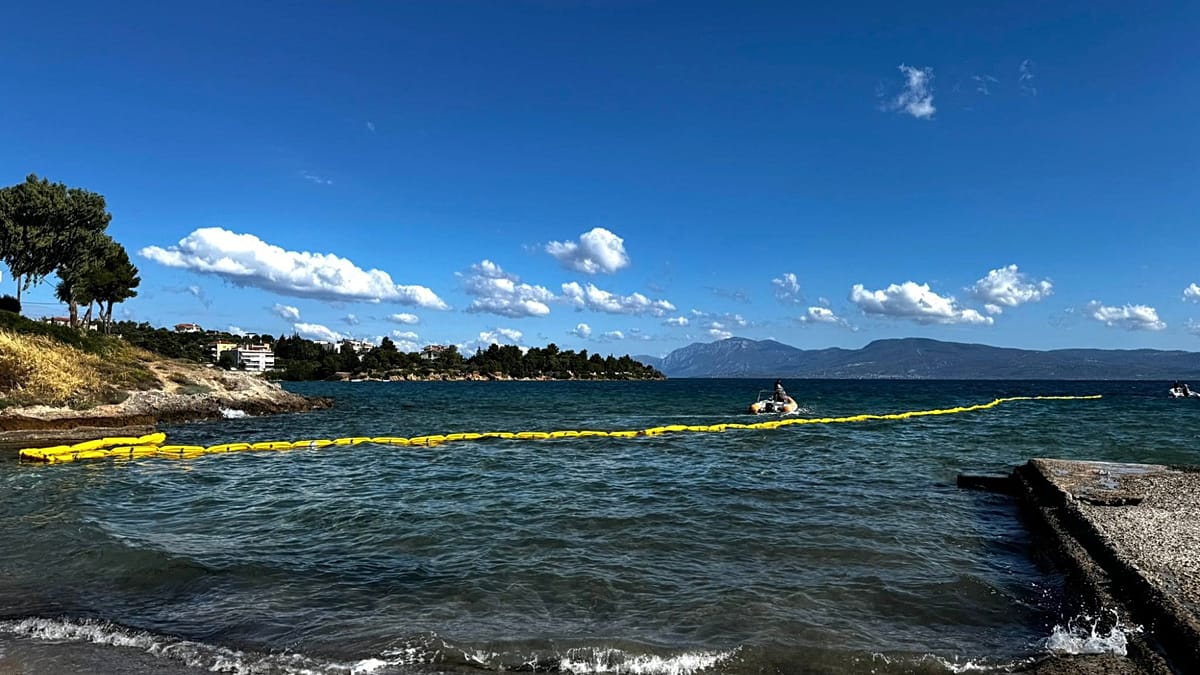
On the world’s most desirable coastlines, the beach is more than scenery—it is part of the luxury experience. That is why floating barriers in Greece are attracting attention not only from swimmers and local authorities, but also from architects, developers, and hospitality brands focused on premium waterfront living.
Recent installations along beaches in the Municipality of Chalkideon, on the northern Euboean Gulf, highlight a practical coastal intervention with surprising relevance for the luxury property market. Designed to reduce the entry of jellyfish, pufferfish, floating waste, and surface pollution into designated bathing zones, these systems could reshape how high-end resorts, villas, and beach clubs think about seaside amenity design.
Why floating barriers in Greece matter to luxury coastal design
For luxury architecture and interiors, value increasingly depends on experience. A private terrace, a sculptural infinity pool, or a beautifully detailed beach pavilion means little if the adjacent sea feels unsafe or unusable. The appeal of floating barriers in Greece lies in their ability to support a more controlled, premium beachfront environment.
In Chalkideon, the municipality began rolling out the barriers in mid-June, starting at Rodies beach, with further installations planned across several beaches including Alykes, Mpourntontas, Valopoula, Kalamia, and Zephyros. Similar systems are also planned by the Ports Organisation of Evia for beaches under its authority.
For luxury developers, this signals a broader trend: coastal infrastructure is becoming part of the design conversation. Just as landscaping, lighting, and wellness spaces are curated, swimmable shoreline zones may soon be treated as an intentional design asset.
How floating barriers work in practice
Experts note that floating barriers in Greece can be effective, but only when installed correctly. Their success depends less on the concept itself and more on execution, maintenance, and site conditions.
The basic design principle
The barrier must create a closed protected area in the water. Typically, it begins at the shore, extends outward into deeper water, and returns to land, forming a semi-circular or rectangular safety zone.
To function properly, the system includes:
- Weighted lower netting that sits on or very close to the seabed
- Reinforced floating buoys that rise roughly 30 to 50 centimetres above the waterline
- A continuous enclosure with minimal openings where marine life could pass through
- Regular cleaning and inspection to prevent seaweed buildup, structural stress, or tears
This means floating barriers in Greece are not a decorative add-on. They are marine infrastructure requiring engineering precision and operational upkeep.
Can they stop jellyfish and pufferfish?
According to expert guidance cited in the source reporting, yes—within the enclosed area. If installed correctly, the barriers can prevent jellyfish and fish, including pufferfish, from entering the designated swimming zone. However, they only protect the specific area they surround, not an entire coastline.
That distinction matters for luxury resorts and private beachfront communities. A barrier can enhance a curated swim area, but it is not a universal solution for all nearshore waters.
What this means for luxury resorts, villas, and branded residences
The rise of floating barriers in Greece introduces a new layer of thinking for high-end waterfront projects. For luxury hospitality and residential design, the shoreline is effectively an outdoor room—one that now may benefit from technical planning similar to a pool, marina, or spa facility.
Design opportunities
When approached intelligently, protected bathing zones can support:
- More reliable guest access to the sea during peak season
- Improved perception of safety and cleanliness
- Enhanced marketability for beach clubs and wellness-led resorts
- Better alignment between landscape architecture and marine use
- Stronger visual and experiential value for seafront properties
In premium developments, even small improvements in swim comfort can elevate the overall brand story. Buyers and guests are increasingly drawn to seamless indoor-outdoor living, and the water itself is part of that promise.
Design limitations to consider
Still, floating barriers in Greece are not without trade-offs. One reported issue at Rodies beach was that the barrier may have been installed in water that felt too shallow, limiting space for swimmers. This is an important lesson for luxury settings, where practicality and aesthetics must work together.
Potential challenges include:
- Visual impact: Barriers can affect pristine sea views if poorly integrated
- User experience: If the enclosed area is too small, bathers may feel restricted
- Maintenance burden: Without frequent cleaning, nets can sag, tear, or become unsightly
- Site specificity: Currents, seabed conditions, and wave exposure all influence performance
For luxury architects and designers, the takeaway is clear: marine barriers should be planned as part of the coastal masterplan, not added as an afterthought.
Blending marine safety with high-end coastal aesthetics
The most compelling future for floating barriers in Greece may lie in discreet integration. In luxury environments, every functional element is expected to contribute to a cohesive visual language. That opens the door to more refined approaches in materials, buoy profiles, access points, and shoreline detailing.
Developers and hospitality operators could work alongside marine engineers, landscape architects, and environmental consultants to create protected swim zones that feel intentional rather than improvised. Done well, this kind of intervention can support the luxury promise of comfort, exclusivity, and ease.
It also reflects a wider shift in luxury design: resilience is becoming aspirational. Today’s premium coastal projects are judged not just by finishes and form, but by how effectively they respond to environmental realities.
Are floating barriers a smart investment?
For the right site, floating barriers in Greece could be a valuable amenity upgrade. They are especially relevant where jellyfish blooms, invasive species, or floating pollution regularly disrupt swimming. But their value depends on correct positioning, sufficient depth, full enclosure, and disciplined maintenance.
In other words, the barriers work best when they are treated as a managed system rather than a one-time installation. For luxury beachfront properties, that mindset aligns well with the broader demands of premium operations.
As coastal design evolves, protected sea access may become as important as shaded terraces, bespoke interiors, and spa programming. Floating barriers in Greece show how marine infrastructure can support luxury living—provided design ambition is matched by technical care. The clear takeaway: on elite coastlines, a swimmable sea is no longer just nature’s gift; it is increasingly part of the design brief.