UK sanctions on Russian chemical weapons labs have intensified the diplomatic and security pressure surrounding Moscow’s alleged use of toxic agents. While the story emerges from foreign policy and international law, it also speaks to a broader climate of risk, resilience, and protected environments that increasingly shapes conversations across luxury architecture, luxury design, and luxury interiors.
The British government announced new sanctions targeting seven Russian scientists and two research institutions accused of supporting the development of chemical agents linked to the Salisbury Novichok poisoning in 2018 and the poisoning of Russian opposition figure Alexei Navalny. The measures arrive at a moment of heightened geopolitical scrutiny, just ahead of a major NATO summit expected to focus heavily on the war in Ukraine and wider European security.
Why the UK sanctions on Russian chemical weapons labs matter
The latest move by London is not simply symbolic. UK sanctions on Russian chemical weapons labs are aimed at disrupting the expertise, research capability, and institutional infrastructure allegedly connected to the creation and testing of banned toxic substances.
According to the UK Foreign Office, the sanctions hit:
- SC Signal, a Russian state scientific research institute
- GNIII VM, Russia’s Scientific Research and Testing Institute for Military Medicine
- Seven scientists, including directors and technical specialists tied to those entities
British officials say these organisations and individuals played roles in developing chemical materials associated with attacks that shocked Europe and triggered global condemnation. By targeting both institutions and personnel, the UK appears to be pursuing a more precise sanctions strategy focused on capability denial rather than broad political messaging alone.
The legacy of Salisbury and the Novichok threat
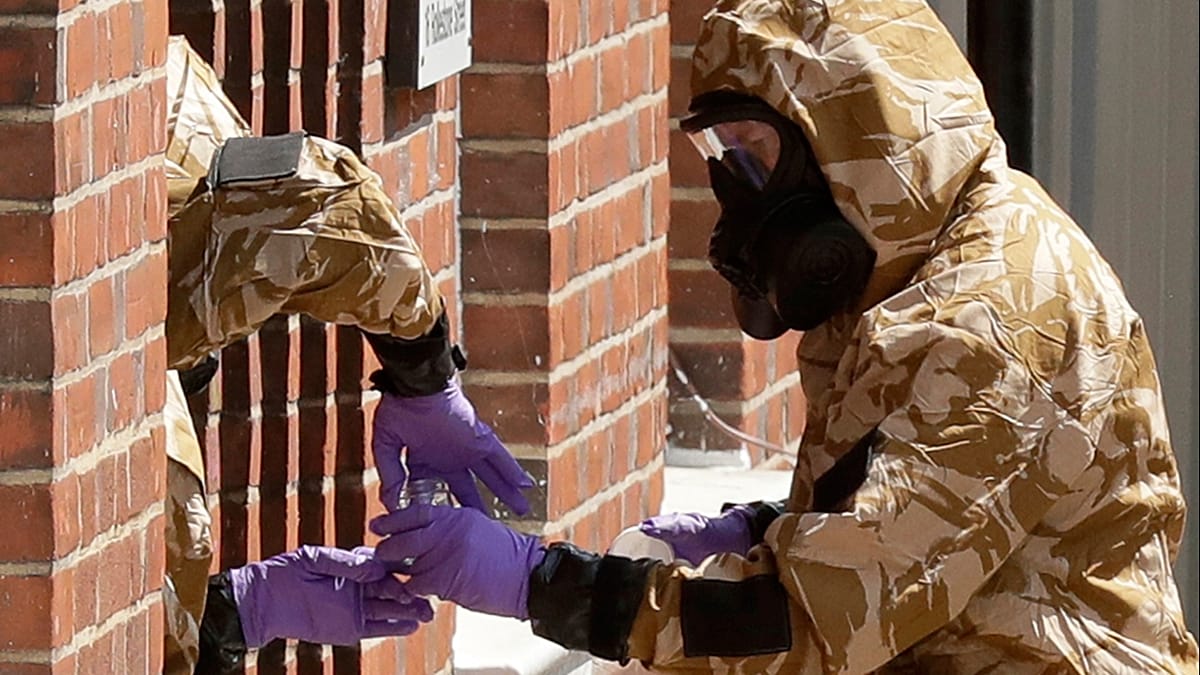
Any discussion of UK sanctions on Russian chemical weapons labs inevitably returns to Salisbury. In March 2018, former Russian spy Sergei Skripal and his daughter were poisoned in the English city using Novichok, a Soviet-developed nerve agent. The incident marked the first offensive use of chemical weapons in Europe since World War II, according to longstanding public accounts.
The attack had consequences far beyond the initial crime scene:
- It caused a major international diplomatic crisis.
- Western governments expelled large numbers of Russian diplomats.
- Public concern over covert toxic exposure rose sharply.
- A British civilian later died after coming into contact with a discarded container believed to have carried the agent.
The Salisbury poisoning changed how governments, security planners, and even private property stakeholders think about contamination, controlled access, and environmental safety. In high-end real estate and luxury interiors, conversations around air quality, filtration, secure storage, and resilient building systems have only grown since then, even if driven by a wide range of threats rather than one event alone.
Navalny case adds renewed urgency
The UK says the same sanctions framework also responds to the poisoning of Alexei Navalny, the Russian opposition figure who was attacked with a chemical agent in Siberia in 2024. Navalny, one of President Vladimir Putin’s most prominent critics, later died in an Arctic prison colony in February 2024 while serving a 19-year sentence.
By linking these cases, UK sanctions on Russian chemical weapons labs send a clear message: alleged chemical attacks will continue to carry personal, institutional, and diplomatic consequences. British Foreign Secretary Yvette Cooper described Russia’s repeated use of chemical weapons as a violation of international law and a threat to global security.
That language matters. It frames the issue not only as a bilateral dispute between London and Moscow, but as part of a rules-based international order in which chemical weapons remain uniquely prohibited.
How sanctions fit into the broader Russia strategy
The announcement also reflects the scale of Britain’s wider response to Russia’s full-scale invasion of Ukraine. The Foreign Office says the UK has now sanctioned more than 3,400 individuals and organisations connected to Moscow’s war effort or related conduct.
In that context, UK sanctions on Russian chemical weapons labs represent one strand of a much larger pressure campaign that includes:
- Financial restrictions
- Travel bans
- Asset freezes
- Trade limitations
- Targeted measures against military, political, and scientific actors
Sanctions policy is often judged by whether it changes state behaviour immediately, but its real effect is frequently cumulative. It can isolate networks, increase transaction costs, deter collaboration, and make it harder for institutions to access international partnerships, procurement channels, and technical resources.
What this means beyond foreign policy
Although the subject is geopolitical, the ripple effects touch sectors far outside diplomacy. For luxury architecture and luxury design, international instability increasingly influences how elite spaces are conceived and protected. Wealth preservation today is not just about aesthetics; it is also about continuity, safety, and environmental control.
Design lessons from an age of heightened risk
Premium residential and hospitality projects are paying closer attention to:
- Advanced HVAC and air purification systems
- Secure delivery and screening zones
- Material resilience and contamination response planning
- Discreet surveillance and access control
- Private wellness rooms and sealed refuge spaces
These features are not direct responses to one sanctions announcement, but they reflect the same reality: luxury interiors are increasingly expected to combine beauty with preparedness. Clients at the highest end of the market want homes and private environments that feel serene, yet are engineered for uncertainty.
Security is becoming part of modern luxury
In the past, prestige design focused heavily on craftsmanship, rarity, and visual impact. Today, true luxury also includes invisible systems that protect occupants without compromising elegance. Whether in a penthouse, country estate, embassy residence, or branded luxury development, security-led design is becoming a sophisticated selling point.
That makes headlines like UK sanctions on Russian chemical weapons labs relevant in unexpected ways. They reinforce the reality that global events influence how premium spaces are imagined, built, and managed.
Conclusion
UK sanctions on Russian chemical weapons labs mark another serious escalation in Britain’s response to alleged chemical attacks tied to Russian state-linked actors. By targeting research institutes and scientists, London is focusing on the technical backbone behind prohibited weapons, not just the political leadership around them.
The wider takeaway is clear: security, accountability, and resilience now shape far more than diplomacy. From international law to luxury interiors, the demand for protected, future-ready environments is only growing. In that sense, UK sanctions on Russian chemical weapons labs are not just a foreign policy headline—they are part of a broader story about how instability reshapes the world around us.