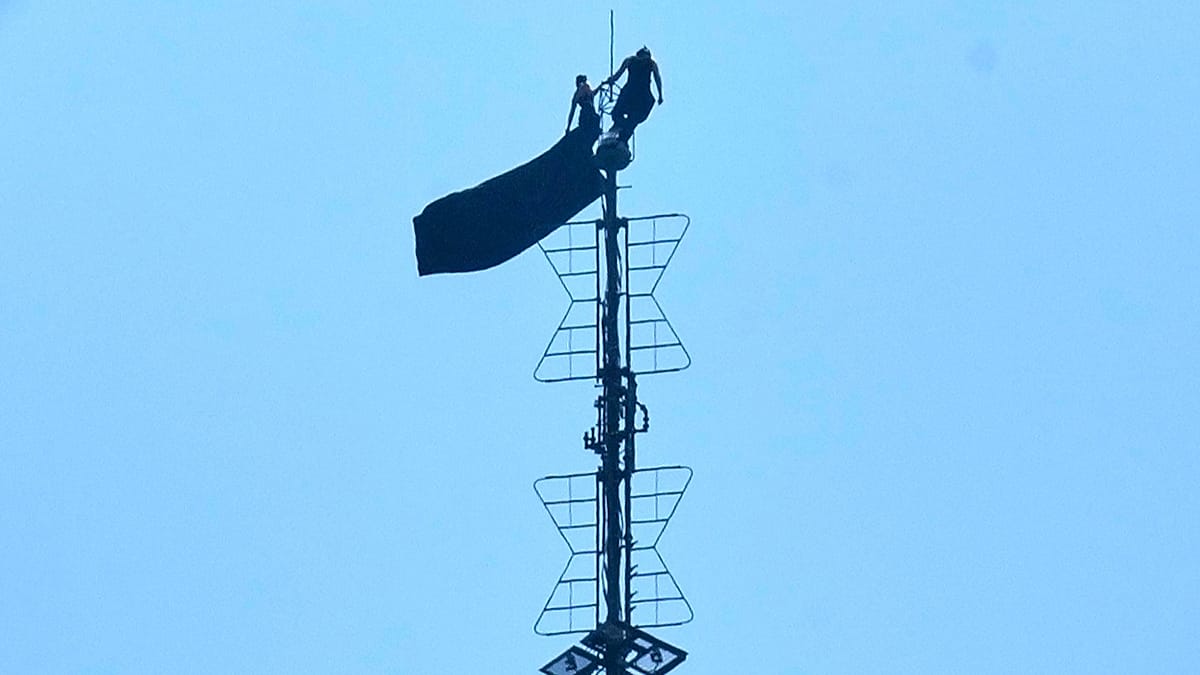
The Empire State Building, one of the most recognisable achievements in luxury architecture and Art Deco design, became the focus of global attention after two masked individuals climbed its antenna and unfurled a banner high above Midtown Manhattan. The dramatic incident blended spectacle, symbolism and serious security concerns, raising fresh questions about how access was gained to one of New York’s most closely managed landmarks.
According to reports, the pair dressed in black, balanced on a narrow ledge near the top of the skyscraper’s antenna and displayed a banner carrying a peace-themed message. Helicopter footage showed the two embracing on the structure before carefully descending. Police later took both into custody, and authorities said no injuries were reported.
The Empire State Building Incident: What Happened
The event unfolded around midday, when bystanders and office workers noticed unusual activity on the antenna of the Empire State Building. The pair appeared far above the public observation areas, standing on exposed metal framework at an elevation that underscored both the danger of the act and the difficulty of reaching that point.
The banner they displayed referenced “the power of love,” turning the unauthorised climb into a highly visible public statement. Video images also appeared to show one individual kneeling, followed by an embrace and selfies, adding a theatrical dimension to the stunt.
By early afternoon, the two climbers had descended and were arrested by police. Officials confirmed that:
- No one inside the building was harmed
- No injuries were reported among the climbers or emergency responders
- The action was considered unauthorised by building management
Why the Empire State Building Remains an Architectural Icon
Beyond the headlines, the episode has renewed fascination with the Empire State Building itself. Completed in 1931, the tower remains a defining example of Art Deco architecture, celebrated for its soaring vertical lines, limestone facade, setback massing and instantly recognisable crown and antenna.
For readers interested in luxury architecture, the building represents more than a tourist attraction. It is a case study in enduring design prestige:
- Architectural legacy: A masterpiece of early 20th-century skyscraper engineering
- Design influence: Its silhouette continues to shape luxury towers and branded residences worldwide
- Interior heritage: The restored lobby remains a benchmark for glamorous, historically sensitive design
- Cultural status: It occupies a rare position where real estate, design and popular culture intersect
That iconic status is exactly why any breach at the Empire State Building attracts such intense public scrutiny.
Security Concerns at a High-Profile Landmark
One of the biggest questions following the stunt is how the pair accessed a highly restricted area. Visitors to the Empire State Building typically pass through screening procedures, and building rules prohibit a range of items, including oversized packages, sports equipment and costume-related accessories.
Office workers and onlookers reportedly expressed disbelief that the climbers made it beyond those layers of control. Management described the incident as unauthorised and said it posed no danger to people inside the building, but did not immediately explain how the antenna was reached.
For operators of luxury properties and landmark buildings, this moment highlights several broader concerns:
- Access control: Even world-famous properties must continually reassess restricted-area protocols.
- Reputation management: Incidents at iconic buildings can quickly become global news.
- Visitor experience: Closures and disruptions affect paying guests and tourism operations.
- Risk exposure: Public stunts can create safety, legal and insurance implications.
What This Means for Luxury Architecture and Building Design
While the Empire State Building is a historic office tower rather than a newly built luxury residence, the lessons extend across the high-end property sector. Prestige architecture increasingly combines public visibility with private security, particularly in mixed-use developments that include offices, observation decks, hospitality and premium amenities.
Design Must Balance Access and Exclusivity
Luxury architecture often celebrates openness, dramatic views and seamless movement through space. But landmark properties also need clearly layered security zones. The challenge is preserving elegance without compromising protection.
In practical terms, this can involve:
- Discreet surveillance integrated into heritage-sensitive spaces
- Restricted service routes and monitored staff access points
- Advanced screening technology that does not diminish the guest experience
- Real-time incident response planning for highly visible buildings
Historic Buildings Face Unique Challenges
The Empire State Building demonstrates a common issue in luxury preservation: older structures were not originally designed for today’s security expectations. Retrofitting systems into celebrated architectural environments requires careful coordination between design teams, building managers and preservation specialists.
That is especially relevant for iconic interiors, where intrusive barriers or heavy-handed interventions can undermine the very design value that makes a property prestigious.
Public Fascination, Media Spectacle and Brand Impact
Part of the reason this story travelled so quickly is that the Empire State Building sits at the crossroads of architecture, tourism and image culture. Any unusual event there is instantly amplified through social media, aerial footage and international news coverage.
For luxury brands and destination properties, this serves as a reminder that visibility cuts both ways. Landmark status creates aspirational appeal, but it also increases the stakes when something unexpected happens.
Even so, the building’s legacy is unlikely to be diminished by a single incident. If anything, the episode reinforces how powerfully the Empire State Building still captures the public imagination nearly a century after its completion.
Conclusion: An Icon Under the Spotlight
The banner stunt has left authorities, visitors and property observers asking how two people managed to scale the antenna of the Empire State Building and turn a legendary skyscraper into the stage for a risky public display. Beyond the arrests, the incident has spotlighted a larger issue facing luxury architecture: how to protect iconic spaces without sacrificing the openness, beauty and prestige that define them.
For architects, developers and building operators, the takeaway is clear. The Empire State Building remains a symbol of timeless design excellence, but even the world’s most celebrated landmarks must continuously evolve their security strategies to match their global visibility.