
The EU sanctions Navalny poisoning case has taken a new turn, with member states agreeing to blacklist six Russian nationals allegedly tied to the chemical substance believed to have caused Alexei Navalny’s death. The move adds fresh pressure on individuals connected to Russia’s chemical weapons research and signals that Brussels is still willing to use targeted sanctions in high-profile human rights cases.
Although the story sits firmly in the geopolitical arena, it also reflects a wider European concern with accountability, state power and cross-border legal enforcement. For readers tracking the intersection of policy, global affairs and elite European influence, this latest sanctions package is a significant development.
EU sanctions Navalny poisoning case: what happened?
According to the latest decision by EU member states, six Russian scientists and researchers will now face:
- EU-wide travel bans
- Asset freezes across the bloc
- Restrictions on access to financial holdings within EU jurisdictions
The sanctions are linked to allegations that these individuals were involved in Russia’s military chemical weapons programme, particularly the development of epibatidine, the toxic substance reportedly detected on Navalny’s body after his death in February 2024.
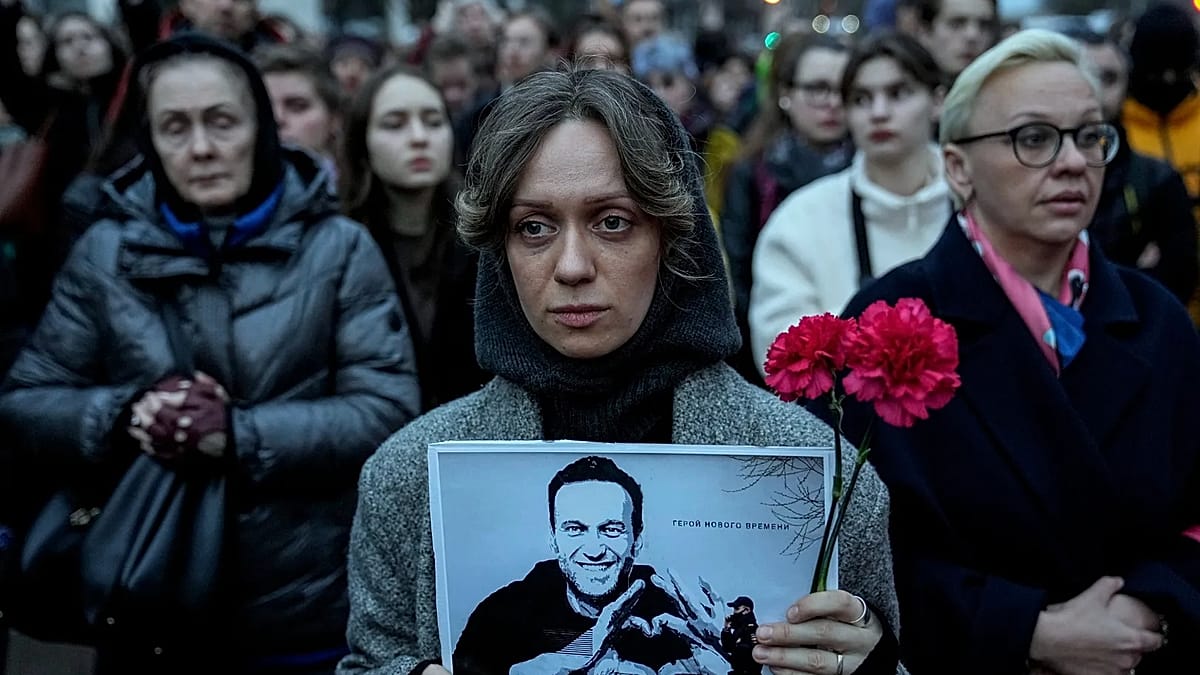
Navalny, the most prominent Russian opposition figure of his generation, died while held in a penal colony after years of imprisonment, prosecution and earlier poisoning allegations. European investigations have since concluded that chemical poisoning was responsible for his death, prompting a renewed push for accountability.
Who are the six people targeted?
The new blacklist focuses on specialists said to have direct or indirect roles in chemical weapons research. Among the most notable names are:
- Igor Babkin, head of the Signal Scientific Centre, the laboratory considered responsible for synthesising epibatidine
- Irina Derevyagina, a chemical research analyst at Russia’s State Research Institute of Organic Chemistry and Technology
- Mikhail Gutsalyuk, who heads the scientific department at the Military Academy of Radiological, Chemical and Biological Defence
While the full sanctions listing extends beyond these figures, the inclusion of senior scientific personnel is especially notable. It suggests the EU is targeting not only political actors or security officials, but also the technical infrastructure behind suspected chemical weapons activity.
Why the Navalny case still matters in Europe
The EU sanctions Navalny poisoning case is about more than one legal measure. It is also a symbol of Europe’s broader struggle over democratic values, state repression and the enforcement of international norms.
Navalny had long been seen as a central critic of corruption in Russia. After surviving a previous poisoning attempt in 2020, he returned to Russia in 2021 and was swiftly arrested. He later faced additional extremism-related charges, received a 19-year sentence and was transferred to an Arctic maximum-security prison, where he was reported dead on 16 February 2024.
For European institutions, the case remains politically charged for several reasons:
- It raises questions about the use of banned or restricted toxic agents
- It keeps attention on Russia’s alleged chemical weapons capacity
- It reinforces the EU’s use of sanctions as a foreign-policy tool
- It signals continued support for dissidents and anti-corruption activists
How EU sanctions work in practice
In the EU sanctions Navalny poisoning case, the penalties are targeted rather than economy-wide. That distinction matters. These measures are designed to hit named individuals by limiting their movement and financial reach without automatically affecting the broader civilian population.
Asset freezes
If sanctioned individuals hold bank accounts, investments or other financial assets within the European Union, those resources can be frozen. In practice, that means they cannot access or move funds under EU jurisdiction.
Travel bans
The listed individuals are also barred from entering or transiting through EU member states. This closes off personal mobility across the bloc and often carries reputational consequences beyond the legal restrictions themselves.
Political messaging
Sanctions also send a diplomatic signal. The EU uses them to demonstrate that certain actions, especially those involving alleged human rights abuses or chemical weapons development, will carry consequences in international forums.
A wider context: pressure on Russia continues
The decision arrives amid ongoing debate within Europe over how far to extend sanctions pressure on Russia. While EU capitals have sometimes differed on timing and scope, the agreement on this package shows continued alignment when it comes to emblematic cases with strong evidence and political resonance.
The EU sanctions Navalny poisoning case also fits into a much larger sanctions architecture that includes measures related to Russia’s leadership, military sector, technology access and international financial ties. What makes this case stand out is its personal and symbolic dimension.
Rather than focusing on abstract institutions alone, this action names individuals linked to the scientific and operational chain behind a suspected poison attack. That can have a powerful impact on public perception and on future investigations.
What happens next?
The latest sanctions are unlikely to be the final word. Possible next steps could include:
- Additional designations if further evidence emerges
- Closer coordination with allied governments outside the EU
- Expanded scrutiny of entities connected to Russian chemical research
- Continued monitoring of legal and forensic findings related to Navalny’s death
Whether these measures alter behaviour on the ground is harder to predict. Sanctions often work gradually, combining financial pressure, diplomatic isolation and long-term reputational cost rather than immediate policy reversals.
Conclusion
The EU sanctions Navalny poisoning case underscores Europe’s determination to respond to allegations of politically motivated chemical poisoning with targeted legal action. By blacklisting six Russian scientists and researchers, the EU is drawing a direct line between forensic findings, accountability and foreign-policy enforcement. The clearest takeaway is this: in cases involving dissidents, chemical agents and alleged state-linked actors, Europe intends to keep raising the cost of impunity.