

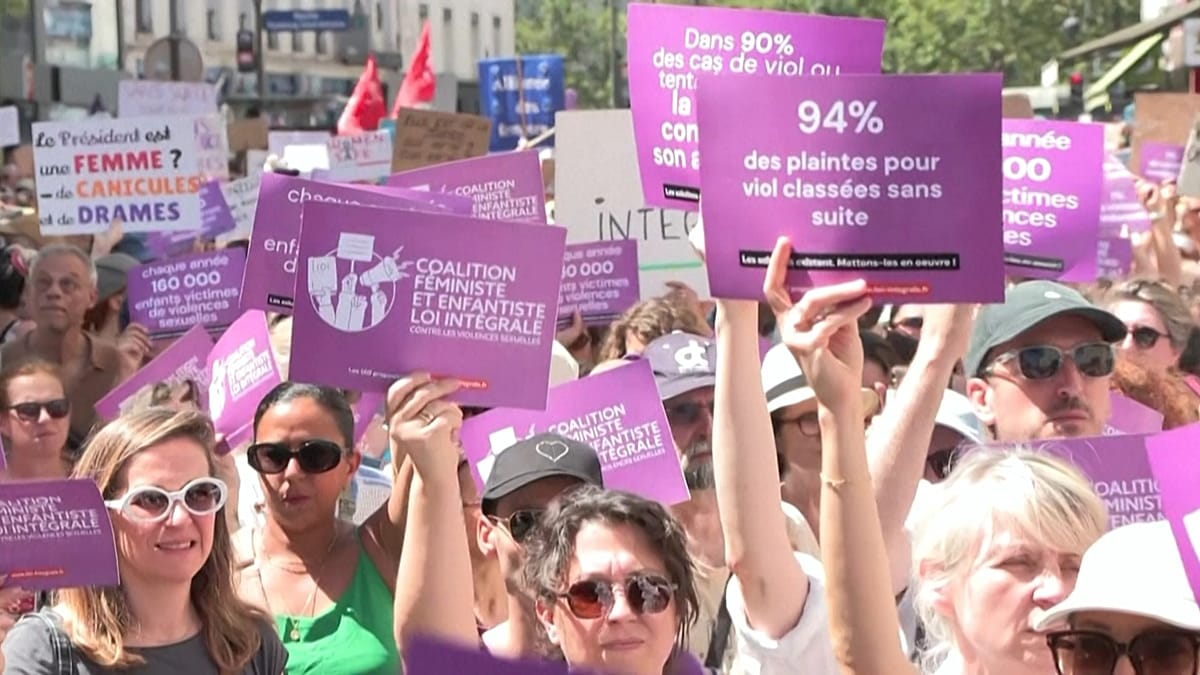
Luxury interiors are often judged by beauty, craftsmanship, and exclusivity, but the latest protests in France point to a deeper question: can elite spaces also be designed for safety, dignity, and protection? As thousands marched across France demanding stronger action against sexual violence after the murder of 11-year-old Lyhanna, the conversation reaches beyond policy and into the built environment, where luxury architecture and luxury design increasingly shape how people live, gather, and seek refuge.
While the demonstrations focused on legal reform, prevention, and support for victims, they also highlight a growing truth for the design world: spaces are never neutral. From private residences to boutique hotels, schools, cultural venues, and high-end residential developments, luxury interiors can support wellbeing when they are planned with visibility, security, privacy, and trauma-informed principles in mind.
Why France’s protests matter to luxury interiors
The nationwide mobilisation in France was triggered by widespread anger over institutional failures in the Lyhanna case. Activists, feminist groups, and child protection organisations are calling for a comprehensive legal framework that addresses prevention, judicial response, and victim support. For professionals in luxury architecture and luxury design, this public reckoning underscores how systems of care must extend into physical environments.
Luxury interiors are part of that system. The most sophisticated projects no longer focus only on premium materials or statement aesthetics. Increasingly, they are expected to deliver:
- Clear sightlines and intuitive circulation
- Secure yet discreet access control
- Private zones for vulnerable users
- Acoustic comfort and emotional calm
- Lighting strategies that improve safety without harshness
- Layouts that balance openness with protection
In short, good design can reduce risk, support supervision, and foster a stronger sense of trust.
How luxury architecture can respond to calls for safer spaces
When public concern turns to prevention, luxury architecture has an opportunity to lead by example. High-end developments often set trends that later influence mainstream residential and commercial design. That makes safety-conscious planning especially important.
1. Designing for visibility without sacrificing elegance
One of the core tensions in luxury interiors is the desire for intimacy and seclusion. However, overly hidden corridors, isolated amenities, or poorly monitored transition zones can create vulnerabilities. Designers can preserve exclusivity while improving oversight through subtle planning choices, such as layered transparency, strategically placed glazing, and circulation routes that avoid dead ends.
Rather than relying on overtly institutional security, luxury design can embed protection into the architecture itself. Materials, partitions, and lighting can all guide movement in a way that feels natural and refined.
2. Privacy that protects rather than isolates
Privacy is central to luxury living, but privacy should never mean unsafe seclusion. In wellness suites, children’s areas, guest wings, and staff circulation routes, thoughtful adjacency planning is essential. Luxury architecture can create protected retreats while maintaining accountability through controlled access, passive supervision, and smart zoning.
This is especially relevant in family residences, branded residences, and luxury hospitality projects where multiple user groups occupy the same property.
3. Integrating discreet technology
Modern luxury interiors increasingly incorporate hidden technology, and safety systems should be part of that conversation. Integrated sensors, silent alert systems, secure entry points, and managed surveillance in common areas can all contribute to safer environments when handled ethically and sensitively.
The key is discretion. In premium spaces, technology should support comfort and security without undermining the serene atmosphere that clients expect.
Trauma-informed luxury design is becoming essential
The protests in France also point to the importance of victim support, not just prevention. This has major implications for luxury interiors in healthcare-adjacent settings, private clinics, hospitality spaces, schools, and community facilities funded by high-end development.
Trauma-informed luxury design considers how space affects the nervous system. It moves beyond visual opulence to create environments that feel safe, legible, and calm.
Key features of trauma-informed luxury interiors
- Soft, layered lighting instead of stark illumination
- Natural materials that evoke warmth and stability
- Predictable layouts that reduce confusion and stress
- Sound insulation for privacy and comfort
- Comfortable waiting or transition spaces
- Biophilic elements that support emotional regulation
In this context, luxury interiors become more than aspirational settings. They become environments that actively support human wellbeing.
The business case for safer luxury interiors
There is also a compelling commercial reason for prioritising safety-led design. Buyers, investors, and hospitality guests are more attuned than ever to the relationship between environment and wellbeing. In premium markets, reputation is everything, and projects that demonstrate care, responsibility, and future-focused planning are likely to command greater trust.
Developers and designers working in luxury architecture can differentiate themselves by showing that protection and beauty are not opposing ideas. In fact, the most forward-thinking luxury design increasingly treats them as inseparable.
This shift is visible in several trends:
- Wellness-led residential design
- Family-focused amenity planning
- Secure luxury hospitality concepts
- High-end educational and cultural spaces with enhanced safeguarding
- Smart-home systems that blend convenience with security
As public expectations evolve, luxury interiors that ignore these priorities may begin to feel outdated, no matter how visually impressive they are.
What designers and developers should take away
The demonstrations across France were a call for systemic change, prompted by public outrage over gaps in prevention and justice. Although the immediate focus is legal reform, the message for the design industry is clear: the built environment must do more to support safety, accountability, and care.
For luxury architecture, that means expanding the definition of excellence. For luxury interiors, it means recognising that refined living is not only about bespoke finishes, collectible furniture, or sculptural lighting. It is also about whether a space helps people feel protected, seen, and respected.
The future of luxury design will belong to projects that combine elegance with responsibility. In the wake of France’s protests, luxury interiors should be viewed not just as symbols of status, but as powerful tools for creating safer, more humane environments.
That is the clearest takeaway: luxury interiors can no longer be only beautiful. They must also be intelligently designed to support safety, trust, and wellbeing.