

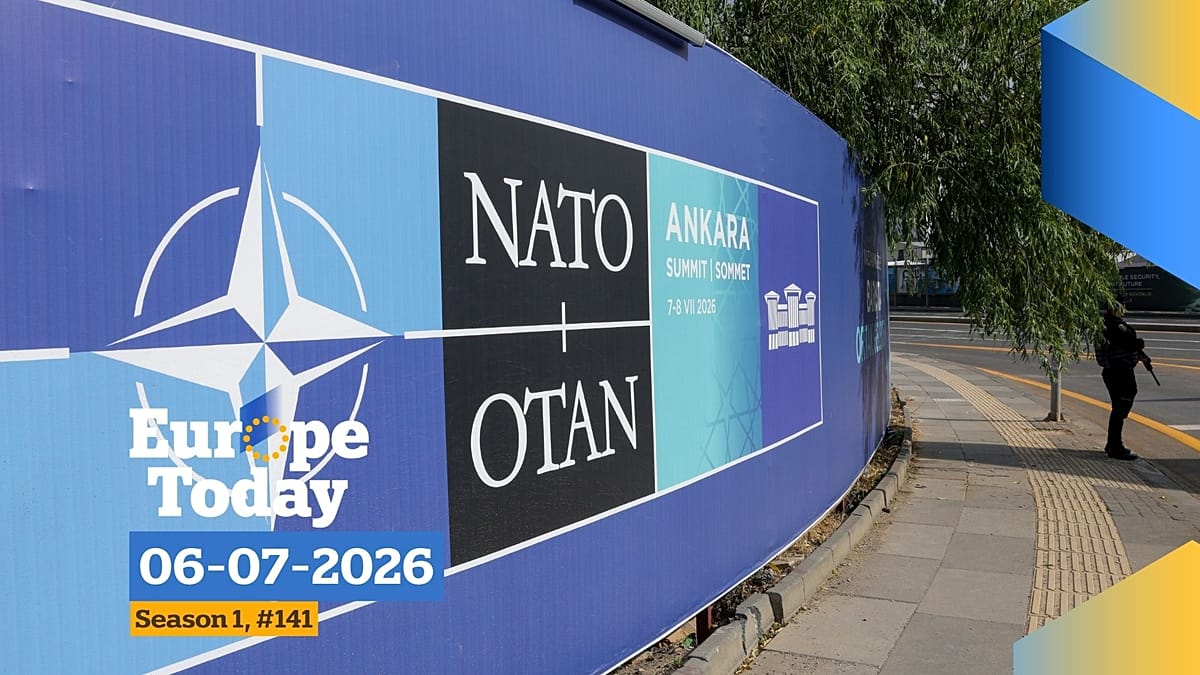
Geopolitics rarely stays confined to parliaments and summits. The latest debate around EU enlargement, Ukraine’s future and NATO security is also poised to influence investment, city-making and the next chapter of high-end design across the continent.
As European leaders weigh military support for Ukraine, reforms to accession policy and the long-term structure of the bloc, the ripple effects will extend far beyond diplomacy. For the worlds of luxury architecture, luxury design and luxury interiors, this moment could redefine where capital flows, which cities rise and how premium spaces express security, identity and European sophistication.
Why EU Enlargement Matters to Luxury Architecture
EU enlargement is often framed as a political or economic process, but it also has a spatial dimension. When candidate countries move closer to membership, developers, hospitality brands, private investors and design firms start reading the built environment differently. Roads, rail, airports, cultural districts, diplomatic quarters and residential stock all become part of a larger European growth story.
That matters for luxury sectors because premium real estate tends to move early, especially where infrastructure upgrades, governance reforms and foreign investment improve confidence. If EU enlargement reforms make accession pathways clearer and more predictable, the result could be renewed interest in landmark projects in Eastern and Southeastern Europe.
For architecture and interior design professionals, several implications stand out:
- Greater demand for mixed-use luxury developments in capital cities
- Growth in branded residences and high-end hospitality projects
- Adaptive reuse of historic buildings for premium residential and cultural uses
- Rising need for interiors that balance local craftsmanship with international standards
Ukraine’s Future and the Rebuilding of Premium Space
Ukraine’s pursuit of stronger NATO backing and progress toward the EU has immediate security implications, but it also raises a longer-term design question: what will reconstruction look like if integration accelerates? In that context, EU enlargement becomes more than policy. It becomes a framework for rebuilding cities, institutions and private developments according to European standards.
Should Ukraine’s path advance, reconstruction will likely include not only essential infrastructure but also civic architecture, cultural venues, hospitality assets and luxury residential projects in major urban centres. High-net-worth investors and international design studios often enter markets once there is clearer political alignment, stronger legal certainty and a compelling long-term narrative.
A New Design Language for Resilient Luxury
The future of luxury in countries affected by conflict or instability will not look identical to pre-2020 European opulence. Instead, a more resilient design language is emerging, one defined by:
- Security-conscious planning without sacrificing elegance
- Durable natural materials such as stone, hardwood and metal
- Energy independence through advanced systems and sustainable technologies
- Cultural preservation integrated into contemporary architecture
This is where EU enlargement could act as a catalyst. As alignment with EU rules and funding mechanisms deepens, luxury projects may increasingly combine aesthetic refinement with resilience, sustainability and local identity.
NATO, Stability and High-End Real Estate Confidence
The renewed focus on NATO comes at a time when Europe’s luxury property market is highly sensitive to security narratives. Elite buyers, family offices and global developers do not assess design quality alone; they also evaluate geopolitical stability, institutional reliability and long-term livability.
That makes the current conversation around Ukraine and European defence directly relevant to architecture and interiors. A secure environment supports confidence in multi-year development cycles, while uncertainty can delay flagship commissions, hotel launches and bespoke residential schemes.
In practical terms, security concerns are already shaping premium design decisions:
- Private residences are adding discreet safe rooms and backup utilities
- Luxury towers increasingly prioritise controlled access and integrated building intelligence
- Hotels are refining circulation, privacy and operational resilience
- Embassy-adjacent districts and diplomatic neighborhoods are gaining strategic value
As a result, EU enlargement and NATO discussions are not separate from the design world. They help determine which markets feel investable and which projects gain momentum.
European Identity in Luxury Interiors
Another underappreciated effect of EU enlargement is cultural. As Europe debates who joins, how accession changes and what shared values define the bloc, designers are presented with an opportunity to reinterpret “European luxury” itself.
For years, the high-end interior market has been dominated by familiar reference points: Parisian refinement, Italian craftsmanship, Belgian minimalism and Nordic calm. But a broader Europe could bring new textures, narratives and artisanal traditions into the mainstream of luxury interiors.
What Designers May Borrow From Emerging European Markets
Designers watching future accession countries may find inspiration in:
- Hand-worked wood, ceramics and textiles rooted in regional craft traditions
- Monumental architectural forms influenced by layered imperial and modernist histories
- A richer palette of stone, plaster and metal finishes
- Interiors that merge solemnity, warmth and symbolic storytelling
If EU enlargement expands Europe’s cultural and economic map, luxury interiors could become more plural, more tactile and less dependent on a narrow Western design canon.
Where Investors and Designers Should Watch Next
The European Commission’s proposed reforms to the accession process, combined with Ukraine’s diplomatic push and ongoing public pressure across Europe, suggest that the enlargement debate is entering a consequential phase. For the luxury property and design industries, now is the time to track not just headlines, but emerging place-based opportunities.
Key areas to watch include:
- Capital cities likely to attract early institutional and private capital
- Cross-border infrastructure corridors that unlock regional development
- Historic urban centers primed for restoration-led luxury projects
- Hospitality destinations where political normalization boosts tourism and brand entry
The smartest players will understand that EU enlargement is not merely a legal process. It is a signal that can reshape land values, design demand and the geography of prestige across Europe.
Conclusion: EU Enlargement Could Redefine Europe’s Luxury Landscape
The latest developments around Ukraine, NATO and Brussels’ reform agenda show that EU enlargement is becoming one of the most important forces shaping Europe’s future. For luxury architecture, luxury design and luxury interiors, that future may include new capitals of taste, new investment frontiers and a stronger emphasis on resilience, heritage and strategic elegance.
The key takeaway is clear: when Europe’s political map evolves, its design map follows. Those who understand how EU enlargement influences confidence, culture and construction will be best positioned to anticipate the next generation of European luxury.