When an earthquake strikes, the most valuable luxury is time. The latest AI earthquake response efforts in Venezuela show how advanced design thinking, precision mapping and elite digital infrastructure can help rescuers act faster when every minute matters.
Although disaster technology may seem far removed from luxury brands, luxury decor or luxury design, the connection is clearer than ever: the world’s most sophisticated systems are increasingly built around accuracy, resilience and intelligent coordination. In Venezuela, that principle is being tested at scale as NASA, Microsoft and European institutions use artificial intelligence and satellite data to accelerate rescue operations after twin earthquakes.
AI Earthquake Response Brings Speed to the First Critical Hours
The current AI earthquake response effort relies on a layered network of satellite imagery, radar analysis and machine learning. Together, these tools help emergency planners identify which neighborhoods and structures are most likely to have suffered severe damage.
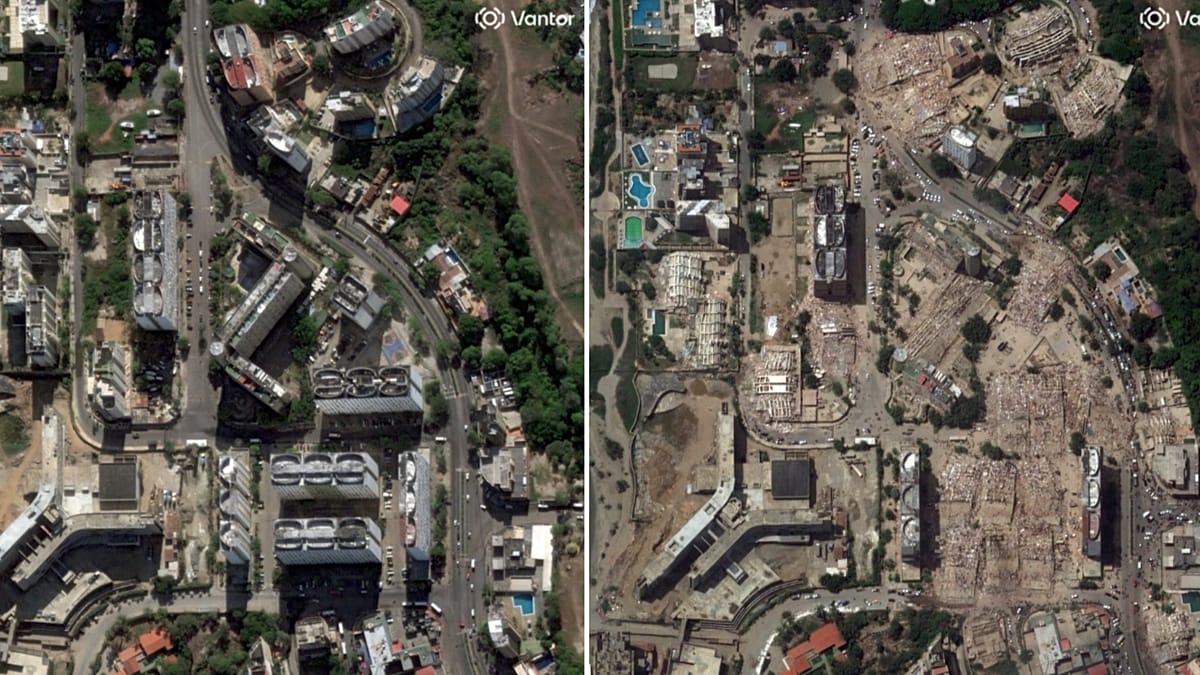
Instead of waiting for all field reports to arrive, analysts can compare imagery captured before and after the quake. That creates a rapid snapshot of shifting ground, altered building shapes and zones where destruction is likely concentrated. In a disaster scenario, this early intelligence can guide search teams, medical crews and aid logistics far more efficiently than manual review alone.
At the center of the operation is a collaboration that blends public science, humanitarian data and corporate AI innovation:
- NASA activated its disaster response capabilities with university researchers.
- Copernicus Sentinel-1 satellites, operated through the European ecosystem, supply high-resolution radar imagery.
- Microsoft AI for Good applies computer vision models to classify likely building damage.
- The UN Humanitarian Data Exchange distributes the resulting maps for near real-time coordination.
This model of AI earthquake response is less about replacing human judgment and more about improving where people go first.
How NASA and Radar Imaging Detect Hidden Damage
NASA’s role focuses on scientific damage assessment. Using radar images taken before and after the earthquakes, researchers can detect abrupt surface changes and structural anomalies that may not be visible from conventional photography.
Radar is especially useful because it can penetrate cloud cover and operate regardless of daylight. That makes it one of the most dependable remote-sensing tools in chaotic post-disaster conditions. Analysts can measure subtle land movement and infer where buildings have collapsed, shifted or lost structural integrity.
Preliminary assessments suggest that tens of thousands of buildings in Venezuela may have been damaged or destroyed. While these figures remain estimates, they give rescue coordinators an immediate starting point for deployment.
Why radar matters in disaster mapping
- Works in poor weather and at night
- Detects ground deformation down to small changes
- Highlights structural alterations across wide areas
- Delivers fast inputs for AI earthquake response systems
Microsoft’s Computer Vision Adds Scalable Intelligence
Once satellite and radar data are available, Microsoft’s AI models can process enormous volumes of imagery much faster than human teams alone. The system reviews thousands of images and sorts buildings by the probability of damage, helping responders prioritize inspections.
This is where the design logic becomes especially compelling. Much like luxury design values a seamless blend of function and form, advanced emergency technology depends on invisible complexity delivering clear, actionable results. The output is not just data; it is a usable decision-making layer.
Importantly, the system does not claim certainty. AI-generated maps are probabilistic, meaning they indicate where damage is likely rather than confirming destruction outright. Ground crews still need to verify conditions in person. Yet in the first hours after an earthquake, those probability models can dramatically improve operational focus.
What AI contributes on the ground
- Faster triage of high-risk districts
- Smarter allocation of search and rescue teams
- Improved visibility for governments and NGOs
- Better coordination from a shared data picture
The European Data Backbone Behind AI Earthquake Response
No modern AI earthquake response system works without reliable source imagery. In this case, the European Copernicus programme provides the crucial raw material through Sentinel-1 satellites. These radar satellites are designed for continuous Earth observation and can capture detailed information on terrain movement and built environments.
That European data backbone is essential because AI models are only as useful as the information they receive. High-quality geospatial inputs make it possible to distinguish between normal urban patterns and quake-related damage signatures.
For readers interested in luxury design, there is an unexpected parallel here. Premium design is rarely about ornament alone; it depends on invisible systems working perfectly beneath the surface. The same is true of humanitarian technology. Elegant outcomes often rest on robust infrastructure that most people never see.
Why Shared Humanitarian Data Is Becoming a Gold Standard
After analysis comes distribution. Microsoft publishes damage maps via the United Nations Centre for Humanitarian Data, allowing rescue teams, public authorities and aid organizations to work from a common operational picture.
This shared platform reduces duplication, confusion and delays. Rather than each organization building its own fragmented estimate, responders can access a more unified view of affected areas almost in real time. In complex emergencies, coordination is often as valuable as the technology itself.
The Venezuelan case highlights a broader shift: premium digital ecosystems are increasingly judged by interoperability, speed and trust. Those same values shape top-tier design industries, from luxury interiors to smart architectural planning.
The Limits and Promise of AI Earthquake Response
Despite the power of these tools, experts are clear about their limits. Artificial intelligence cannot replace on-site inspection, survivor detection or the judgment of emergency professionals. A damaged building on a map is still only an assessment until someone reaches it.
Still, the promise of AI earthquake response is significant. It compresses the time between disaster and decision, helping responders focus on the places where lives are most at risk. As climate shocks, urban density and infrastructure vulnerability continue to rise globally, this kind of integrated response model will likely become standard.
It also signals a larger design evolution: the future of high-value innovation is not only about beauty or exclusivity, but about systems engineered for resilience, clarity and real-world impact.
Conclusion
The Venezuela operation shows that AI earthquake response is no longer a futuristic concept; it is an active, practical rescue tool powered by satellites, machine learning and shared humanitarian data. NASA, Microsoft and European institutions are demonstrating how intelligent systems can help rescuers move faster, prioritize better and potentially save more lives. The clearest takeaway is simple: in moments of crisis, the most powerful design is the one that turns complexity into action.