Architecture news rarely captures the layered relationship between memory, material, and citymaking as vividly as Amman Design Week 2026. Returning after its last edition in 2019, the event transforms Jordan into a living design laboratory, where exhibitions, public interventions, and cultural programs reveal how places are shaped over time.
Running from October 2 to 17, 2026, Amman Design Week gathers more than 220 designers and participants across Amman and, for the first time, Aqaba. Founded by Her Majesty Queen Rania Al Abdullah in 2016, the fourth edition is built around the theme “Accumulations”—a concept that examines how labor, materials, everyday rituals, archives, and inherited knowledge become embedded in the spaces people inhabit. For readers following luxury architecture, luxury design, and elevated cultural travel, this year’s program offers a compelling look at how thoughtful design can turn heritage, landscape, and public space into lasting experiences.
Architecture News From Jordan: Why Amman Design Week 2026 Matters
This edition is significant not only because it marks the event’s return, but also because it reflects a broader shift in contemporary design culture. Rather than treating architecture as isolated objects, Amman Design Week presents it as a living process shaped by use, repair, adaptation, and collective memory.
The 2026 event unfolds across several key locations:
- Ras El Ain
- Jabal Al Lweibdeh
- Jabal Amman
- Iraq Al Amir
- Aqaba
That multi-site format allows visitors to experience Jordan’s built environment as a layered narrative. Historic houses, industrial structures, parks, streets, archaeological landscapes, and coastal contexts all become part of the exhibition itself. In the world of architecture news, this approach stands out for linking design directly to place rather than confining it to gallery walls.
The Theme “Accumulations” Turns the City Into an Exhibition
Curated in part around the idea that places are formed gradually, “Accumulations” explores how cities gather meaning through physical and cultural traces. Architect and curator Faysal Tabbarah has organized works around the relationships between daily practice, material environments, and cultural memory, with each project presented alongside a “trace,” such as an artifact, document, oral history, inherited tool, or ecological reference.
This curatorial direction gives the event unusual depth. Instead of only showcasing polished final outcomes, the exhibition emphasizes process, continuity, and context. That makes this chapter in architecture news especially relevant for designers and homeowners interested in timeless interiors, collectible design, and architecture rooted in authenticity.
New Leadership, Broader Urban Vision
The return of the festival also introduces a new leadership model under architects Sarah Hejazin and Bisher Tabbaa, co-founders of Jordanian studio FADAA. Their appointment signals a stronger architectural framework for the event, one that extends beyond exhibitions into education, public-space strategy, local production, and community engagement.
The decision to work through existing buildings, streets, parks, and heritage sites reinforces a key message: exceptional design does not begin with a blank slate. It often emerges from careful dialogue with what is already there.
The Hangar in Ras El Ain Anchors the Main Exhibition
Among the most important destinations in this architecture news story is The Hangar in Ras El Ain. Originally built in the 1930s to house electricity generators during a period of rapid urban growth, the industrial structure has since been rehabilitated into a cultural venue. Its visible layers of use make it an ideal setting for an exhibition about transformation over time.
Inside The Hangar, visitors encounter work spanning architecture, furniture, publishing, material research, and civic design. Several projects stand out:
- Praxis – “Infusing Green Infrastructure in Amman”: examines how community engagement, technical research, and site analysis can shape more resilient public space.
- DASA Architecture Practice – “Common Ground”: uses modular blocks on a grid to encourage social interaction and flexible occupation.
- Laith Matarweh Studio for Architecture – “Al-Mastaba”: layers stone and concrete into a structure imagined almost as a future ruin, open to weathering and vegetation.
- Abdulrahman Al Muftah and Huzaima Al Rifai – “Binayah”: explores furniture as an inhabitable architectural element, drawing on Amman’s terrain and traditional Qatari tower openings.
Together, these installations demonstrate why this moment in architecture news matters: the most exciting work today is not simply formal or decorative, but adaptive, social, and materially intelligent.
Public-Space Interventions Bring Design Into Everyday Life
One of the strongest aspects of Amman Design Week 2026 is its commitment to permanent and semi-permanent urban interventions. In Ras El Ain Park and beyond, the program moves architecture into the public realm, where it can be used, tested, and remembered.
Highlights include:
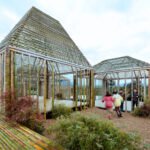
- Civil Architecture – “Folly”: a shaded gathering structure with a ceramic-tile roof produced in Jordan by Haswa, linking the project to local craft and manufacturing.
- Abeer Anabtawi – “Nawwarat Amman”: a basketball court that transforms concrete into a vivid landscape inspired by tomatoes, chamomile, mallow leaves, and wheat.
- Mohamad Nahleh – “Domes of the Rock”: a functional lighting and seating intervention that references the repair history of Jerusalem’s Dome of the Rock.
- L.E.F.T. with collaborators – “Ard Al Sahn”: reimagines an intersection near the Shariah Mosque using stone waste, flowering trees, and bird baths to create a more civic, ecological space.
For anyone tracking architecture news, these projects show how design can elevate ordinary urban infrastructure into places of gathering, identity, and cultural resonance.
From Restored Houses to Ancient Landscapes
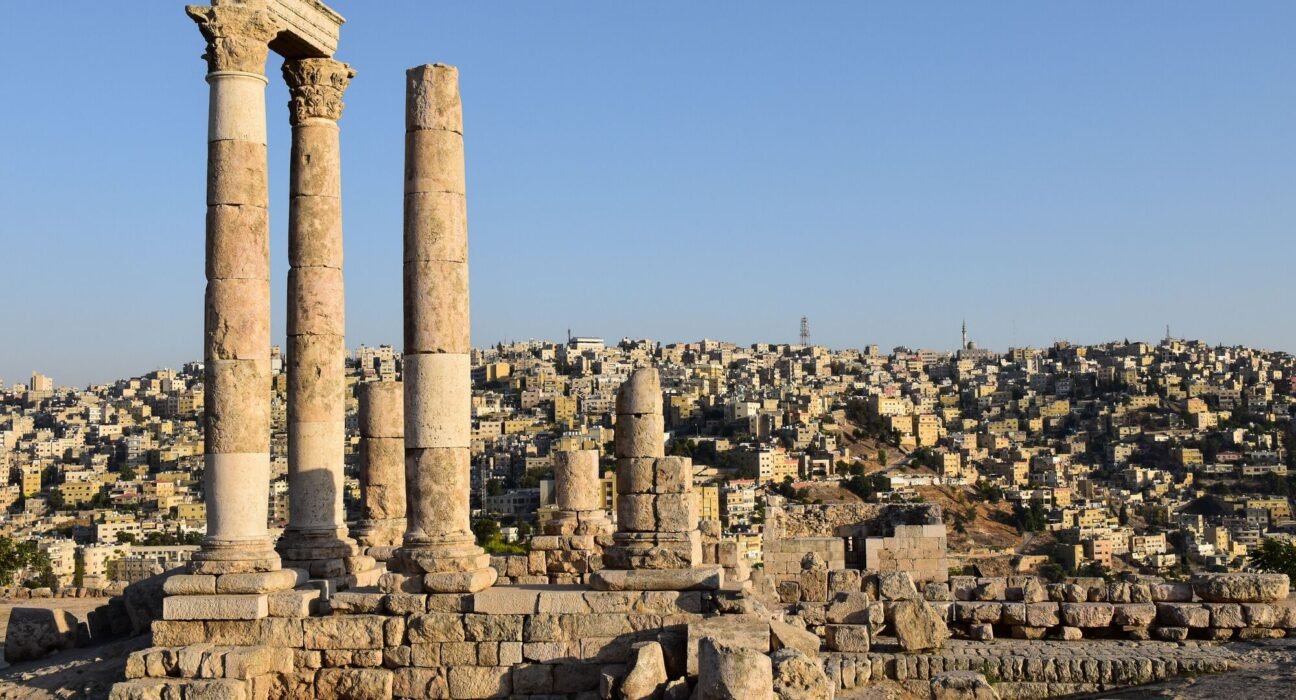
Beyond Ras El Ain, the program extends into locations that deepen the conversation around architectural time. Darat Abu Adnan in Jabal Al Lweibdeh, a restored 1950s house, reflects a moment when international influences were adapted to local materials and domestic life in Amman. Meanwhile, Iraq Al Amir introduces an entirely different scale of memory through Qasr Al Abd and its surrounding archaeological and agricultural landscape.
This geographical and historical range gives the event unusual richness. It links domestic architecture, urban infrastructure, archaeology, and environmental context in one continuous story. For luxury home and luxury decor audiences, it also offers a reminder that the most refined spaces often draw their power from texture, provenance, and a strong sense of place.
A Design Event With Global Relevance
Amman Design Week 2026 arrives at a moment when major international design events are also asking deeper questions about ecology, scarcity, value, and the future of the built environment. Yet Jordan’s contribution feels especially grounded. Its focus is not spectacle for its own sake, but the accumulated life of cities—the ways buildings, parks, streets, and landscapes are continuously remade by people and time.
That perspective gives this piece of architecture news lasting significance. It positions Amman not just as a host city, but as an active case study in how design can work with memory, repair, and public life.
In the end, the clearest takeaway from this architecture news story is that Amman Design Week 2026 is more than a festival. It is a powerful reminder that architecture gains value through use, adaptation, and cultural meaning—and that the most memorable design often comes from building on what already exists.