
Architecture news rarely lands with as much global significance as this: Beijing has officially been named the UNESCO-UIA World Capital of Architecture for 2029. The designation places one of the world’s oldest and most layered cities at the center of an international conversation about heritage, innovation, sustainability, and the future of urban life.
Announced on 5 August 2026, the honor is jointly awarded by UNESCO and the International Union of Architects (UIA) to a city that demonstrates how architecture, urban planning, and culture can support sustainable development. For readers interested in luxury architecture, luxury design, and the evolution of world-class cities, Beijing’s selection is more than ceremonial. It is a signal that the capital’s architectural identity—spanning imperial urbanism, contemporary landmarks, cultural institutions, and regeneration projects—will shape the next phase of global design dialogue.
Architecture News: Why Beijing Won the 2029 Title
This major piece of architecture news reflects Beijing’s unusual ability to unite deep historical legacy with an ambitious contemporary vision. UNESCO highlighted the city’s architectural heritage, urban regeneration efforts, and commitment to sustainable urban development as key reasons for its selection.
Beijing stands apart because it offers a rare architectural spectrum:
- Ancient urban patterns and protected heritage districts
- Monumental civic spaces and cultural landmarks
- Bold contemporary architecture by global and local firms
- Ongoing projects focused on resilience, livability, and public life
Rather than treating preservation and progress as competing forces, Beijing has increasingly framed them as interconnected. That balance is central to why the city was recognized and why the 2029 program is likely to attract attention from architects, planners, investors, and luxury homeowners worldwide.
What the UNESCO-UIA World Capital of Architecture Means
The World Capital of Architecture title is awarded every three years and aligns with the UIA World Congress of Architects. Previous and current host cities have included Rio de Janeiro, Copenhagen, and Barcelona. With this latest architecture news, Beijing joins a select group of cities using design as a public tool for social, cultural, and environmental progress.
The designation is not just honorary. It launches a multi-year build-up to 2029, when Beijing will host a broad calendar of:
- Exhibitions
- International conferences
- Workshops and academic exchanges
- Public cultural programming
- The UIA World Congress of Architects
These events are expected to bring together architects, urban designers, researchers, students, public officials, and cultural leaders from around the world. For the luxury design sector, this also means increased focus on material innovation, civic beauty, adaptive reuse, and the role of architecture in elevating everyday life.
Beijing’s Theme for 2029: Back to Balance
One of the most compelling elements in this architecture news story is Beijing 2029’s official theme: Back to Balance. The concept positions architecture as a bridge between culture, nature, and people—an idea that resonates strongly across luxury architecture and luxury home decor trends today.
In practical terms, the theme points toward a design future shaped by:
- Human-centered spaces that prioritize comfort, health, and community
- Climate-responsive urbanism that addresses resilience and environmental performance
- Heritage-sensitive development that protects identity while enabling growth
- Inclusive public realms that make design accessible beyond elite audiences
This balance is increasingly relevant in high-end residential and hospitality design, where buyers and designers alike are looking for spaces that combine sophistication with cultural meaning and ecological awareness.
Beijing’s Architectural Appeal, From Heritage to Contemporary Icons
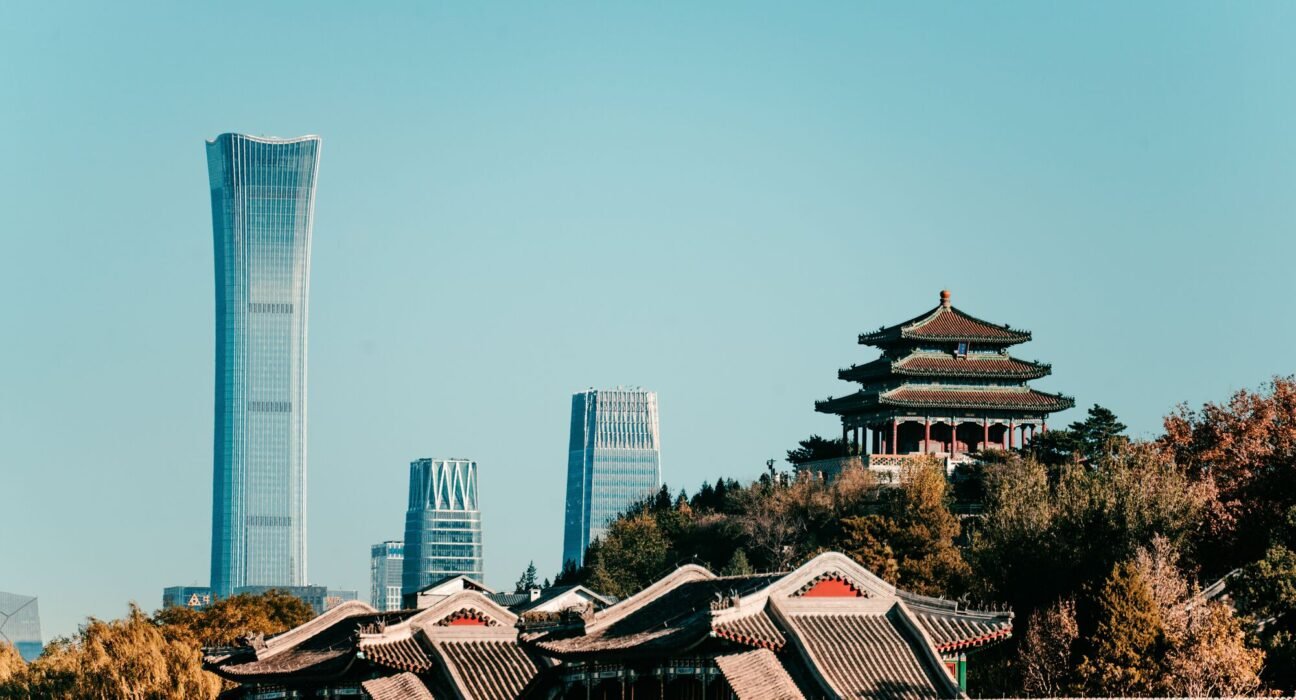
For followers of global architecture news, Beijing’s appeal lies in its contrasts. The city’s skyline can place historic forms and ultra-modern towers within the same visual narrative, creating a living study in how architecture evolves across centuries.
Its recognition by UNESCO and the UIA acknowledges several strengths:
A rich architectural heritage
Beijing’s historic fabric remains one of the most important in the world, shaped by imperial planning, ceremonial axes, courtyard typologies, and cultural landmarks that continue to influence architects internationally.
Regeneration and adaptive urban change
The city has also shown how older environments can be revitalized through thoughtful interventions, public realm upgrades, and cultural reinvestment rather than simple replacement.
Contemporary cultural architecture
Recent projects such as major libraries, performing arts venues, and museum spaces demonstrate how Beijing is investing in architecture as civic infrastructure. These buildings do more than serve a function—they project identity, invite public participation, and elevate the urban experience.
This layered character makes the city especially relevant to luxury design audiences, who increasingly value homes and interiors that draw from local craft, history, and context rather than generic global aesthetics.
Why This Architecture News Matters for Luxury Design Trends
This architecture news story extends beyond the professional architecture world. Global recognition for Beijing is likely to influence broader design conversations across luxury home, luxury decor, and high-end real estate.
Key ripple effects may include:
- Greater appreciation for East-meets-West design language in interiors and residences
- Renewed interest in natural materials and spatial calm, echoing the “Back to Balance” ethos
- More demand for heritage-informed contemporary homes
- Stronger focus on sustainability as a marker of true luxury
In today’s premium market, luxury is increasingly defined not just by exclusivity, but by craftsmanship, longevity, environmental intelligence, and emotional resonance. Beijing’s moment in the global spotlight reinforces all of those values.
China’s Broader Design Momentum
Another reason this architecture news matters is that it reflects wider design ambition across China. Cities such as Shenzhen have recently advanced major museum and cultural projects, while broader national initiatives are engaging with landscape restoration, public infrastructure, and climate resilience.
This context matters because Beijing’s 2029 role will not exist in isolation. It will likely showcase a larger story about how Chinese cities are experimenting with culture-led development, iconic public buildings, and future-facing urban strategies. For international observers, that makes Beijing 2029 both a city-specific event and a window into the next chapter of Asian urbanism.
Looking Ahead to Beijing 2029
As preparations begin, expectations are high that Beijing will use the World Capital of Architecture platform to frame urgent debates around urbanization, heritage preservation, inclusive design, and sustainable development. This is the kind of architecture news that shapes agendas, not just headlines.
For architects and designers, it offers a laboratory of ideas. For luxury homeowners and decor enthusiasts, it offers inspiration rooted in harmony, material richness, and cultural continuity. And for cities everywhere, it presents a compelling question: how can architecture better serve both beauty and public life?
Beijing’s appointment is ultimately a reminder that the best architecture news is about more than buildings. It is about the power of design to connect past and future, elevate daily living, and create more resilient, meaningful places. As 2029 approaches, Beijing will be one of the most important cities in the world to watch.