
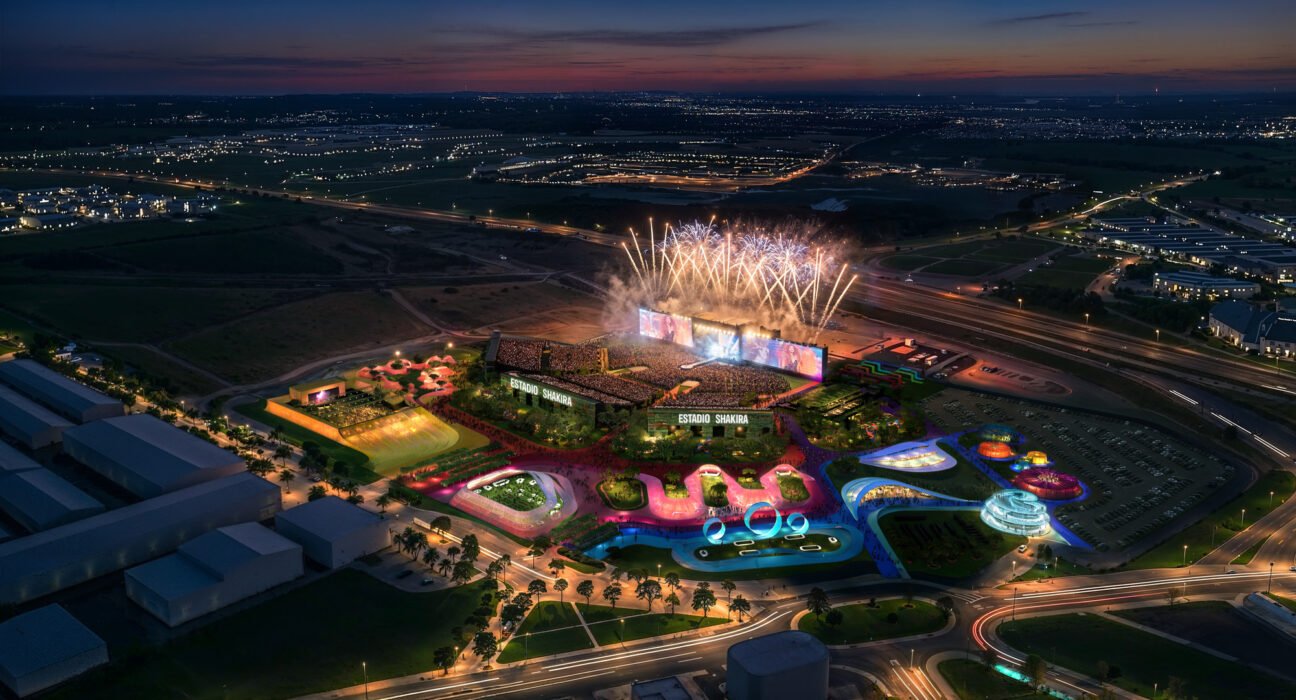
Architecture news rarely arrives with this much cultural resonance. In Madrid, BIG-Bjarke Ingels Group has unveiled a bold multi-use stadium concept for the final leg of Shakira’s world tour, transforming a concert venue into an immersive destination that blends performance, landscape, family programming, and Latin American storytelling.
Set for 2026 on the site of the existing Iberdrola Music venue, the project goes far beyond a temporary stage set. Envisioned as the centerpiece of Macondo Park, the development reflects a growing shift in luxury design and entertainment architecture: spaces are no longer built only to host events, but to create all-day experiences with cultural depth, visual identity, and broad public appeal.
Architecture News Spotlight: BIG’s Vision for Shakira’s Madrid Stadium
The proposed stadium is designed to accommodate more than 50,000 fans while functioning as a flexible, multi-activity destination. According to the concept, the venue will remain active from noon to midnight on event days, expanding the traditional concert model into a full-scale cultural environment.
This is what makes the project especially notable in architecture news: it merges spectacle with urban placemaking. Rather than centering only on the stage, the design layers entertainment with public space, retail, food, art, and recreation.
- A large-scale performance venue for Shakira’s tour finale
- Park-like public areas woven through the site
- Markets and artisan-focused zones
- Food and culinary experiences
- A dedicated children’s area
- Programming for music, art, film, and fashion
For luxury architecture observers, the concept is significant because it reflects how global entertainment brands are increasingly commissioning destination-driven environments rather than one-dimensional venues.
Why Macondo Park Matters in Luxury Architecture
The name Macondo Park gives the project its conceptual power. Macondo, the fictional town from Gabriel García Márquez’s One Hundred Years of Solitude, is one of the most recognized symbols in Latin American literature. By drawing on that reference, the design aligns itself with magical realism, memory, place, and cultural identity.
In practical terms, BIG translates this literary inspiration into a spatial experience. The masterplan features curving circulation routes, layered public spaces, and “green islands” that wrap the stadium in a more immersive landscape. Recycled fabrics are proposed as part of the visual language, adding movement and texture to the visitor journey.
That combination of narrative and form is why this story stands out in architecture news. The project is not simply branded around a pop icon; it uses architecture to evoke geography, literature, and shared identity. For readers interested in luxury home decor and luxury design trends, it also demonstrates how storytelling has become central to high-end environments, whether at the scale of a residence or a stadium.
A Contemporary Expression of Latin Identity
The design reportedly reflects both Latin American and Spanish landscapes, creating a hybrid setting in Madrid that feels rooted in culture rather than generic event architecture. This matters because contemporary luxury architecture increasingly values authenticity, regional references, and emotional connection.
Instead of defaulting to a neutral global aesthetic, the stadium concept embraces:
- Landscape-inspired spatial composition
- References to Colombian cultural memory
- Family-friendly programming
- A festival-like atmosphere that extends beyond the headline performance
In that sense, the project participates in a wider design conversation about how architecture can represent communities, not just clients.
From Concert Venue to All-Day Cultural Destination
One of the most compelling aspects of this architecture news story is the redefinition of what a stadium can be. Traditionally, stadiums sit dormant outside major events. Here, the proposal imagines a venue that remains animated through multiple attractions and audiences.
Visitors would move through a sequence of experiences rather than enter, watch a show, and leave. That strategy mirrors some of the most successful moves in contemporary luxury design, where mixed-use planning and experiential programming increase both cultural value and commercial appeal.
Key Features of the Experience Model
- Extended operating hours: The venue is planned to function for much longer than a standard concert window.
- Multi-generational appeal: Adults, children, music fans, and casual visitors all have reasons to engage.
- Cultural layering: Art, fashion, film, and food diversify the experience.
- Landscape as infrastructure: The park elements are not decorative extras; they help organize movement and atmosphere.
This approach is relevant to luxury home and luxury decor audiences because it reflects a broader market shift: design is expected to do more than look beautiful. It must host different lifestyles, adapt to changing needs, and create memorable emotional experiences.
Family-Centered Design and the Macondito Concept
Another distinctive element in this architecture news update is the emphasis on children and family programming. The project includes a dedicated children’s zone called Macondito, reportedly inspired by imagination, curiosity, and discovery. This moves the venue away from the adults-only image often associated with major music events.
Family-centered design has become an influential idea across luxury architecture and luxury home decor. Spaces now increasingly prioritize inclusion, flexibility, and interactivity. In Macondo Park, that appears as an environment where play, culture, and performance coexist within one destination.
The result is a venue model that feels more civic and more emotionally intelligent than a conventional arena.
What This Means for Architecture, Pop Culture, and Spain
Celebrity engagement with architecture is nothing new, but this project suggests a more ambitious role for design. Rather than simply purchasing iconic homes or renovating landmark properties, public figures are helping commission environments that shape cultural narratives at an urban scale.
That is why this project deserves attention in architecture news. It connects entertainment architecture with identity, placemaking, and public experience. It also arrives at a moment when Spain is already drawing global focus through major architectural events, including Barcelona’s role as the 2026 World Capital of Architecture and ongoing milestones at the Sagrada Familia.
For Madrid, Shakira’s BIG-designed stadium could become more than a tour stop. It could stand as a case study in how temporary cultural energy can be translated into a destination with lasting design impact.
Conclusion
In today’s architecture news, the most exciting projects are those that combine spectacle with meaning. BIG’s proposed Macondo Park stadium for Shakira in Madrid does exactly that, turning a concert venue into an immersive landscape of music, literature, culture, and family life. The clearest takeaway is simple: the future of luxury architecture may belong to spaces that perform as destinations, tell stories through design, and make identity visible at every scale.