
In the latest Architecture news, the Canadian Centre for Architecture is turning the spotlight on one of the discipline’s most thoughtful masters of urban form. A new exhibition dedicated to Álvaro Siza reveals why great cities are not perfected in a single gesture, but shaped over time through sensitive, layered design.
Titled The fortune of the city is that it has never been perfect, the exhibition is on view at the CCA’s Main Galleries from May 21, 2026, to January 10, 2027. Rather than celebrating architecture as isolated objects, the show examines how Siza approaches neighborhoods, public space, infrastructure, and the lived reality of the city itself. For audiences interested in luxury architecture, refined urban design, and the cultural values behind enduring places, this exhibition offers a compelling lens on city-making at its highest level.
Architecture News: Why the CCA Exhibition Matters
This major museum exhibition focuses on the urban work of Portuguese architect Álvaro Siza, whose career has long been defined by restraint, precision, and deep respect for context. Curated by Giovanna Borasi with Laura Aparicio Llorente, the presentation explores how Siza works with what already exists instead of imposing idealized master plans.
That approach makes this one of the most significant items in Architecture news this season. In an era when many cities are balancing growth, heritage, housing pressure, and public realm quality, Siza’s work feels especially relevant. His projects suggest that architecture and planning are most powerful when they listen carefully to the physical and social life of a place.
The exhibition frames the city not as a finished composition, but as an evolving condition shaped by:
- Historical memory
- Topography and landscape
- Existing infrastructure
- Everyday patterns of use
- Social and civic relationships
For readers drawn to luxury design and luxury home culture, this urban perspective is surprisingly important. High-end architecture does not exist in a vacuum; its value is elevated when it participates meaningfully in a broader urban fabric.
Álvaro Siza’s City-Making Philosophy
At the heart of this Architecture news story is Siza’s belief that each site requires its own reading. Instead of applying a universal formula, he studies the existing city through observation, drawing, and careful interpretation. The result is architecture that feels both precise and humane.
Siza’s work has often been admired for its calm formal language, but this exhibition pushes visitors to see a larger ambition. His architecture extends beyond individual buildings into the structure of streets, squares, edges, and connections. That means the exhibition is not simply about beautiful objects; it is about how design can repair, continue, and enrich urban life.
What sets Siza apart
Several themes define his urban method:
- Context before spectacle: He responds to existing conditions rather than chasing novelty for its own sake.
- Continuity over rupture: His interventions often strengthen the city’s inherited character.
- Human scale: Public life, movement, and lived experience shape the design process.
- Architectural patience: Projects grow from close study, sketches, and iterative thinking.
These values resonate strongly in contemporary discourse around urban transformation, adaptive development, and contextual architecture. That is why this exhibition stands out in current Architecture news coverage.
What Visitors Will See at the Exhibition
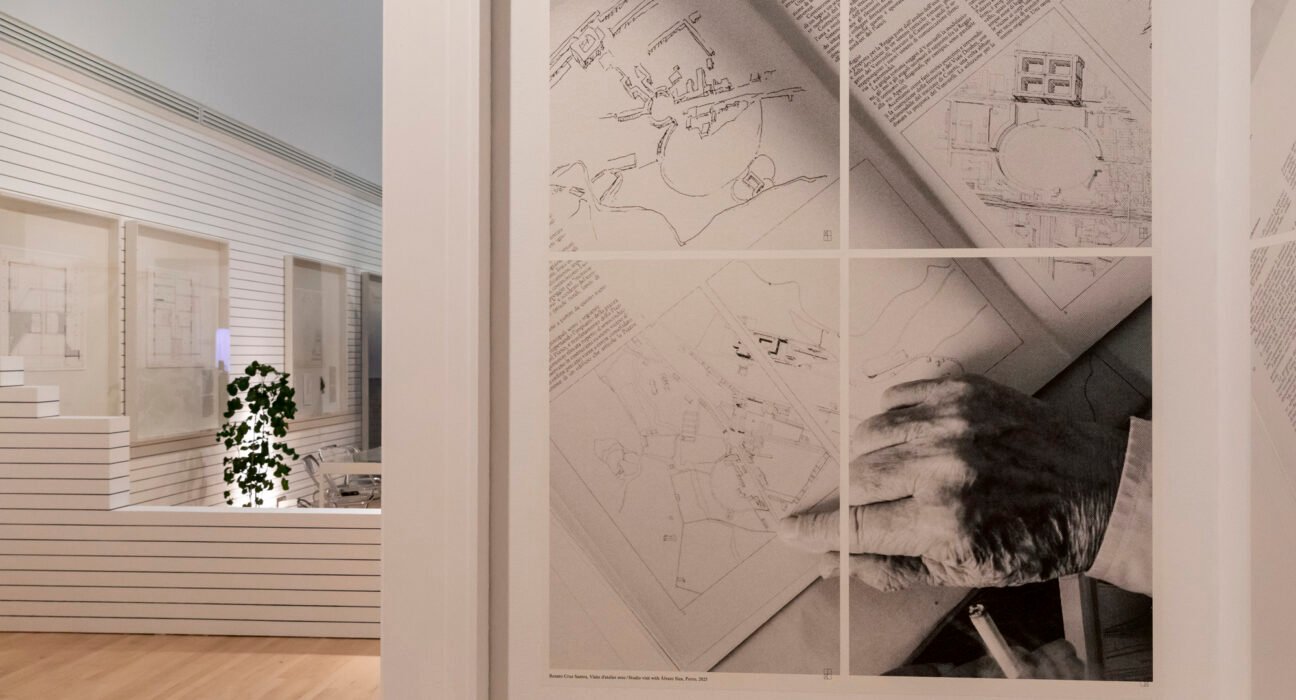
The CCA draws extensively from the Álvaro Siza archive donated to the institution, giving the exhibition unusual depth. Visitors can expect a rich presentation of original material that traces both thinking and built outcomes.
The exhibition includes:
- Original drawings
- Sketchbooks and transcribed notes
- Architectural models
- Photo collages
- Photographs of completed works
Additional photography by noted image-makers including Gabriele Basilico, Nuno Cera, Giovanni Chiaramonte, Alessandra Chemollo, and Balthazar Korab expands the visual reading of Siza’s buildings and urban settings. Their contributions help connect the architect’s drawings and models to the texture of real places.
This layered curatorial strategy makes the show especially appealing for design professionals, collectors, and aesthetically driven travelers who follow Architecture news for more than headlines. It offers access to process, research, and visual culture all at once.
A Broader Conversation on Architecture and Planning
One of the exhibition’s strongest ideas is that the city itself is a source of knowledge. Instead of treating existing urban conditions as obstacles, Siza’s work regards them as the material from which future development can emerge.
That position has major relevance today. Across global capitals, architects and planners are wrestling with questions such as:
- How should new construction relate to historic fabric?
- What forms of urban renewal preserve identity while enabling change?
- How can public space support dignity, beauty, and daily life?
- What role should architecture play in long-term civic continuity?
By engaging these questions, the exhibition goes beyond monographic display and enters the territory of urban theory. For anyone tracking Architecture news, this is what makes the project especially timely: it speaks directly to the future of cities without pretending there is a single ideal solution.
Why This Exhibition Appeals to Luxury Architecture Audiences
Although the exhibition is grounded in urbanism, it aligns naturally with luxury architecture and luxury design interests. True luxury in the built environment is increasingly defined by quality, permanence, cultural intelligence, and spatial refinement rather than excess.
Siza’s practice embodies that shift. His work demonstrates that elegance can come from disciplined proportions, material sensitivity, and deep contextual awareness. These are the same principles that often distinguish exceptional luxury homes, bespoke interiors, and high-end residential design.
For readers in luxury home and luxury decor circles, the show offers a valuable reminder: the most sophisticated spaces are those that understand their surroundings, whether that means a private residence, a civic plaza, or an entire neighborhood.
Publication and Related Exhibition Highlights
The exhibition is also accompanied by a publication built around an oral history recorded with Siza in Porto. It brings together archival documents, newly transcribed sketchbook notes, and previously unpublished material uncovered through collaborative archive work. That added scholarship reinforces the exhibition’s value as both a public event and a lasting research contribution.
Within the wider landscape of Architecture news, the CCA show joins a strong lineup of international exhibitions, including recent presentations focused on Jean Nouvel in Shanghai, landscape installations in Barcelona, and Dorte Mandrup’s work in Denmark. Together, these events show how architecture exhibitions are increasingly becoming spaces for public debate about design, place, and cultural memory.
Conclusion
This Architecture news story is about more than a museum exhibition. It is about a way of seeing the city as unfinished, layered, and full of possibility. By examining Álvaro Siza’s approach to city-making, the CCA offers a powerful argument for architecture that listens before it acts.
For architects, collectors, luxury design enthusiasts, and anyone invested in the future of urban life, this exhibition is a reminder that the finest architecture often begins with humility. In a world chasing quick visual impact, the most meaningful lesson in Architecture news may be that enduring cities are built through attention, continuity, and care.