
Architecture news rarely captures the tension between heritage, money, and urban ambition as vividly as the current debate over Dallas City Hall. The city is now confronting a high-stakes question: should I.M. Pei & Partners’ monumental civic landmark be restored, repurposed, sold, or ultimately demolished?
For admirers of luxury architecture and design, this is more than a local government story. It is a revealing case study in how cities value iconic modernist buildings, especially when repair costs climb and prime land becomes a magnet for redevelopment. Dallas City Hall, one of the most recognizable examples of American Brutalist architecture, now stands at the center of a national conversation about preservation, adaptive reuse, and the future of civic space.
Architecture News Spotlight: Why Dallas City Hall Matters
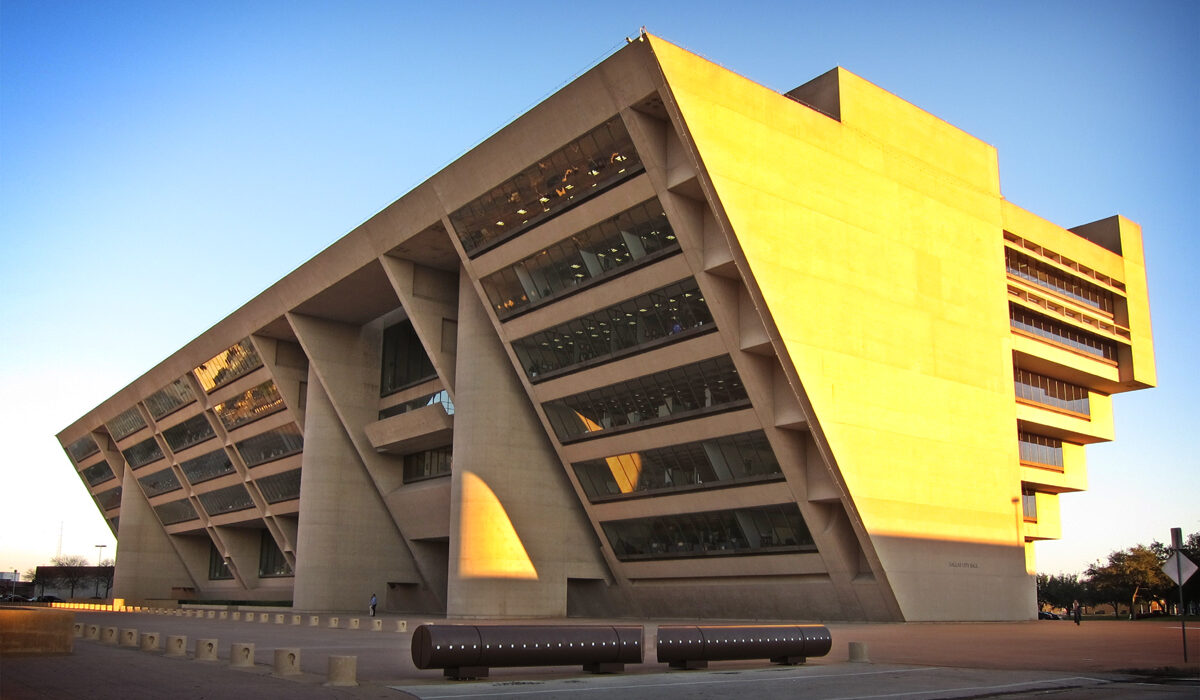
Completed in 1978 and designed by I.M. Pei & Partners, Dallas City Hall occupies an 11.8-acre site near downtown and remains one of the city’s most distinctive public buildings. Its dramatic inverted pyramid form, sloped cast-in-place concrete facade, and expansive civic plaza set it apart from conventional municipal towers. Rather than maximizing vertical density, the project was conceived as a union of building and park, giving Dallas a rare open civic landscape.
The structure contains nearly one million square feet in total, including substantial office space, public chambers, and underground parking. Yet its importance goes beyond scale. For decades, the plaza and public interiors have served as a backdrop for protests, parades, civic gatherings, and popular culture appearances, helping the building become a visual shorthand for Dallas itself.
In luxury design terms, the building represents a different kind of grandeur: not opulence through ornament, but power through form, proportion, and public presence. That distinction is one reason the current debate has drawn such intense interest from preservationists, architects, and urban policy watchers.
The Core Debate: Repair, Sell, or Demolish?
The latest architecture news from Dallas centers on a practical reality: the building needs major work. Reports have cited long-deferred maintenance issues ranging from water intrusion to aging electrical systems. Cost estimates for repairs and operations vary widely, from roughly $60 million to several hundred million dollars depending on the scope, timeline, and scenario studied.
City leaders are now evaluating multiple options, including:
- Comprehensive repair and modernization of the existing structure
- Relocation of city functions to another facility
- Sale of the site for redevelopment
- Demolition followed by a new project on the property
Those favoring preservation argue that a transparent renovation study should come first, especially given the building’s architectural significance and the pending historic landmark process. Those more open to demolition or sale point to fiscal pressures, operational inefficiencies, and the redevelopment potential of a centrally located site near the future convention center.
Why the Land Itself Is Part of the Story
Any discussion of Dallas City Hall must also account for real-estate value. The site sits in a highly strategic downtown location, and some officials see it as a catalyst for future investment. With sports venue conversations and large-scale redevelopment possibilities circulating, the land has become almost as important as the building on it.
That dynamic is increasingly common in architecture news: landmark structures are not only assessed for design merit, but also for what their sites could yield in a fast-changing urban market.
A Brutalist Icon Under Pressure
Dallas City Hall is widely recognized as a major Brutalist landmark in the United States. Its bold geometry, heavy concrete expression, and commanding silhouette exemplify a period when civic architecture aimed to project permanence and institutional confidence. While Brutalism remains divisive in public opinion, design professionals often regard buildings like this as irreplaceable pieces of architectural history.
Supporters of preservation emphasize several key points:
- Architectural pedigree: The building was designed by one of the 20th century’s most influential architects, I.M. Pei.
- Civic identity: It has become a symbol of Dallas through decades of public use and media visibility.
- Urban design value: Its plaza provides meaningful public open space in the downtown core.
- Adaptive reuse potential: Other modernist landmarks have been successfully renewed rather than erased.
The building’s supporters also note that renovation, while expensive, may still be more responsible than combining demolition costs with the price of constructing an entirely new municipal complex.
Historic Preservation vs. Fiscal Responsibility
One reason this story has become such prominent architecture news is that it reflects a broader policy clash seen in cities around the world. Preservationists often frame buildings like Dallas City Hall as cultural infrastructure, worthy of long-term investment. Public officials, meanwhile, must weigh budget constraints, safety concerns, and day-to-day functionality.
In Dallas, that tension has sharpened through public meetings, committee reviews, and a City Council vote directing staff to evaluate alternatives. At the same time, efforts to secure historic designation have moved forward, creating a legal and political balancing act between landmark protection and redevelopment flexibility.
This kind of conflict is hardly unique. Modernist and Brutalist buildings often face a difficult midlife moment: they are old enough to need substantial upgrades, but not always universally loved by the public. Their survival frequently depends on whether cities can see design value and civic memory as assets rather than liabilities.
What Other Cities Can Teach Dallas
Recent architecture news offers several useful comparisons. Boston City Hall, another once-controversial Brutalist civic building, avoided demolition through renovation and revitalization. Internationally, preservation campaigns have also rallied around major modernist works under threat, showing that public opinion can shift when adaptive reuse is presented as a credible, forward-looking strategy.
Dallas could take lessons from those examples by exploring:
- Phased restoration instead of all-at-once intervention
- Energy and systems upgrades that improve long-term performance
- Public-private partnerships for plaza activation and programming
- Design-sensitive interior modernization that preserves the building’s identity
- A broader civic master plan that treats the site as both landmark and asset
For audiences interested in luxury home decor, luxury architecture, and luxury design, this may seem distant from residential concerns. But the same principles apply across scales: enduring design gains value when it is thoughtfully maintained, intelligently adapted, and understood in context.
What Happens Next?
Dallas City Council is expected to continue evaluating options before making a final decision. Until then, public petitions, preservation advocacy, expert commentary, and political debate are likely to intensify. The outcome will shape not only the future of one building, but also Dallas’s broader identity as a city deciding how it treats its architectural legacy.
In the end, the most important takeaway from this architecture news story is clear: Dallas City Hall is not just a maintenance problem or a redevelopment opportunity. It is a test of whether a city can reconcile fiscal realism with cultural ambition. If Dallas chooses a path that respects both, it could transform a threatened modernist landmark into a model for 21st-century civic renewal.