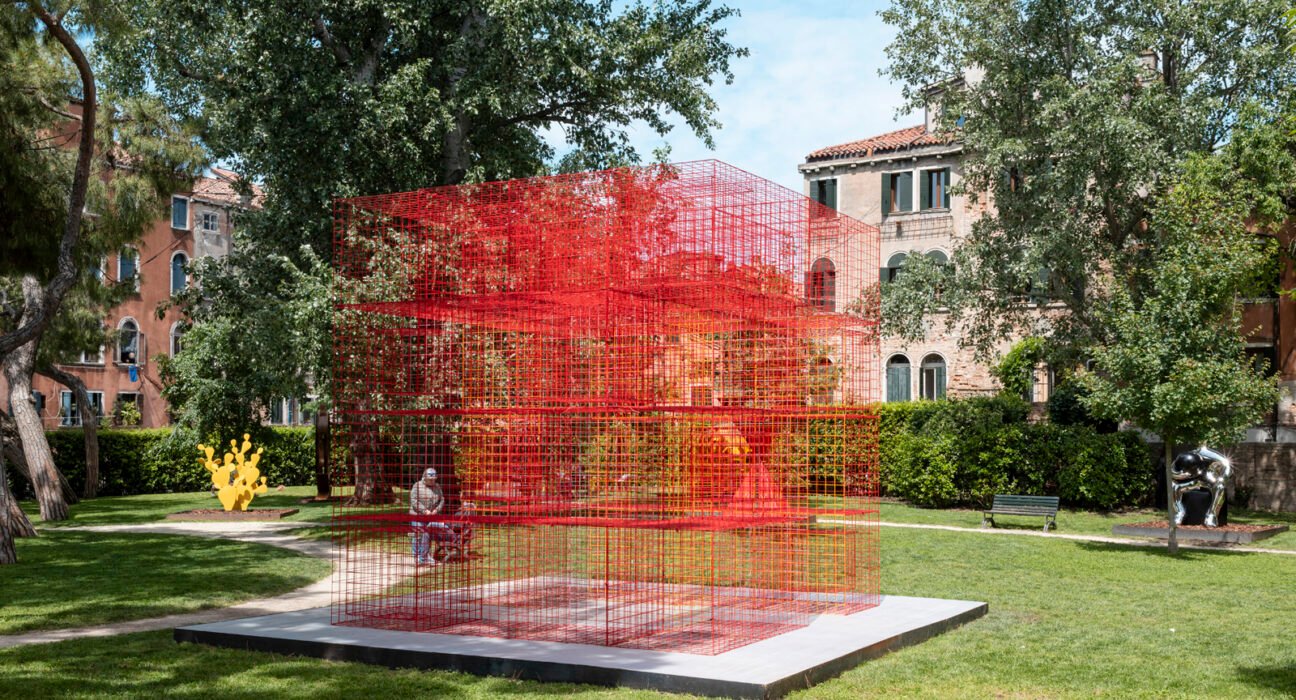
Architecture news rarely captures the layered cultural energy of Venice quite like the newly announced ECC Awards shortlist. Set within the European Cultural Centre Italy’s Personal Structures – Confluences exhibition, the finalists reveal how contemporary art, design, and spatial thinking are increasingly shaped by memory, identity, craft, and technology.
Running from 9 May to 22 November 2026 across Palazzo Bembo, Palazzo Mora, and the Marinaressa Gardens, the exhibition unfolds alongside the Venice Art Biennale. For readers interested in luxury architecture, luxury design, and the future of high-concept interiors, the shortlist offers a compelling view into the ideas now influencing cultural space-making at the highest level.
Architecture News from Venice: Why the ECC Awards Matter
The ECC Awards spotlight practices that respond to the exhibition theme, Confluences, through research, interdisciplinarity, and a strong dialogue with place. More than a conventional prize, the program frames Venice as a living laboratory where art, architecture, and design intersect.
This year’s finalists come from 17 countries, underlining the global scope of the conversation. The awards are divided into five categories:
- Artistic Interpretation of the Theme: Confluences
- Research & Curatorial Project
- Cross-Disciplinary Project
- Emerging Practices
- Space & Context Project
For the luxury sector, this matters because today’s most influential spaces are not defined by ornament alone. They are shaped by narrative, material intelligence, and emotional resonance. That makes the ECC Awards especially relevant to anyone tracking architecture trends, collectible design, and immersive environments.
Memory, Identity, and Material Culture Take Center Stage
A recurring thread throughout the shortlist is the idea that space can hold memory and express identity. Several featured projects treat materials not simply as aesthetic tools, but as carriers of culture, labor, and lived experience.
Craft as a Contemporary Language
Japanese platform B-OWND’s Relational Logic – Beyond Dualism, a World Reconnected proposes a hybrid approach that dissolves old distinctions between art, craft, and technology. Its curatorial position feels especially timely in a design world where artisanal making increasingly meets digital production.
Similarly, Mahwish Chishty’s Tanka Tales: Thread as Archive elevates embroidery into a living archive. By working with Pakistani artisans, the installation ties together women’s labor, heritage, and storytelling. In luxury home decor terms, it reflects a broader movement toward objects and surfaces that carry provenance and human touch.
Identity Expressed Through Form
Other finalists explore identity through sculpture, installation, and embodied narratives. Intimate Unthinkables by Adrian Parr Zaretsky and Liu Shiming connects female experience across cultures, using art as a bridge between vulnerability, care, and resistance. Meanwhile, Stephens Tapestry Studio’s collaboration with William Kentridge translates themes of migration and memory into monumental woven works, showing how textile traditions can become powerful spatial statements.
For designers and architects, these works reinforce an important point: material richness becomes more meaningful when it is tied to story and context.
Technology Enters the Conversation with Greater Sensitivity
One of the most interesting developments in this architecture news story is the way technology appears not as spectacle, but as a nuanced creative partner. The shortlisted projects suggest that digital tools, AI, and scientific research are being used to deepen human experience rather than replace it.
AI, Data, and the Emotional Environment
ORLAN’s WE ARE INCONSOLABLE uses AI-generated imagery and painterly intervention to transform pain into political critique. Rather than treating artificial intelligence as a novelty, the project positions it as a medium for questioning power, gender, and representation.
A+N Studio’s Breathing Light takes a different route, translating deep breathing rhythms into an interactive luminous environment. Rooted in wellbeing research, the installation merges lighting design, behavioral science, and participatory design. This approach has clear implications for luxury interiors, hospitality, and wellness-focused residential spaces.
Art Meets Science
Projects such as Becoming You by Geraldine Ondrizek and Shizuko Takahashi further expand the field by visualizing human development through scroll painting, medicine, and storytelling. Princeton Research Film Studio’s Atlantis also stands out for examining cinema in the age of automation while preserving an immersive, craft-based sensibility.
Together, these works point to a growing design priority: innovation must still feel tactile, interpretive, and emotionally intelligent.
What Luxury Architecture and Design Can Learn from the Shortlist
For professionals and enthusiasts in luxury architecture, the ECC Awards shortlist offers more than cultural commentary. It reveals where premium design values are headed.
- Context is becoming a luxury in itself. Site-responsive work now signals sophistication more than generic opulence.
- Craft and technology are no longer opposites. The most exciting projects merge handmade traditions with advanced tools.
- Wellbeing is shaping space. Light, perception, ritual, and sensory immersion are central to future-forward interiors.
- Story-driven design has stronger emotional value. Spaces and objects that carry memory or identity resonate more deeply with audiences and clients.
- Interdisciplinary thinking is the new benchmark. Art, science, design, and curatorial research increasingly inform one another.
This is why the Venice shortlist feels so relevant beyond the art world. It speaks directly to the evolution of luxury homes, collectible interiors, and bespoke environments that aim to be culturally rich as well as visually stunning.
A Global Jury and a Global Design Conversation
The finalists will be reviewed by an international jury drawn from contemporary art, publishing, curating, and cultural institutions. That breadth of expertise reflects the spirit of the exhibition itself: a belief that meaningful work emerges through exchange across borders and disciplines.
With participants from Japan, the United States, the Netherlands, China, South Korea, France, Pakistan, Nepal, Israel, Bahrain, Canada, and the United Kingdom, the shortlist frames Venice as a crossroads for global creative practice. In today’s architecture news landscape, that internationalism is essential. It is where new ideas about place, authorship, and design ethics are being tested in real time.
Conclusion
The ECC Awards shortlist proves that the most compelling architecture news is no longer confined to buildings alone. In Venice, memory, identity, and technology are converging through installations, textiles, light, research, and spatial storytelling to reshape how we think about design. For the luxury architecture and interiors world, the message is clear: the future belongs to spaces that are not only beautiful, but also culturally aware, materially intelligent, and emotionally resonant.