
Architecture news rarely captures the cultural imagination quite like a museum expansion that reshapes both an institution and the city around it. In Buenos Aires, the Museum of Latin American Art of Buenos Aires (MALBA) has unveiled plans for a major underground addition by Taller Frida Escobedo, a move set to double exhibition space while preserving the public plaza above.
Announced during MALBA’s 25th anniversary celebrations, the project positions the museum for a new era of growth. More than a square-footage upgrade, the plan rethinks how visitors move through the museum, how art programs coexist, and how a celebrated cultural destination can build a stronger relationship with the urban fabric of Buenos Aires.
Architecture News: A Landmark Expansion for MALBA
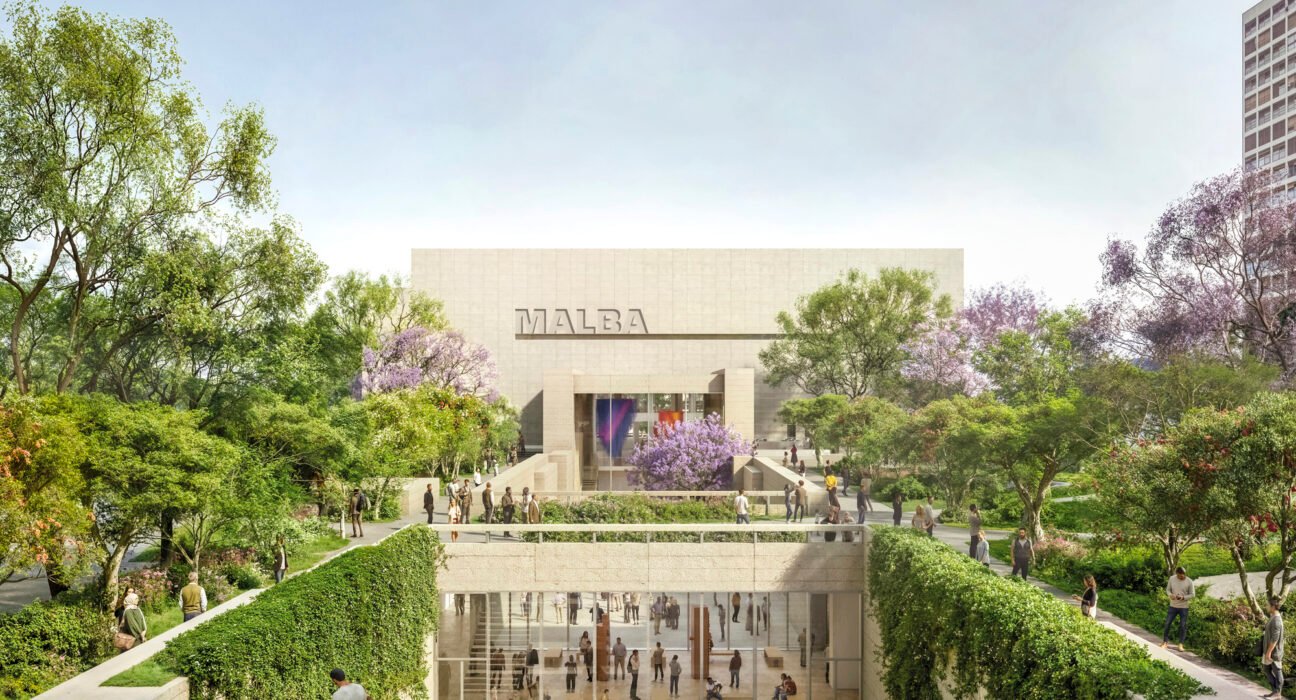
This latest piece of architecture news centers on one of Latin America’s most influential art institutions. MALBA confirmed that its new expansion will be built beneath Plaza República del Perú, allowing the museum to increase capacity without sacrificing valuable open space at street level.
The underground extension is expected to include:
- New temporary exhibition galleries
- A dedicated auditorium
- Multipurpose cultural spaces
- An open-air plaza-courtyard
- Workshops and educational areas
- Art storage and administrative offices
The project is slated for completion in late 2029 or early 2030, giving the museum a substantially larger platform for exhibitions, events, and public engagement.
Why Frida Escobedo’s Design Matters
For followers of architecture news, the appointment of Taller Frida Escobedo is especially significant. The New York- and Mexico City-based studio has earned international recognition for work that balances material sensitivity, civic awareness, and contemporary spatial thinking. Its growing portfolio in cultural architecture includes major global commissions, reinforcing Escobedo’s position as one of the most important voices shaping museum design today.
That pedigree matters for MALBA. The museum is not simply adding rooms; it is using architecture to redefine its identity. Escobedo’s approach appears to focus on continuity between institution and city, offering a more porous, welcoming, and flexible experience for visitors.
An Underground Strategy With Urban Benefits
The decision to build below the plaza is one of the smartest aspects of this architecture news story. Instead of consuming parkland or crowding the existing building footprint, the design unlocks new program space beneath the surface while activating public life above and around it.
This strategy brings several advantages:
- Preservation of green and civic space: The plaza remains intact for public use.
- Improved urban integration: The museum can engage more directly with surrounding streets and landscape.
- Greater flexibility: New circulation routes can connect old and new spaces more intuitively.
- Year-round programming: Dedicated event and multipurpose areas can operate independently from the main galleries.
In luxury design terms, this is a sophisticated example of architectural restraint—expanding dramatically without overwhelming the site.
A New Relationship Between Museum and City
One of the most compelling dimensions of this architecture news announcement is the way it reframes MALBA’s urban presence. According to the project narrative, the existing building lacks a fully resolved connection to its immediate surroundings. The expansion addresses that issue by transforming the museum’s perimeter and creating new access points.
Planned interventions include a sculpture garden, a reworked central courtyard, and multiple new entrances that better link the current museum, the underground addition, and Plaza República del Perú. The result could be a more open cultural campus rather than a standalone object building.
That shift is increasingly important in contemporary museum architecture. Leading institutions are expected to serve not only as exhibition venues but also as social infrastructure—places where education, performance, conversation, and community activity can happen throughout the day and evening.
Designing for Culture Beyond the Gallery
MALBA’s growth is tied to the expansion of its programming and collection, including the addition of the Daros Latinamerica Collection. With more modern and contemporary Latin American works entering the institution, the need for new gallery space is clear. But the project goes further by supporting film, literature, learning, and public programming in a more integrated way.
The intervention reportedly clears and reorganizes the building’s center, extending activity downward into the subsoil. This creates a connective spine between existing and new areas while freeing central space for circulation, gathering, and display.
From a visitor perspective, that means the museum could function more fluidly, with spaces that allow:
- Simultaneous exhibitions and talks
- Independent auditorium access after regular hours
- Educational workshops without interrupting gallery flow
- Stronger transitions between indoor and outdoor programming
For cultural institutions competing for attention in a global city, that versatility is essential.
What This Means for Global Museum Architecture
In the wider landscape of architecture news, MALBA’s expansion reflects a strong international trend: museums are investing in additions that are less about monumentality and more about adaptability, civic engagement, and layered programming. Rather than building ever-more iconic forms, many institutions are focusing on how architecture can support richer public use.
MALBA joins a broader conversation that includes recent museum developments across Europe and North America, from underground extensions to adaptive reuse strategies and carefully phased cultural campuses. What sets this project apart is its combination of urban sensitivity and cultural ambition.
It also reinforces Buenos Aires’ status as a key destination for design-forward cultural architecture. For readers interested in luxury architecture, luxury design, and luxury home decor inspiration, museum projects like this often signal larger aesthetic shifts—toward tactile materials, experiential circulation, landscape integration, and multifunctional environments that blur the line between institution and lifestyle space.
Why This Architecture News Story Deserves Attention
This architecture news update is more than an announcement about extra square meters. It marks a pivotal evolution for MALBA at a moment when museums must do more than display collections. They must engage their communities, adapt to changing cultural habits, and create spaces that feel generous, connected, and future-ready.
Frida Escobedo Studio’s underground expansion promises exactly that: more room for art, more opportunities for public life, and a smarter relationship between architecture and the city. If delivered as envisioned, the project could become one of the most important museum transformations in Latin America by the end of the decade.
For anyone tracking architecture news, MALBA’s next chapter is one to watch closely.