Architecture news rarely feels as hopeful as a project that combines design excellence, public space, and social impact in one elegant gesture. In Jakarta, SHAU’s new Microlibrary Taman Puring shows how small-scale civic architecture can deliver outsized value for communities while setting a fresh benchmark for inclusive, sustainable design.
Currently under construction in South Jakarta, Microlibrary Taman Puring is the latest addition to SHAU’s growing microlibraries initiative, developed in collaboration with the City of Jakarta and the Microlibrary Foundation. For readers interested in luxury architecture, luxury design, and elevated public interiors, this project offers a compelling reminder that refinement is not limited to private residences or high-end hospitality. Thoughtful detailing, climate-responsive form, and community-centered planning can create a different kind of luxury: access, dignity, and beauty in everyday urban life.
Architecture News from Jakarta: A Microlibrary Designed for Community Impact
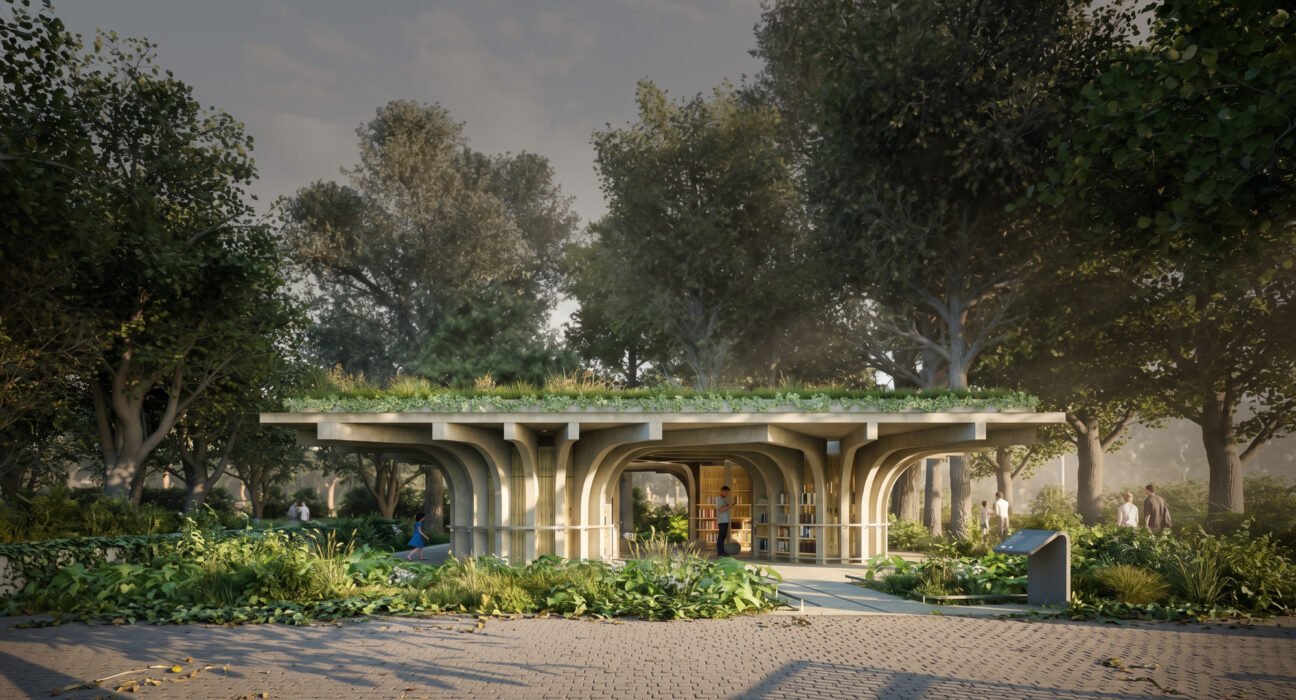
The new library broke ground on October 24, 2026, and is scheduled for completion in June 2027, aligning with Jakarta’s 500th anniversary celebrations. Located within a park in South Jakarta, the project is designed to sit lightly within a lush landscape, using vegetation not merely as decoration but as an integral part of the spatial experience.
SHAU, the Rotterdam-Bandung practice led by Florian Heinzelmann and Daliana Suryawinata, has built a reputation for socially engaged architecture that remains visually distinctive. With Taman Puring, the studio continues its mission to expand a network of sustainable, multifunctional reading spaces across low-income neighborhoods in Indonesia.
This latest milestone in architecture news also reflects momentum generated by SHAU’s earlier success. The firm’s Kampung Mrican Phase 1 received the top prize in the social architecture category of the Ammodo Architecture Award 2025, and that recognition helped enable the realization of this second project.
A Sculptural Design Language with a Green Urban Presence
One of the most striking elements of Microlibrary Taman Puring is its spiraling composition. Curved concrete walls shape a series of rounded rooms, while a lightweight green roof stretches above to create shaded, semi-outdoor spaces between them. The effect is both sculptural and practical: an architecture of movement, shelter, and openness.
For followers of architecture news, the design stands out because it balances expressive form with environmental intelligence. In a tropical city like Jakarta, shade, airflow, and planted surfaces are not aesthetic extras; they are essential performance features.
Key design highlights include:
- Spiral-shaped concrete volumes that define intimate reading and gathering zones
- A green roof that softens the structure and improves thermal performance
- Semi-outdoor shaded areas that encourage flexible community use
- Strong integration with park vegetation to create a calm, nature-connected setting
From a luxury decor and luxury home design perspective, there is also inspiration here in the material restraint. The project does not rely on opulence. Instead, it demonstrates how texture, curvature, landscape, and light can create a high-design atmosphere with lasting emotional value.
Inclusive Architecture at the Heart of the Project
What elevates this story within today’s architecture news cycle is the seriousness of its inclusive design process. SHAU conducted consultations and workshops with disability communities, including Yayasan Menembus Batas and Mitra Inspirasi Pendidikan Indonesia (MIPI), to ensure the building responds to a broad range of users.
Rather than treating accessibility as a late-stage technical requirement, the project incorporates universal access from the beginning. Planned features include wheelchair accessibility and accommodations for visitors with visual impairments, helping the library serve as a genuinely welcoming public space.
This approach matters because the most successful civic architecture is not only beautiful and sustainable, but usable by everyone. In that sense, Taman Puring reflects a growing global shift toward human-centered design, where architecture supports independence, participation, and belonging.
Why inclusive public design matters
- It expands cultural access: Libraries should serve the full community, not just a narrow user group.
- It improves long-term relevance: Spaces designed for varied needs remain useful over time.
- It builds social value: Inclusive design strengthens the role of architecture in public life.
How Taman Puring Builds on SHAU’s Award-Winning Microlibraries Network
Microlibrary Taman Puring is not a standalone gesture. It joins seven other buildings designed by SHAU as part of the broader microlibraries network in Indonesia. That larger initiative positions the library as more than a reading room; it becomes infrastructure for education, community gathering, and neighborhood identity.
SHAU’s earlier Kampung Mrican Phase 1 illustrates this broader vision well. That project combined a library with a playground, public space, flood-control post, community garden, bridge, and sidewalk system. Developed with local residents and in collaboration with Indonesia’s Ministry of Public Works and Housing, it demonstrated how architecture can improve quality of life through layered, everyday functions.
In the context of architecture news, this continuity is significant. Too often, socially minded design is presented as a one-off prototype. SHAU’s work suggests a replicable model: compact, climate-aware, community-driven architecture that can be adapted to local conditions while preserving a strong design identity.
What This Means for Luxury Architecture and Design Conversations
At first glance, a microlibrary in a low-income neighborhood may seem distant from luxury architecture or luxury home decor. Yet the project speaks directly to evolving ideas of contemporary luxury. Today, many designers and clients are looking beyond extravagance toward meaning, wellness, craftsmanship, and environmental intelligence.
Taman Puring embodies several of those values:
- Well-being: Greenery, shade, and open-air circulation create a restorative environment.
- Crafted form: The curved geometry gives the building a memorable, highly designed presence.
- Sustainability: Passive climate strategies are embedded in the architecture.
- Purpose: The building delivers cultural and educational value, not just visual impact.
That is why this piece of architecture news resonates beyond the public sector. It offers lessons for luxury homes, boutique hospitality, and high-end interiors: beauty works best when it is tied to comfort, access, and a deeper sense of place.
A New Chapter in Architecture News Worth Watching
As Jakarta approaches its 500th anniversary, Microlibrary Taman Puring is shaping up to be one of the city’s most meaningful cultural additions. It is elegant without excess, experimental without losing practicality, and civic-minded without compromising architectural ambition.
The clearest takeaway from this architecture news story is simple: great design can be both aspirational and accessible. SHAU’s Taman Puring project shows that when architecture listens carefully to communities, embraces climate-sensitive strategies, and prioritizes inclusion, even a modest library can become a landmark of contemporary design.