Architecture news rarely carries the cultural weight of preservation, memory, and design innovation all at once. The Getty Foundation’s latest expansion of its Conserving Black Modernism program does exactly that, adding five significant sites that spotlight the legacy of African American architects and the enduring value of Modernist design in communities across the United States.
Originally launched in 2022 through the National Trust’s African American Cultural Heritage Action Fund, Conserving Black Modernism has grown from a limited initiative into a national preservation effort. With support now reaching 26 historic modern sites across 17 states and Washington, D.C., the program funds conservation planning, documentation, professional training, and storytelling. This newest round of grants brings fresh momentum to a conversation that sits at the intersection of design history, social equity, and the future of adaptive reuse.
Architecture News: Why Conserving Black Modernism Matters
This wave of architecture news is important because it goes beyond celebrating iconic buildings. It addresses a long-standing gap in how architectural history is documented, funded, and preserved. Black architects made foundational contributions to the Modernist movement in the U.S., yet many of their works have been under-recognized and under-protected.
The Getty Foundation’s program helps correct that imbalance by supporting places that are not only architecturally notable, but also deeply tied to civic life, education, worship, commerce, and public space. The five newly supported grantee sites show the breadth of Black Modernism through varied building types and regional contexts.
- Transit and landscape infrastructure in Boston
- A sculptural church in Indiana
- An academic building at Fisk University in Tennessee
- A landmark humanities center in Houston
- A pioneering Black-owned commercial complex in Milwaukee
For readers following luxury architecture and luxury design, this is also a reminder that design value is not defined solely by exclusivity or materials. Cultural significance, vision, and spatial ingenuity are equally powerful markers of architectural excellence.
Five New Sites Featured in the Latest Architecture News
1. Southwest Corridor and Ruggles Station, Boston
One of the most compelling stories in this round of architecture news comes from Boston, where the Southwest Corridor Project transformed land once cleared for the cancelled I-95 Southwest Expressway. After community activism halted the highway plan, Black-led firm Stull & Lee, Inc. helped shape a new urban vision that combined transportation infrastructure with public parkland.
The result was a people-centered corridor that linked historically Black neighborhoods with gardens, recreation spaces, pathways, and MBTA transit access. Ruggles Station, completed in 1987, became a standout element with its barrel-vaulted form, sunburst windows, and integration of public art. Getty funding will support historical documentation, photography, 3D modeling, and archival research to preserve the design legacy of Stull & Lee.
2. St. Mark AME Zion Church, East Chicago
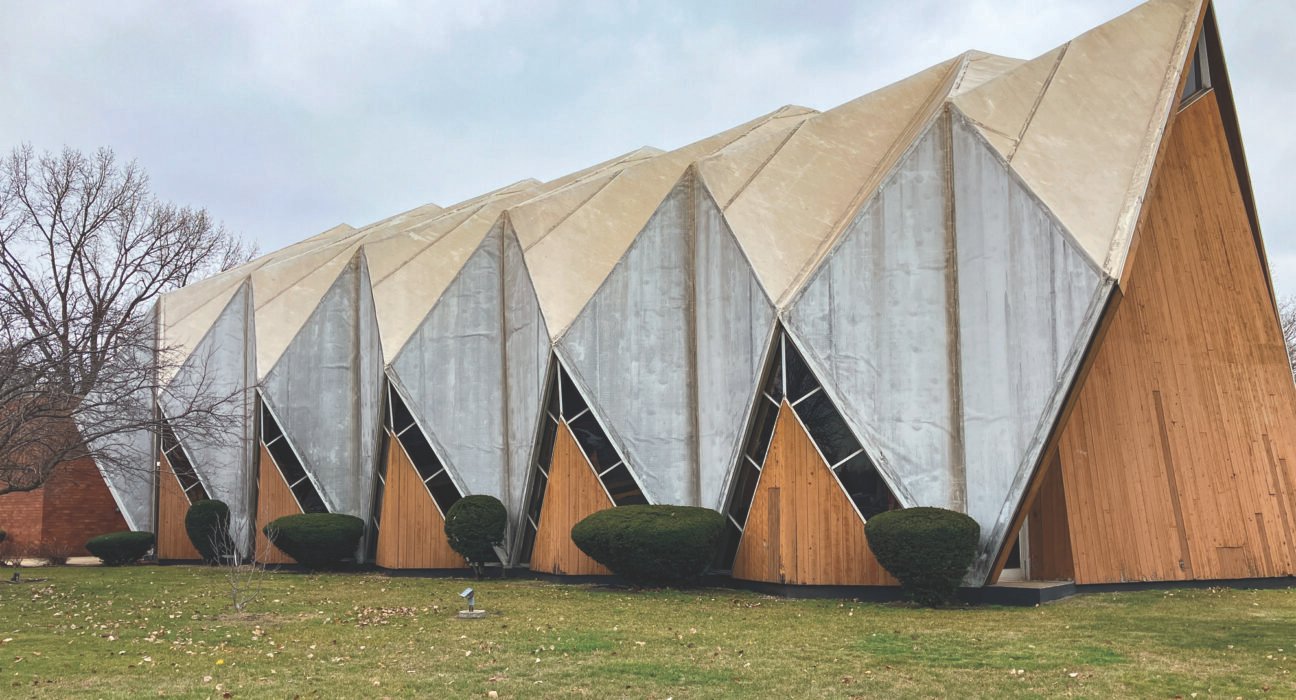
Designed by Wendell Campbell and completed in 1973, St. Mark AME Zion Church is an expressive example of religious modernism. Its dramatic roofline and angular composition are said to evoke two hands interlocked in prayer, giving the building both symbolic resonance and sculptural presence.
This is the kind of architecture news that underscores how spiritual spaces can also be major works of design. Campbell, a co-founder and first president of the National Organization of Minority Architects, created a church that blends neo-expressionist energy with liturgical function. Funding will help create a conservation management plan that identifies current conditions and future preservation priorities.
3. Park-Johnson Hall at Fisk University, Nashville
At Fisk University, Park-Johnson Hall stands as a refined example of mid-century academic design. Built in 1954, the brick-and-glass building was designed by McKissack & McKissack, recognized as the oldest Black-owned architecture firm in the United States.
In recent architecture news, universities have increasingly turned to preservation as part of campus planning, and this grant fits that trend. Getty support will fund a full conservation and management plan, while also placing the building within the larger body of work McKissack & McKissack produced for Fisk. The effort recognizes not just one structure, but an architectural relationship between institution, community, and designer.
4. Martin Luther King Jr. Humanities Center, Houston
Texas Southern University’s Martin Luther King Jr. Humanities Center, completed in 1969, was designed by John Saunders Chase Jr., the first licensed Black architect in Texas. The building’s cylindrical core and projecting wings give it a distinctive silhouette, one often interpreted as a physical expression of Dr. King’s influence and legacy.
This chapter in architecture news reflects how preservation can protect both form and meaning. Getty funding will support a historic structures report documenting the building’s significance, material condition, and rehabilitation priorities. As conversations around campus heritage continue to evolve, the Humanities Center stands out as a site where architecture and civil rights history intersect in a particularly powerful way.
5. Central City Plaza, Milwaukee
Completed in 1973 and designed by Alonzo Robinson Jr., Central City Plaza was the first Black-owned, designed, and operated shopping center in Milwaukee. It remains one of the city’s few examples of New Formalist architecture, with arched porticos, fluted concrete panels, and arcaded storefronts that give the complex a distinctive civic rhythm.
Among this year’s most socially resonant architecture news stories, Central City Plaza also demonstrates how preservation can support present-day community needs. Part of the site has long been used for humanitarian services, including emergency housing and meals. Getty-backed studies will help guide rehabilitation and adaptive reuse, potentially expanding these support functions while maintaining the site’s architectural identity.
What This Means for Luxury Architecture and Design Audiences
Although this story emerges from preservation policy, it carries clear relevance for luxury architecture, luxury decor, luxury home, and luxury design audiences. Why? Because the future of high-end design is increasingly shaped by authenticity, legacy, and thoughtful stewardship.
These newly funded sites offer lessons that transcend category:
- Design with meaning endures. Buildings rooted in cultural narratives often outlast trend-driven aesthetics.
- Material preservation is a design discipline. Conservation planning requires as much expertise as new construction.
- Adaptive reuse adds value. Rehabilitating important architecture can create social and economic impact without erasing history.
- Architectural storytelling matters. The public is paying closer attention to who designed spaces and whose histories they represent.
For professionals in luxury interiors and luxury home decor, this broader lens on architectural heritage reinforces a growing market preference for spaces with provenance, intention, and narrative depth.
The Bigger Picture in Architecture News
This latest architecture news arrives during a wider global reappraisal of modern heritage. From UNESCO’s recent recognition of major 20th-century sites to ongoing debates over whether to restore or demolish aging modern landmarks, preservation is becoming one of the defining design conversations of the decade.
The Getty Foundation’s Conserving Black Modernism program stands out because it ties that global conversation to communities that have too often been overlooked in mainstream architectural history. By funding documentation, conservation plans, and public storytelling, the initiative helps ensure these places are not simply remembered, but actively sustained.
In the end, the most meaningful architecture news is not just about what gets built next. It is also about what we choose to protect. Getty’s five new grants make a strong case that preserving Black Modernist landmarks is essential to understanding American design history—and to shaping a more inclusive architectural future.