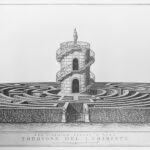


Architecture news often focuses on skylines, materials, and spectacle, but the most compelling ideas in design begin with how we move, feel, and interpret space. A recent book examining the labyrinth as a way of reading architecture opens a rich conversation for the worlds of luxury architecture, luxury decor, and luxury home design, where experience can matter as much as form.
The labyrinth is more than an ancient symbol or a winding path. In architectural thinking, it becomes a lens for understanding uncertainty, sequence, discovery, and bodily movement through space. Rather than treating buildings as static objects to be viewed from a distance, this approach invites readers and designers to see architecture as something unfolded step by step. That concept is especially relevant to high-end residential and interior design, where curated circulation, spatial drama, and emotional pacing define truly memorable environments.
Architecture News and the Return of Experiential Design
In today’s architecture news, one of the strongest shifts is the renewed interest in experience-driven design. The labyrinth offers a powerful framework because it resists instant comprehension. Instead of revealing everything at once, it creates layers of perception, encouraging pause, anticipation, and surprise.
For luxury architecture, this is a meaningful idea. The most refined homes are rarely just large or expensive; they are orchestrated. Entry sequences, framed views, concealed courtyards, changing light conditions, and tactile transitions between rooms all contribute to a sense of narrative. A labyrinthine reading does not necessarily mean confusing layouts. Rather, it suggests intentional complexity, where movement through the home becomes part of its beauty.
This perspective also resonates with luxury design more broadly, especially in spaces that prioritize privacy, ritual, and mood. A corridor that narrows before opening into a grand salon, a stair that slowly reveals a sculptural chandelier, or a garden path that hides and then unveils a reflecting pool all embody the architecture of unfolding experience.
The Labyrinth as a Reading of Architecture
The idea of the labyrinth in architecture is not simply about maze-like plans. It is about how humans navigate uncertainty in space. Buildings are not understood all at once; they are read over time. As we move, our perspective changes, and each threshold alters our understanding of what comes next.
That reading can be broken into several architectural qualities:
- Sequence: spaces reveal themselves in a deliberate order
- Ambiguity: not every destination is obvious at first glance
- Transition: doors, stairs, halls, and courtyards shape emotional rhythm
- Embodiment: architecture is experienced physically, not just visually
- Memory: movement creates lasting impressions and spatial recall
In architecture news, discussions like these expand the field beyond aesthetics and into phenomenology, spatial storytelling, and sensory design. This is particularly valuable for luxury home projects, where clients increasingly seek homes that feel immersive rather than merely impressive.
What This Means for Luxury Architecture
Luxury architecture has long embraced procession and spatial layering, from classical villas to contemporary estates. The labyrinth concept sharpens that tradition by emphasizing uncertainty as a design tool. Not confusion, but controlled discovery.
1. Arrival becomes an event
In a luxury home, the path from gate to front door can set the entire tone. Curved drives, screened entrances, textured walls, and landscaped approaches create anticipation. The home is not consumed in a single glance; it is encountered gradually.
2. Interiors gain narrative depth
Luxury decor and luxury home decor thrive when rooms feel connected by a larger story. Transitional spaces such as vestibules, galleries, and passageways should not be treated as leftover square footage. They can become atmospheric moments that heighten the impact of the rooms beyond them.
3. Movement shapes emotional response
A double-height living room revealed after a compressed hallway feels more dramatic. A spa bath at the end of a quiet circulation spine feels more secluded. Through movement, architecture controls tension and release, intimacy and grandeur.
4. Privacy is designed, not added
One of the hallmarks of luxury design is discretion. A labyrinthine reading supports that value by using layered thresholds, hidden sightlines, and staggered zones to separate public entertaining areas from personal retreats.
From Theory to Luxury Home Design
The best ideas in architecture news become powerful when translated into practice. For architects, interior designers, and developers working in high-end residential projects, the labyrinth can inspire concrete design strategies.
- Create spatial progression: Design homes with a clear sequence from public to private areas.
- Use light as guidance: Natural light can draw residents through a space and reveal destinations gradually.
- Layer materials: Stone, wood, plaster, bronze, and glass can signal transitions and enrich the journey.
- Frame partial views: Avoid exposing every room immediately; let glimpses encourage movement.
- Design for pause: Seating niches, courtyards, and landings give rhythm to circulation.
These ideas also apply to luxury decor. Furniture placement, sculptural lighting, textiles, and artwork can reinforce the sense of passage and discovery within a home. In this way, interiors do not simply fill architecture; they participate in its unfolding.
Why This Conversation Matters in Architecture News
There is a reason this topic deserves attention in architecture news. Contemporary design culture often rewards instant visual impact, especially online, where a single image can define a project. Yet architecture is never fully captured in one photograph. It is lived in motion.
The labyrinth reminds us that architecture is a temporal art. We understand spaces through walking, turning, entering, and remembering. For luxury architecture, that insight is transformative. It shifts value away from surface display alone and toward atmosphere, choreography, and emotional resonance.
For luxury home owners and designers alike, this is an invitation to think differently about elegance. True sophistication may lie not in showing everything, but in revealing it at the right moment. That principle can elevate everything from a penthouse interior to a private coastal estate.
Conclusion
As architecture news continues to highlight ideas that shape the future of design, the labyrinth stands out as a compelling way to read architecture through uncertainty and movement. For luxury architecture, luxury decor, and luxury home design, it offers a timeless lesson: great spaces are not only seen, they are discovered. The strongest takeaway is simple but profound: when architects design for sequence, sensation, and surprise, they create homes that feel unforgettable long after the first impression fades.