
Architecture news rarely arrives with the drama of a new Jean Nouvel project opening on Shanghai’s waterfront. The newly unveiled Museum of Art Pudong is more than a gallery building—it is a monumental cultural destination that fuses luxury architecture, landscape design, and urban spectacle into one striking riverfront experience.
Designed by Ateliers Jean Nouvel, with TJAD Shanghai as architects of record, the Museum of Art Pudong occupies a vast site of nearly 40,000 square meters along the Huangpu River. Rather than behaving like a standalone object, the museum has been conceived as a carefully framed domain: a civic setting where architecture, art, light, water, and landscape interact. For readers following luxury design and high-end cultural spaces, this project stands out as one of the most compelling museum openings in recent years.
Architecture News: A New Cultural Landmark in Pudong
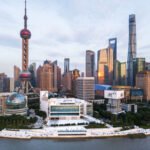
In the world of architecture news, museum projects often signal how cities want to present themselves to the world. Shanghai’s Museum of Art Pudong does exactly that. Positioned on the outer banks of the Huangpu River, the building creates an elegant threshold between the fast-rising skyline of Pudong and the historic visual presence of the Bund across the water.
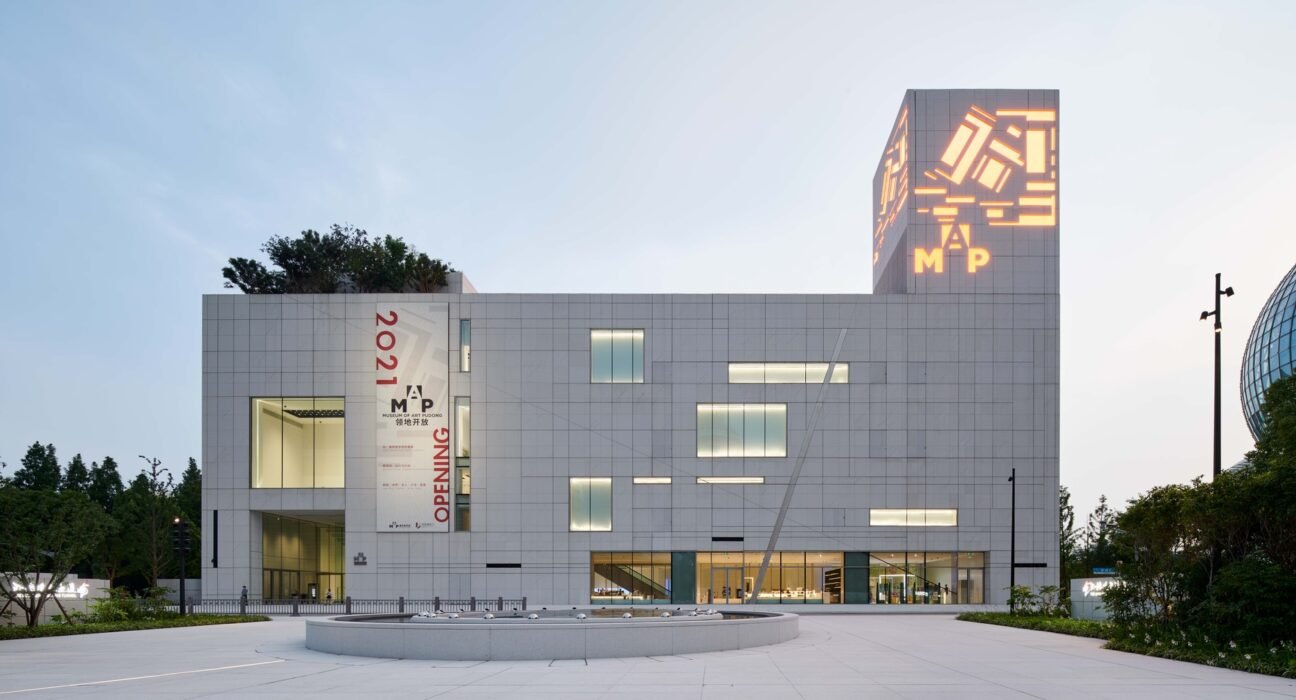
The museum is wrapped in warm white granite, a material choice that gives the building both permanence and softness. As the structure descends toward the river, the façade appears to lighten, subtly responding to water, sky, and changing daylight. This careful modulation is central to Jean Nouvel’s approach: architecture here is not static, but atmospheric.
Key project highlights include:
- A monumental granite-clad exterior with refined textural detailing
- A prime waterfront location along the Huangpu River
- An expansive landscaped setting designed to separate the museum from nearby towers
- Integrated art, performance, and media elements across indoor and outdoor spaces
- Panoramic views toward the Bund from elevated public areas
Luxury Architecture Meets Landscape Design
One reason this story belongs at the center of architecture news is the way the museum merges luxury architecture with landscape as a complete sensory experience. The site is visually and physically buffered from neighboring high-rises by a dramatic V-shaped linear garden extending roughly 700 meters. Planted with tall trees, this green edge forms a dense frame around the museum grounds while also allowing air to circulate through the site.
This landscaping strategy does more than beautify the surroundings. It establishes privacy, scale, and rhythm—qualities often associated with luxury home design and luxury decor, but here translated to an urban cultural institution. The result is a museum campus that feels composed and immersive rather than exposed or overbuilt.
The outdoor sequence includes:
- A forecourt that prepares visitors for the monumental interior experience
- A stone field that amplifies the building’s material character
- A terrace overlooking the waterfront
- A public walkway along the river designed for sculpture and art installations
From day to night, these spaces are intended to shift in mood, supported by changing natural light and illuminated artworks. That layered experience is a hallmark of luxury design thinking: every transition matters.
Granite, Light, and Detail: The Museum’s Material Language
Among the most notable details in this chapter of architecture news is the museum’s highly considered material palette. The stone surfaces vary in scale and incorporate a raindrop-like texture that provides subtle slip resistance. This is a practical move, but it is also tactile and poetic, turning the ground plane into part of the architectural narrative.
Sharp geometric lines across the structure are emphasized with metal edging, reinforcing the precision of the design. The interplay between crisp angles and softly luminous granite gives the museum a powerful sculptural presence.
Inside, natural light plays a defining role. The top-floor rooms and atrium exhibition areas are illuminated from above through micro sheds, creating a controlled overhead daylight condition. Carefully placed windows also frame selected views of the landscape and city, ensuring that visitors remain aware of Shanghai beyond the gallery walls.
Why the lighting strategy matters
For museum architecture, lighting is not just functional—it shapes how art is perceived. Here, the combination of overhead illumination and curated urban views allows the building to operate as both neutral exhibition container and active visual instrument. This duality is exactly why the project is generating so much attention in architecture news and luxury architecture circles alike.
The Screens That Turn the Museum Into Urban Theater
Perhaps the most futuristic aspect of this architecture news story is the museum’s system of monumental screens. Two vertical screen-signs—one above the museum and another atop the ventilation tower—are connected at night by laser beams, producing intersecting lines of light over the site. This transforms the institution into a civic beacon after dark.
On the western side facing the Bund, a large double-glazed screen façade functions as what the architects describe as a testament to 21st-century art. Built with mirrors and projection surfaces across two stacked floors, it serves multiple roles throughout the day.
Its uses include:
- Daytime installation space: a reflective architectural gallery facing the city
- Performance venue: a dramatic stage-like backdrop for public programming
- Nighttime video surface: a media façade capable of animated visual content
This ability to shift identity from mirror to gallery to performance wall to digital canvas makes the museum especially relevant to contemporary luxury design. It is architecture that performs, communicates, and evolves.
What Museum of Art Pudong Means for Luxury Design
Beyond its cultural role, this project offers valuable lessons for anyone interested in luxury home decor, luxury architecture, or elevated spatial design. The museum demonstrates that luxury is not only about expensive finishes. It is about orchestration—how material, view, movement, atmosphere, and technology work together.
From the loggia restaurant overlooking the river to the carefully framed city vistas, every element has been designed to heighten experience. Even the separation from neighboring towers feels intentional, creating a sense of exclusivity and calm that many luxury residential projects aim to achieve.
For designers and enthusiasts, the museum’s most inspiring takeaways are clear:
- Use natural materials to create timeless visual depth
- Let landscape define architecture, not merely surround it
- Design with changing light conditions in mind
- Incorporate multifunctional surfaces and adaptable spaces
- Create moments of drama without sacrificing clarity and restraint
Conclusion: Why This Architecture News Story Matters
As a piece of architecture news, the opening of Jean Nouvel’s Museum of Art Pudong is significant because it shows how a museum can become both a public landmark and a luxury spatial experience. With its granite-clad massing, riverfront terraces, sculpted landscape, natural light strategy, and media-driven screens, the project expands what contemporary cultural architecture can be.
For Shanghai, it adds a bold new destination to the waterfront. For the broader design world, it offers a masterclass in how architecture, art, and environment can be composed into one unforgettable setting. If you follow architecture news for the projects that truly shape design conversations, Museum of Art Pudong deserves your attention.