Architecture news rarely feels as urgent, layered, and visually powerful as this. With Architects of Liberation: Modernism in Western Africa, the Museum of Modern Art in New York brings overdue global attention to a generation of buildings that transformed newly independent nations—and still shape how we think about luxury architecture, climate-responsive design, and cultural identity today.
Open from July 5, 2026, through January 2, 2027, the exhibition explores modern architecture in West Africa from the late 1950s to the early 1980s. Spanning Benin, Cameroon, Côte d’Ivoire, Ghana, Nigeria, Senegal, and Togo, the show presents architecture not simply as construction, but as a form of nation-building, symbolism, and self-definition in the aftermath of colonial rule.
Architecture News Spotlight: Why MoMA’s West African Modernism Exhibition Matters
This major museum presentation examines the independence era as one of the most prolific periods of architectural production on the African continent. Following the political transformations that culminated in 1960’s “Year of Africa,” newly sovereign states turned to design to express ambition, unity, and a distinctly modern future.
For readers interested in luxury design and luxury home aesthetics, this story offers more than historical insight. It shows how architecture can communicate prestige without excess, and how monumentality, local climate, and cultural meaning can coexist in sophisticated ways. In today’s design conversations—where authenticity and regional intelligence are increasingly prized—these projects feel remarkably contemporary.
Curated by Martino Stierli and Ikem Stanley Okoye, with Mallory Cohen, the exhibition is built around key “entry point” projects and thematic lenses including housing, education, and urban identity. The result is a broader architectural narrative that challenges the old Eurocentric canon and expands the conversation around global modernism.
A Closer Look at the Exhibition’s Scope
MoMA’s presentation is substantial in both depth and scale. The exhibition includes around 450 objects gathered through years of research, drawing from more than 50 lenders across 17 countries. Many works on view have never been publicly exhibited before, and numerous featured architects have received little scholarly attention until now.
Visitors encounter a rich mix of material:
- Archival photographs
- Architectural drawings and plans
- Original and newly commissioned models
- New film works
- Contemporary photographic documentation
Together, these materials reveal an “architectural language of self-determination,” one that adapted modernist principles to African political realities, social aspirations, and environmental conditions.
Countries and Themes Represented
The exhibition loosely defines “western Africa” as the coastal region from Senegal to the Gulf of Guinea. Within that framework, the show highlights how different nations developed parallel yet distinct architectural identities. Rather than presenting a single style, it demonstrates a spectrum of approaches shaped by local materials, governance, symbolism, and climate.
Iconic Buildings That Redefined National Identity
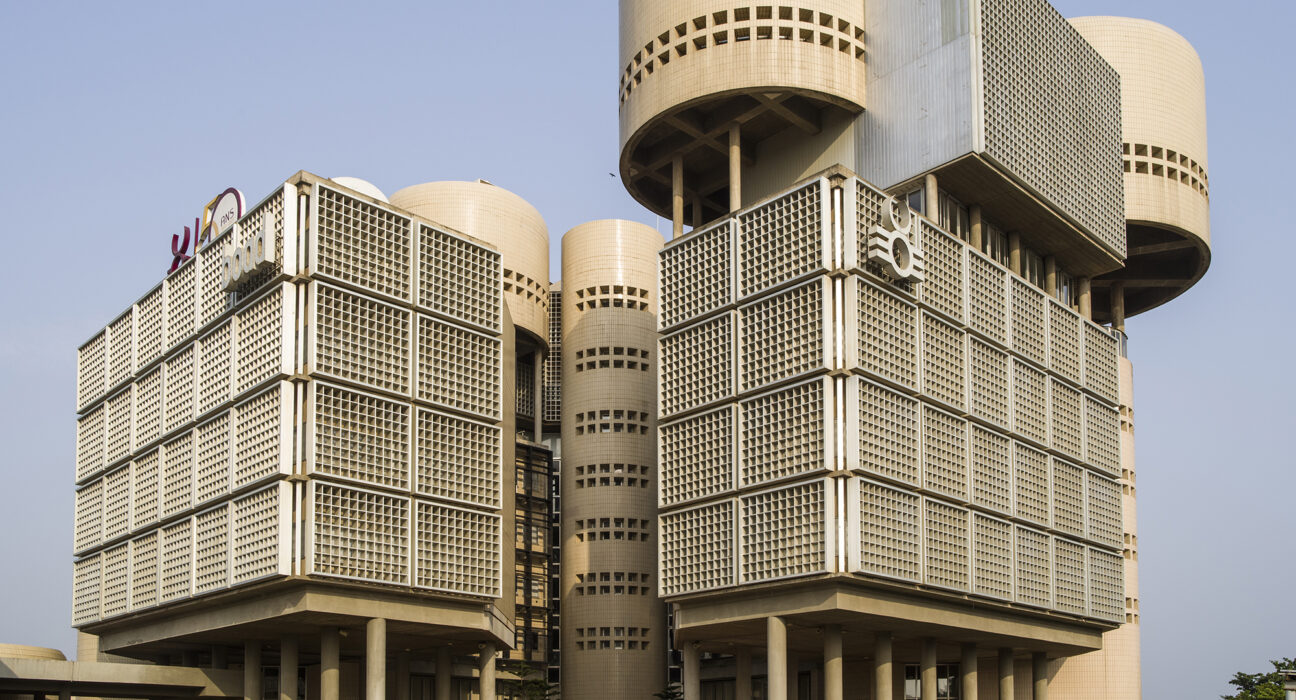
One of the most compelling aspects of this architecture news story is the lineup of landmark buildings included in the exhibition. These works reveal how architecture served as a public face for independence-era optimism.
The Africa Pavilion, Accra Trade Fair, Ghana
Designed by Vic Adegbite, Jacek Chyrosz, and Stanisław Rymaszewski under the Ghana National Construction Corporation, this circular pavilion became a symbol of national unity. Its form communicated civic purpose while embracing the expressive optimism of post-independence modernism.
La Pyramide, Abidjan, Côte d’Ivoire
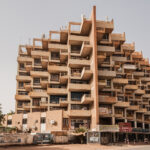
Completed in 1973 and designed by Rinaldo Olivieri, La Pyramide remains one of the most recognizable modernist structures in West Africa. Its sculptural profile altered Abidjan’s skyline and anticipated contemporary interest in dramatic massing, shading, and mixed-use urban presence—qualities now frequently celebrated in luxury architecture.
CICES, Dakar, Senegal
The Centre International du Commerce Extérieur du Sénégal, designed by Jean-François Lamoureux and Jean-Louis Marin, exemplifies how trade, diplomacy, and architectural identity intersected. The campus is associated with President Léopold Senghor’s cultural vision and presents a dynamic composition rather than repetitive formal order.
University of Ife, Nigeria
With a masterplan by Arieh Sharon, this educational project reflects the role of institutions in shaping modern national futures. Campuses like this were not only functional; they projected intellectual confidence and long-term civic ambition.
The Designers Behind the Movement
A key strength of the exhibition is its attention to the first generation of trained African architects, many of whom have not received the international recognition they deserve. Featured figures include John Owusu Addo, Demas Nwoko, Cheikh Ngom, Jean Léon, and Vic Adegbite, among others.
The show also acknowledges the transnational nature of postwar architecture, including contributions from architects from Italy, France, Yugoslavia, and elsewhere. That balance is important: it neither erases international collaboration nor overlooks African authorship. Instead, it shows how design cultures intersected during a pivotal historical moment.
What Luxury Design Can Learn From West African Modernism
For audiences focused on luxury home, luxury decor, and luxury home decor, this exhibition offers a surprising number of design lessons. Independence-era West African modernism often prioritized qualities that define high-end living today:
- Climate intelligence: deep overhangs, shading devices, and ventilation strategies created comfort through design rather than dependence on mechanical systems.
- Material presence: bold concrete forms, textured surfaces, and carefully articulated facades delivered visual richness through structure itself.
- Cultural specificity: buildings expressed identity, ceremony, and place instead of chasing a generic international style.
- Monumental restraint: many projects achieved grandeur through proportion and rhythm rather than ornament overload.
In a luxury context, these principles translate beautifully into contemporary residences, boutique hospitality, and collectible interiors. They suggest that true sophistication lies in spatial intelligence and meaning—not just finish selections.
Why This Architecture News Story Has Lasting Relevance
This is more than a museum event announcement. It is a reminder that the story of modernism is incomplete without Africa, and that some of the most innovative responses to politics, climate, and identity emerged outside the traditional centers of architectural history.
The accompanying catalogue, with extensive illustrations and new photography, further strengthens the exhibition’s impact, making it a valuable resource for architects, collectors, designers, and anyone tracking global design culture.
As architecture news goes, MoMA’s Architects of Liberation stands out for reframing the past in a way that directly informs the future. For the luxury design world, the takeaway is clear: the most compelling architecture is not only beautiful, but rooted in place, purpose, and cultural confidence.