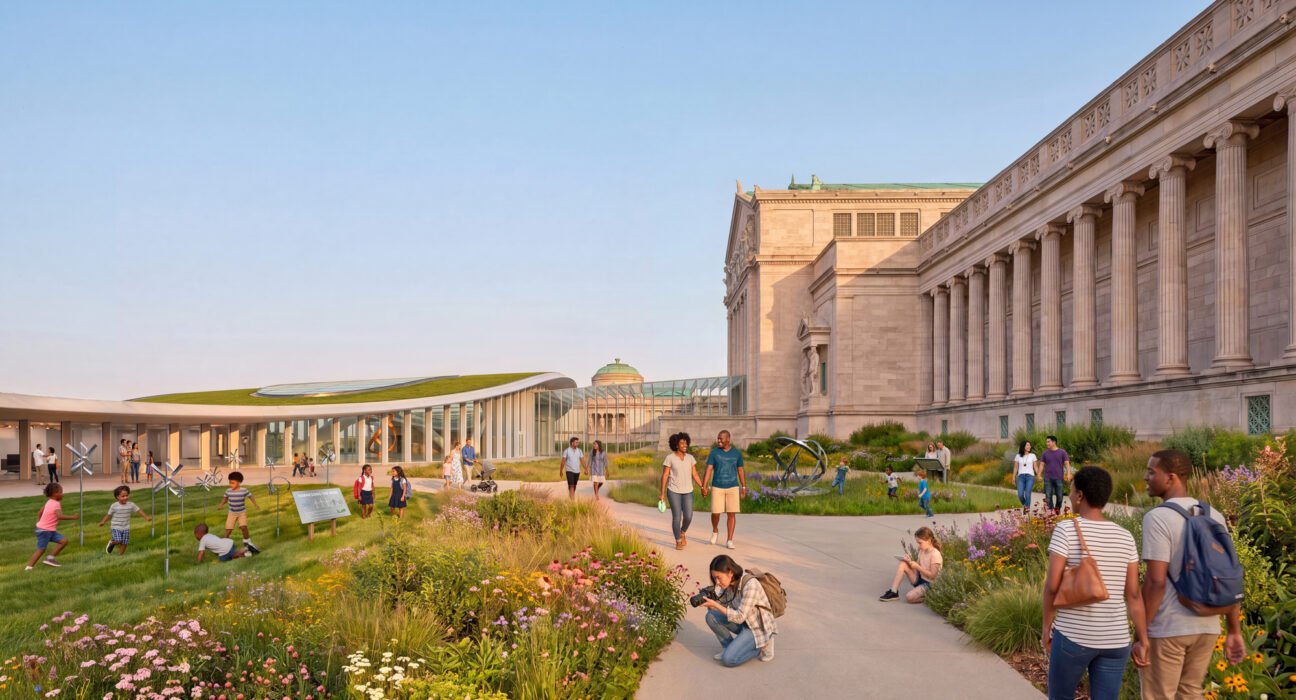
Architecture news rarely feels as exciting as the moment a beloved civic landmark prepares for a new chapter. In Chicago, that moment has arrived with Robert A.M. Stern Architects’ proposal for a refined new welcome hall at the Griffin Museum of Science and Industry, a project that blends grandeur, function, and cultural ambition.
The plan signals more than a simple entry upgrade. It reflects a broader shift in how major museums are designing first impressions: creating arrival spaces that are intuitive, memorable, and architecturally significant in their own right. For readers interested in luxury architecture, luxury design, and elevated public interiors, this development is worth watching closely.
Architecture News From Chicago: A New Front Door for a Historic Institution
The Griffin Museum of Science and Industry is one of Chicago’s most recognizable cultural destinations, known for its monumental setting and deep public legacy. The newly unveiled welcome hall by RAMSA, short for Robert A.M. Stern Architects, aims to reimagine how visitors enter and experience the museum from the very first step.
In today’s architecture news cycle, museum expansions and renovations often focus on circulation, accessibility, and identity. This proposal appears to do all three. A thoughtfully designed welcome hall can dramatically improve visitor flow, reduce congestion, and create a stronger sense of occasion. Rather than serving as a purely utilitarian threshold, the entrance becomes part of the museum experience itself.
That is especially important for a destination like the Griffin Museum, where architecture must support education, discovery, and civic pride at once. A successful welcome hall needs to welcome families, students, tourists, and architecture enthusiasts while respecting the stature of the existing institution.
Why Welcome Halls Matter in Contemporary Museum Design
A museum entry is no longer just a lobby. In leading cultural projects, it acts as a social space, orientation point, and architectural statement. That is one reason this item stands out in architecture news and resonates beyond Chicago.
Today’s best welcome halls typically serve several purposes:
- Create a clear and elegant arrival sequence
- Improve navigation and ticketing efficiency
- Support accessibility for a broad range of visitors
- Provide flexible space for gathering, programming, and events
- Strengthen the institution’s visual identity
For museums competing for attention in a crowded cultural landscape, the quality of the entrance can shape public perception instantly. Visitors increasingly expect spaces that feel open, intuitive, and visually compelling. In that sense, entry architecture has become a key element of museum branding and visitor satisfaction.
RAMSA’s Design Language and Its Luxury Appeal
RAMSA has long been associated with classicism, proportion, material richness, and a polished approach to large-scale civic and residential work. Those qualities align naturally with the interests of readers drawn to luxury architecture and luxury home decor, because the same design principles often overlap: symmetry, permanence, craftsmanship, and carefully curated detail.
Even in public architecture, RAMSA’s work tends to emphasize elegance over spectacle. That balance is especially relevant here. A museum devoted to science and industry benefits from an arrival space that feels dignified and welcoming rather than overwhelming. Good design in this context should elevate the experience without distracting from the institution’s mission.
From a luxury design perspective, projects like this are influential because they often set broader interior trends. Elements commonly seen in high-end public halls can later inform luxury home, luxury decor, and hospitality design, including:
- Layered natural materials
- Grand but restrained lighting strategies
- Formal spatial sequencing
- Generous ceiling heights
- Timeless detailing instead of trend-driven finishes
This is one reason high-profile cultural announcements consistently attract attention in architecture news. They are not just about one building; they often preview wider design directions.
What This Means for Chicago’s Cultural and Design Landscape
Chicago has one of the richest architectural legacies in the world, so any major museum intervention enters a citywide conversation about heritage, innovation, and public space. The proposed welcome hall contributes to that dialogue by investing in the visitor experience while reinforcing the museum’s role as a major civic anchor.
For the city, improvements to a landmark institution can have ripple effects:
- Stronger tourism appeal: A more dramatic and efficient arrival can enhance the museum’s draw for both local and international visitors.
- Renewed institutional identity: Updated entry design can signal momentum, relevance, and long-term investment.
- Architectural continuity: Thoughtful additions help historic destinations evolve without losing character.
- Design influence: High-visibility projects often inspire future work across residential and commercial sectors.
That combination of civic value and aesthetic ambition is exactly why this story deserves attention in architecture news. It sits at the intersection of preservation, contemporary planning, and premium design thinking.
Luxury Architecture Lessons Homeowners and Designers Can Take Away
Although this project centers on a museum, its design logic applies surprisingly well to residential interiors. In luxury home design, the entry sequence matters just as much as it does in a public building. The way a person arrives, pauses, and transitions into a space defines the emotional tone of the entire property.
Designers and homeowners can borrow several principles from museum welcome hall planning:
1. Make the entrance feel intentional
A foyer should not feel like leftover space. Strong proportions, clear sightlines, and elegant finishes create an immediate sense of order.
2. Balance beauty with movement
Great spaces support circulation. Whether in a museum or a luxury home, people should know where to go instinctively.
3. Use durable, elevated materials
Stone, wood, metal, and architectural lighting add visual depth while standing up to heavy use.
4. Design for first impressions
The opening view into a building sets expectations. Framing that moment carefully is a hallmark of sophisticated design.
These ideas help explain why readers interested in luxury decor and luxury architecture continue to follow institutional projects through the lens of architecture news. Public buildings often showcase design strategies at their most refined and legible.
Why This Project Stands Out in Architecture News
Not every museum upgrade captures broad design interest, but this one has several compelling elements: a major Chicago institution, a respected architecture firm, and a building type that increasingly shapes how the public engages with culture. The proposed welcome hall is significant not because it is merely new, but because it reframes arrival as a meaningful architectural experience.
As more institutions rethink access, hospitality, and spatial identity, projects like this will remain central to architecture news. They reveal how architecture can be ceremonial and practical at once, serving both public needs and aesthetic ambitions.
For Chicago, the plan suggests a future in which one of its most treasured museums greets visitors with renewed clarity and grandeur. For the wider design world, it is another reminder that the most memorable spaces often begin at the threshold.
In the end, this piece of architecture news is about more than an entrance. It is about how architecture shapes anticipation, communicates institutional values, and turns arrival into an experience worth remembering.