Architecture news this week reveals a powerful shift in how cities are being redesigned for climate resilience, cultural life, and high-end urban living. From Antalya’s COP31 preparations to Foster + Partners’ ambitious World Trade Center Yerevan, the latest projects show how luxury architecture now depends as much on public value and sustainability as on visual impact.
Across Europe, the Caucasus, Australia, and the United States, architects are rethinking museums, stadiums, waterfront destinations, and mixed-use precincts. The common thread is clear: the best contemporary design is no longer only about iconic buildings, but about creating refined, future-ready places that blend heritage, wellness, access, and environmental performance.
Architecture News Highlights a New Era of Adaptive Urbanism
One of the most important stories in architecture news this week comes from Antalya, where the city is preparing to host COP31 by adapting the former EXPO 2016 grounds. Rather than building an entirely new summit venue, planners are combining existing infrastructure with permanent and temporary additions. The site will include dedicated zones for formal negotiations and public programming, while remaining usable long after the climate conference ends.
This approach reflects a growing priority in luxury architecture and luxury design: adaptability. High-value development today is increasingly measured by how well a project can evolve over time, minimize waste, and extend the life of major civic investments.
The same logic appears in the renovation of Museum Boijmans Van Beuningen in Rotterdam. Mecanoo’s update addresses long-standing maintenance and safety issues while improving circulation, exhibition areas, and visitor amenities. In Pittsburgh, the Heinz Architectural Center at the Carnegie Museum of Art is also being reimagined, with new spaces for research, study, and public learning.
Together, these projects underscore several themes shaping current architecture news:
- Adaptive reuse is becoming central to prestige design
- Cultural institutions are prioritizing flexible public access
- Long-term sustainability is influencing both planning and aesthetics
- Luxury environments increasingly balance heritage with performance
New Public Destinations Redefine Luxury Architecture
Another key trend in architecture news is the emergence of public-facing destinations that merge recreation, culture, and urban placemaking. In Copenhagen, Kengo Kuma & Associates’ KAI Water Culture House is set to add a dramatic new waterfront experience on Paper Island. The 5,800-square-meter complex will feature indoor and outdoor pools, wellness amenities, and cultural areas, extending the city’s relationship with the harbor.
For readers interested in luxury home decor and luxury lifestyle environments, this project is especially notable. It shows how wellness architecture is moving beyond private clubs and elite resorts into civic spaces with elevated materiality, serene landscapes, and experiential design.
In Chicago, RAMSA’s planned Welcome Hall for the Griffin Museum of Science and Industry offers another example of elegant public improvement. By reopening the historic North Portico and replacing a long subterranean route with a more direct and accessible entrance, the scheme transforms arrival into a meaningful architectural moment.
Meanwhile, Stefano Boeri Architetti’s masterplan for Loco Park in Tbilisi converts a former electric locomotive factory into a mixed-use neighborhood with housing, shops, cafés, workshops, gardens, and parks. It is a compelling model of urban regeneration that combines industrial memory with contemporary residential appeal.
These projects illustrate how architecture news is increasingly centered on spaces that feel premium without being exclusive. The most successful developments invite public engagement while delivering the sophistication expected in luxury design.
Foster + Partners Brings Global Prestige to Yerevan
Among the week’s most prominent architecture news stories is Foster + Partners’ unveiling of the World Trade Center Yerevan. The mixed-use development combines offices, residences, a hotel, retail, and cultural functions in a pair of towers connected at multiple levels.
What makes the project particularly compelling is its urban strategy. Roughly half the site is being preserved for public space, with plazas, landscaped terraces, pedestrian routes, and event areas extending the green axis of nearby Diana Abgar Park. The masterplan also respects historic Frik Street, creating a dialogue between Yerevan’s architectural legacy and its global future.
From a luxury architecture perspective, the project checks all the boxes:
- High-density mixed-use programming
- Integrated hospitality and residential components
- Generous landscaped public realm
- Attention to wellness and environmental certification
- Engineering tailored to seismic conditions
The development is targeting LEED and WELL Gold certifications and is planned to be net-zero-ready, showing how sustainability has become inseparable from premium real estate. In today’s architecture news, environmental credibility is no longer an added benefit; it is a marker of design leadership.
From Stadium Districts to Olympic Precincts
This week’s architecture news also points to a broader expansion of mixed-use planning around sports and global events. In Zagreb, VG13 Architects has won the competition for a new 35,000-seat Maksimir Stadium and the adjacent Svetice Sports and Recreation Centre. The project goes beyond a standalone arena, introducing landscaped public space, rain gardens, and a pedestrian connection between Maksimir Park and a nearby transit hub.
The design reinterprets the historic stadium’s open form while positioning the new district as a civic and recreational asset. It is a reminder that major sports architecture now functions as urban infrastructure, not simply event space.
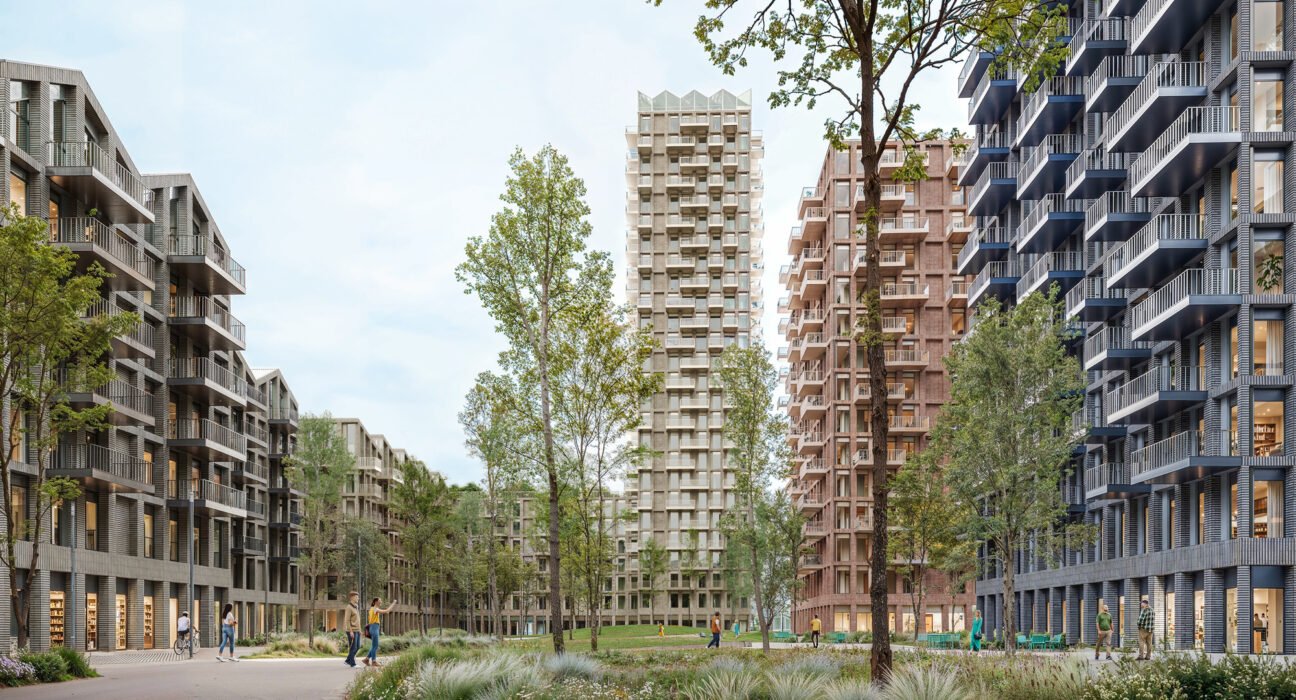
In Brisbane, Aria Property Group’s Sanctuary precinct reflects a similar mindset ahead of the 2032 Olympic and Paralympic Games. Designed by Richards + Spence and Bates Smart, the development layers restored heritage buildings, retail and dining, landscaped courtyards, and an urban meadow beneath a 43-level residential tower. With naturally ventilated corridors, shaded balconies, and all-electric systems, it also aligns environmental performance with luxury home expectations.
For audiences tracking luxury home, luxury decor, and upscale city living, Sanctuary stands out as a model for future residential precincts: walkable, climate-responsive, and rooted in public space.
What This Week in Architecture News Means for Luxury Design
The strongest message from this week’s architecture news is that luxury is being redefined. Prestige no longer comes only from scale, exclusivity, or signature forms. It comes from thoughtful adaptation, public generosity, wellness-driven design, and the ability to connect architecture with everyday urban life.
Whether it is Antalya reusing a major event site, Yerevan expanding its civic core, Copenhagen investing in waterfront wellness, or Brisbane blending heritage with new residences, these projects show where the industry is headed. The future of luxury architecture lies in places that are beautiful, resilient, and socially valuable.
For designers, developers, and design-savvy homeowners alike, this latest wave of architecture news offers a clear takeaway: the most desirable spaces of the future will be those that combine refinement with responsibility.