Architecture news rarely asks a more urgent question than this: what does a building truly cost? At the Tallinn Architecture Biennale 2026, that deceptively simple question becomes the foundation for a wider conversation about luxury, value, materials, labor, and the long-term future of the built environment.
The 8th edition of the Tallinn Architecture Biennale, known as TAB 2026, unfolds across Estonia’s capital through November 30, 2026. Under the theme “How Much?”, the event explores how architecture is shaped not only by budgets, but also by scarcity, maintenance, environmental impact, and social responsibility. For readers following luxury architecture, luxury design, and high-end home trends, this biennale offers a timely reminder: true luxury is no longer defined only by price, but by intelligence, durability, and cultural value.
Architecture News From Tallinn: Why TAB 2026 Matters
In this major piece of architecture news, TAB 2026 reframes affordability as something more complex than a lower construction bill. Curated by Kertu Johanna Jõeste, Siim Tanel Tõnisson, Ra Martin Puhkan of Stuudio TÄNA, alongside Mark Aleksander Fischer and Mira Samonig, the biennale investigates the hidden costs that shape architecture over time.
Rather than focusing narrowly on upfront expenses, the exhibition asks visitors to consider:
- Material extraction and resource consumption
- Labor and production conditions
- Environmental consequences
- Maintenance and repair over a building’s lifespan
- Social and cultural effects on communities
This broader view resonates strongly with today’s luxury home and luxury home decor sectors, where clients are increasingly interested in craftsmanship, sustainability, and enduring quality over disposable trend cycles.
Linnahall Becomes the Biennale’s Most Powerful Exhibit
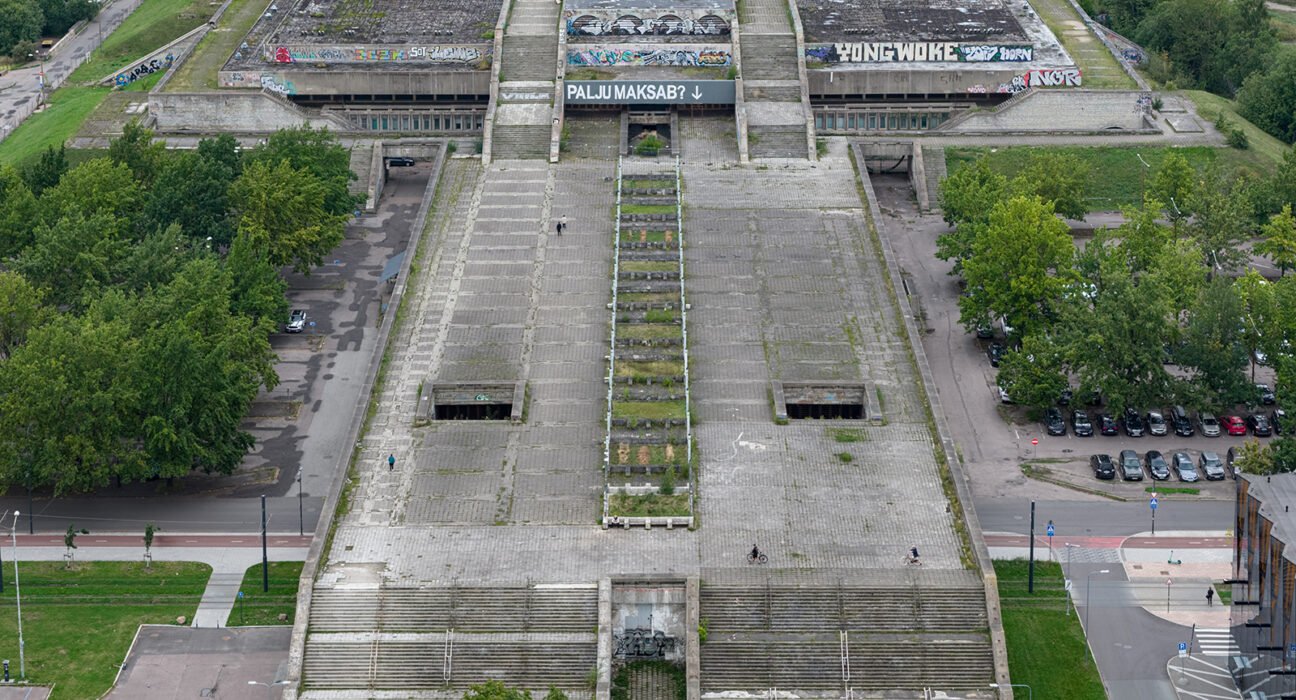
The heart of this architecture news story is Linnahall, the monumental waterfront complex originally built for the 1980 Summer Olympics. Long debated, largely unused, and visibly weathered, the building is more than a venue for TAB 2026—it is the argument itself.
Linnahall embodies the dilemma at the center of contemporary architecture:
- Rebuilding it would require enormous investment
- Demolishing it would also carry financial and environmental costs
- Leaving it unresolved creates another kind of slow, cumulative loss
Its concrete interiors, unfinished atmosphere, and traces of past use make the biennale’s theme tangible. Visitors do not simply read about adaptive reuse and deferred maintenance; they experience those issues inside a structure whose future remains uncertain. For luxury architecture professionals, this is a sharp lesson in legacy: prestige buildings must be evaluated not only for visual impact, but for resilience and long-term stewardship.
How the Main Exhibition Explores Value Beyond Price
Another standout element in this architecture news update is the curatorial exhibition inside Linnahall, where architects and interdisciplinary teams from Estonia and abroad present responses to constrained building conditions. Participating practices address reuse, alternative development models, resource-aware construction, and the financial systems that influence design decisions.
The exhibition does not romanticize “cheapness” as an aesthetic. Instead, it treats limitation as a productive design condition. That distinction matters. In luxury design, the most compelling spaces often emerge not from excess, but from thoughtful editing, intelligent detailing, and meaningful material choices.
Several works examine how architecture can gain richness by working with what already exists. Others show how limited money, space, or materials can inspire new structural solutions and more adaptable forms of living. An Estonian collective exhibit grounds these ideas in local practice, showing how projects born from budget restrictions can still achieve architectural distinction.
Budget Bougie: When Luxury Design Meets Constraint
Among the most intriguing parts of the biennale is the installation program at the Estonian Museum of Architecture, aptly titled “Budget Bougie.” This strand of architecture news speaks directly to luxury decor and luxury home audiences by asking a provocative question: can a space feel rich, atmospheric, and elevated without extravagant spending?
The winning pavilion, “Resonance” by Aru Ma- Architects, uses a restrained palette of rebar, rope, limestone, and plywood. Organized around a central stone core, the temporary structure demonstrates how modest materials can produce memorable spatial and acoustic effects.
Its message is especially relevant in contemporary interiors and high-end residential design:
- Luxury can come from composition, not only cost
- Natural materials often create stronger sensory experiences than expensive finishes
- Spatial drama can be achieved through form, light, texture, and sound
For those tracking luxury home decor trends, this suggests a shift away from overt opulence toward tactile, intentional, and materially honest environments.
Architecture News and the Future of Affordable Excellence
TAB 2026 extends its inquiry through talks, competitions, and educational exhibitions. The symposium “Sounds Expensive” gathers architects, critics, curators, and researchers to challenge assumptions about affordability, efficiency, and scarcity. Meanwhile, “Capital-A Affordable Architecture” brings together architecture schools from across Europe and beyond to explore how different cultures define affordability today.
Also on the biennale program is “From Void to Value: Revisioning Tallinn’s Old Town,” which presents proposals for a difficult urban site at the edge of the historic center. This competition asks how neglected or empty urban land can acquire new social, economic, and spatial value—a question that reaches far beyond Estonia.
Taken together, these programs make this architecture news event especially significant. They point toward a future where design excellence is measured not just by exclusivity or spectacle, but by adaptability, reuse, and civic contribution.
What Luxury Architecture Can Learn From TAB 2026
For the luxury sector, the takeaway from this architecture news story is clear: the definition of value is evolving. Today’s most sophisticated architecture is not simply expensive—it is responsible, enduring, and deeply aware of context.
Key lessons from TAB 2026 include:
- Adaptive reuse can be more culturally powerful than replacement
- Material restraint can still create extraordinary sensory richness
- Long-term maintenance is part of design, not an afterthought
- True prestige increasingly comes from sustainability and relevance
As global conversations around climate, housing, and resource scarcity intensify, biennales like this help redefine what aspirational design should look like. In that sense, Tallinn is not just hosting another exhibition—it is shaping the next chapter of architectural thinking.
In the end, the most important lesson in this architecture news story is that “How Much?” is about far more than money. It is about what architecture demands, what it preserves, and what it gives back over time. For anyone invested in luxury architecture, luxury decor, and future-focused design, TAB 2026 offers a compelling new standard for what real value means.