Architecture news rarely captures both cultural memory and future-facing design as elegantly as Türkiye’s latest Venice Biennale announcement. For design enthusiasts across luxury architecture, luxury decor, and luxury home culture, the Türkiye Pavilion’s newly revealed exhibition, Spolia Futures, offers a powerful reminder that the most refined ideas in architecture often begin with what already exists.
The Türkiye Pavilion has announced Spolia Futures as its official presentation for the 20th International Architecture Exhibition of La Biennale di Venezia, running from May 8 to November 21, 2027. Commissioned by the Istanbul Foundation for Culture and Arts (İKSV) and curated by ba-be commons, the exhibition rethinks spolia—the reuse of architectural fragments and materials—not as a relic of the past, but as a living architectural strategy for the future.
Architecture News: Why Türkiye’s “Spolia Futures” Matters
At a time when global design conversations are increasingly focused on sustainability, repair, and circular thinking, Spolia Futures arrives with remarkable relevance. The curatorial proposal positions reuse as more than conservation. Instead, it frames architectural materials, building methods, and inherited craft traditions as active participants in shaping tomorrow’s built environment.
This is one reason the announcement stands out in current architecture news. Rather than celebrating novelty for its own sake, the exhibition suggests that innovation can emerge through continuity, adaptation, and memory. In a luxury design landscape often associated with pristine finishes and new construction, that idea feels both sophisticated and necessary.
What “spolia” means in contemporary architecture
Traditionally, spolia refers to the reuse of elements from older buildings in new structures. Historically, that might have meant columns, stones, carvings, or facades finding a second life elsewhere. Spolia Futures expands that definition.
The exhibition proposes spolia as:
- An architectural method rather than just a historical reference
- A regenerative practice rooted in ecological responsibility
- A cultural framework linking memory, making, and material life cycles
- A tool for reimagining design in response to environmental and social pressures
This broader reading aligns with some of the most influential movements in contemporary sustainable architecture, adaptive reuse, and material innovation.
The Curatorial Vision Behind the Türkiye Pavilion
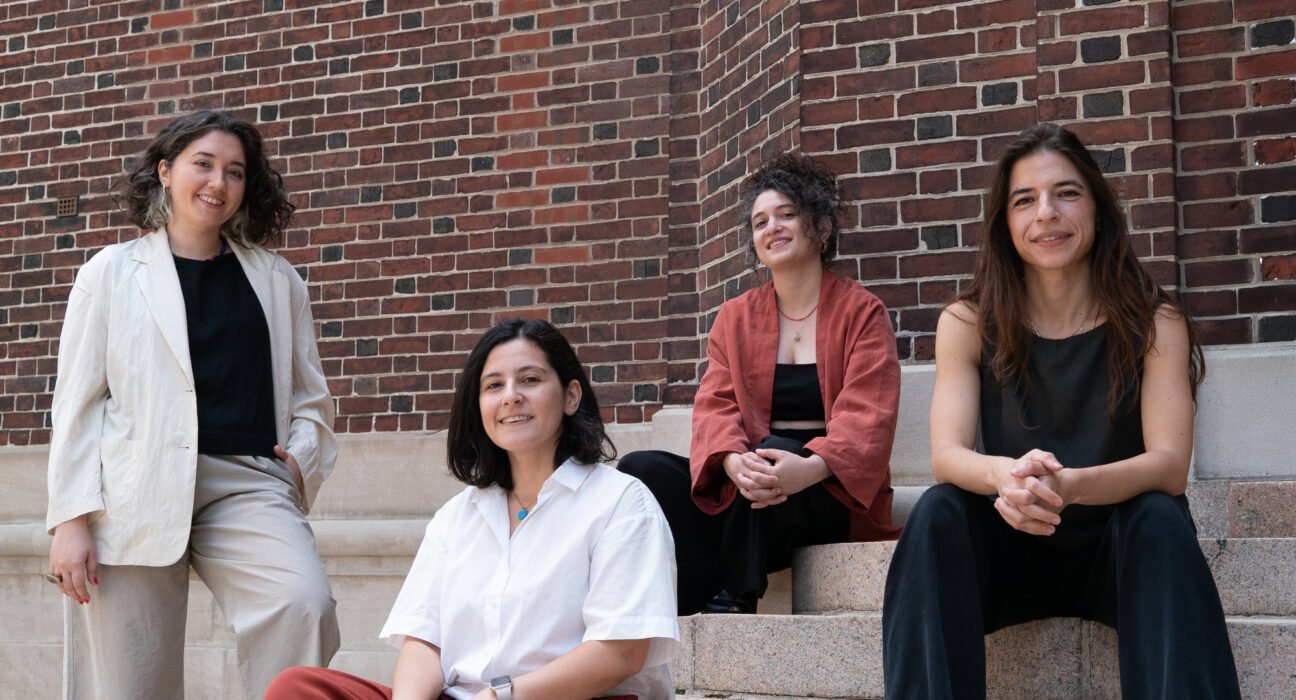
Spolia Futures was selected through an open call and a two-stage evaluation process, underscoring the depth of thought behind Türkiye’s participation. The exhibition is curated by ba-be commons, a research collective made up of Başak Eren, Asya Ece Uzmay, Beril Sarısakal Erkent, and Ece Yetim.
The group emerged from shared academic roots at Istanbul Technical University’s Faculty of Architecture, and its members now contribute to architectural discourse through advanced research and teaching across prominent institutions. Their combined expertise spans archival representation, infrastructure history, political dimensions of design, public space, and drawing as research.
That interdisciplinary background is essential to understanding why this architecture news story resonates beyond the biennale circuit. The pavilion is not simply staging an exhibition of objects; it is constructing a framework for how architecture can think more carefully about inherited materials, social memory, and collective futures.
Key themes shaping the exhibition
The proposal is organized around several interrelated themes that give it intellectual and practical depth:
- Coexistence — exploring how architecture can support relationships between people, materials, ecosystems, and histories
- Archiving — treating materials and building fragments as repositories of knowledge and experience
- Slowing down — resisting extractive speed in favor of more deliberate forms of design and construction
- Repair — emphasizing maintenance, restoration, and extension over demolition and waste
- Future speculation — imagining new architectural practices grounded in reuse and transformation
These themes mirror a wider shift in architecture news toward circular design, low-carbon construction, and deeper material consciousness.
From Material Reuse to Luxury Design Values
For readers interested in luxury home, luxury decor, and luxury architecture, the significance of Spolia Futures extends far beyond institutional exhibition design. It taps into a growing luxury sensibility: authenticity over excess, craftsmanship over disposability, and character over uniformity.
In high-end residential and interior design, reclaimed stone, restored timber, antique architectural elements, and handcrafted finishes are increasingly prized not only for aesthetics but also for narrative value. A material with age, patina, and memory can create a richer spatial experience than something newly manufactured.
That is why this piece of architecture news matters to the luxury sector. The exhibition reinforces several premium design principles:
- Enduring materials carry emotional and cultural value
- Repair can be a mark of refinement, not compromise
- Design legacy enhances exclusivity and depth
- Sustainability and luxury are becoming inseparable
In many ways, Spolia Futures reflects the future of elevated living: spaces that are beautiful, responsible, and rooted in meaning.
How “Spolia Futures” Builds on Türkiye’s Biennale Momentum
The announcement follows the Türkiye Pavilion’s 2025 exhibition, Grounded, curated by Ceren Erdem and Bilge Kalfa. That earlier presentation examined soil as both a material and cultural agent, linking ecological systems, construction practices, and collective memory.
With Spolia Futures, Türkiye continues a compelling line of inquiry into material culture as a lens for architectural thought. The focus now shifts from earth and territory toward reuse, repair, and the evolving life of buildings and building parts. For observers tracking international architecture news, this continuity signals a thoughtful national curatorial direction rather than a one-off theme.
The wider context of the 2027 Venice Architecture Biennale
Türkiye joins a growing list of national pavilions announced for the 2027 edition of the Venice Architecture Biennale, curated by Wang Shu and Lu Wenyu under the theme Do Architecture — For the Possibility of Coexistence Facing a Real Reality. That overarching theme makes the Turkish proposal especially timely, as it directly addresses coexistence through materials, histories, and ecological limits.
Other countries are also engaging urgent questions around housing, territory, water, and collaboration, but Türkiye’s emphasis on spolia gives its contribution a particularly resonant material and philosophical dimension.
What This Architecture News Reveals About the Future of Building
The real value of Spolia Futures lies in the way it reframes progress. Instead of assuming that architectural advancement must depend on extraction, replacement, and perpetual newness, the exhibition suggests another path—one grounded in continuity, care, and transformation.
For architects, designers, and luxury homeowners alike, that message is increasingly important. The buildings of the future may be defined less by what is newly produced and more by how intelligently we adapt what is already here.
In that sense, this architecture news story is about far more than one national pavilion. It is about a design culture learning to see memory as a resource, reuse as creativity, and repair as a form of vision. As the 2027 Venice Architecture Biennale approaches, Spolia Futures stands out as a sophisticated model for where architecture could go next—and why the most compelling architecture news often begins with the materials we thought were left behind.