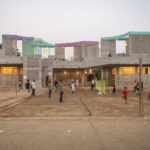
Architecture news rarely carries stakes as high as housing, dignity, and urban survival. UN-Habitat’s 2026 Scroll of Honour reminds the design world that the future of cities will be shaped not only by iconic skylines, but by practical, scalable ideas that make adequate housing possible for millions.
Announced on October 9, 2026, the annual award recognizes five recipients from Brazil, Myanmar, Pakistan, Tunisia, and the United Kingdom. Selected from 101 nominations spanning Africa, Asia, Europe, and the Americas, the winners reflect a broad spectrum of strategies: community-led settlement planning, bamboo construction, public housing finance, low-carbon materials innovation, and metropolitan policy leadership. For readers following luxury architecture, luxury home design, and high-end interiors, this year’s architecture news offers an important takeaway: the most influential design ideas today are increasingly measured by resilience, social value, and environmental intelligence.
Architecture News Spotlight: Why the 2026 Scroll of Honour Matters
First launched in 1989, the UN-Habitat Scroll of Honour recognizes individuals and institutions advancing adequate housing, sustainable urbanization, and better urban life. The 2026 edition arrives at a moment of growing urgency. According to UN-Habitat’s recent global reporting, billions still lack adequate housing, while more than 1.1 billion people live in informal settlements and slums.
This year’s World Habitat Day theme, Adequate Housing for All, underscored a simple but powerful principle: housing is the foundation of inclusive, resilient cities. That message resonates far beyond social policy. It is also becoming central to architecture news, urban planning, and contemporary design culture, where material innovation, climate adaptation, and access are reshaping what responsible building looks like.
The Five Award-Winning Approaches to Adequate Housing
1. Housing NOW, Myanmar: Bamboo Construction With Community Impact
Myanmar-based Housing NOW was recognized for developing affordable homes and community infrastructure for people affected by conflict, poverty, disasters, and displacement. Its approach combines locally sourced bamboo, traditional building knowledge, and prefabricated elements that can be assembled on site using portable guides.
What makes the model especially compelling is its versatility. The system has been used not only for homes, but also for schools, preschools, health facilities, and community centers, including post-earthquake recovery projects in 2025. The organization also hires local residents and shares illustrated construction manuals, helping communities participate directly in rebuilding.
From a design perspective, this is a notable piece of architecture news because it shows how vernacular materials can be elevated into repeatable, elegant, and highly efficient building systems.
2. Tekoa Ara Hovy, Brazil: Indigenous Housing Rooted in Culture
In Maricá, Brazil, Aldeia do Espraiado – Tekoa Ara Hovy was honored as a landmark example of culturally grounded housing. Recognized as the country’s first Indigenous village established by a municipality, the settlement provides a permanent home for Guarani Mbyá families who previously lacked secure land tenure and full access to basic services.
Developed with community participation, the village includes:
- Traditional homes
- A bilingual school
- A health post
- A cultural center
- A community kitchen
- Water infrastructure
- Solar lighting in shared spaces
This project stands out in architecture news because it treats housing as more than shelter. It integrates identity, self-determination, and public infrastructure into a single spatial model, showing that luxury in its deepest sense can also mean permanence, belonging, and cultural continuity.
3. Punjab Housing and Town Planning Agency, Pakistan: Scaling Affordable Ownership
Pakistan’s Punjab Housing and Town Planning Agency was recognized for implementing the Apni Chhat Apna Ghar program, which supports low-income households that already own land but cannot afford to build on it. Launched in 2024, the initiative aims to facilitate 100,000 affordable houses and apartments across the province.
The program offers interest-free financing, supported by digital application systems and banking partnerships. Its significance lies in how it bridges land ownership and actual home construction, a gap that often leaves families unable to turn assets into safe housing.
In the wider landscape of architecture news, the Punjab model highlights an essential truth: good housing design needs equally smart delivery systems. Finance, administration, and digital access are now just as critical to housing outcomes as floor plans and facades.
4. Abdelmalek Ghannem, Tunisia: Building Materials From Local and Mining Residues
Tunisian sustainable construction specialist Abdelmalek Ghannem, founder of Société Industrielle de Blocs, earned recognition for advancing low-impact building systems using local materials and industrial residues. Since 2009, his company has produced compressed stabilized earth blocks and interlocking systems that incorporate quarry and mining byproducts.
These blocks can reduce cement and mortar use compared with standard masonry while supporting better thermal performance in hot climates. The system has reportedly been used in more than 100 projects across Tunisia, and the company also trains architects, engineers, and builders.
This is major architecture news for designers interested in sustainable construction materials, bioclimatic performance, and circular economy thinking. It demonstrates how material innovation can be practical, scalable, and regionally responsive without sacrificing build quality.
5. Sadiq Khan, London: Policy as an Urban Design Tool
London Mayor Sadiq Khan was recognized for promoting affordable and sustainable housing alongside more inclusive, climate-resilient urban development. During his tenure, City Hall has backed council housing, affordable homes, and targeted support for key workers.
In January 2026, Khan launched the Key Worker Living Rent initiative, aiming to start at least 6,000 rent-controlled homes by 2030. The scheme ties rents to the incomes of workers such as nurses, teachers, carers, and bus drivers.
For followers of global architecture news, this recognition is a reminder that city leadership matters. Housing outcomes are shaped not only by architects and developers, but also by public policy, land strategy, and long-term planning frameworks.
What Designers and Home Enthusiasts Can Learn From This Architecture News
Although the Scroll of Honour focuses on housing access rather than luxury real estate, its lessons are highly relevant to luxury architecture, luxury decor, and luxury home design. Across all five winners, several themes stand out:
- Local materials matter: Bamboo, earth blocks, and regionally sourced systems can deliver beauty, performance, and lower environmental impact.
- Community input improves outcomes: Participatory design leads to spaces that serve real social and cultural needs.
- Infrastructure is part of design: Schools, water systems, health posts, and public spaces are essential components of livable neighborhoods.
- Policy shapes architecture: Financing tools and public initiatives determine whether great housing ideas can scale.
- Sustainability must be practical: The most effective solutions are buildable, affordable, and adaptable.
As architecture news continues to evolve, the most admired projects may increasingly be those that combine refinement with responsibility.
Conclusion
The 2026 UN-Habitat Scroll of Honour is more than a list of award winners; it is a global snapshot of where meaningful design is heading. From bamboo homes in Myanmar to Indigenous settlement planning in Brazil, affordable housing finance in Pakistan, low-carbon materials in Tunisia, and policy-led housing reform in London, this architecture news reveals that innovation is no longer defined by spectacle alone. The clearest takeaway is simple: the future of architecture will belong to ideas that make housing more humane, sustainable, and accessible for all.