In a year when the global housing crisis has become impossible to ignore, Architecture news is increasingly being shaped by projects that do more than impress visually—they solve urgent human needs. UN-Habitat’s 2026 Scroll of Honour Award spotlights five very different approaches to adequate housing, proving that design excellence, sustainability, and social impact can—and must—work together.
Announced from a pool of 101 nominations across four continents, the 2026 recipients represent Brazil, Myanmar, Pakistan, Tunisia, and the United Kingdom. While the projects range from bamboo housing systems to Indigenous settlement planning and income-linked urban rental policies, they are united by one essential idea: housing is the foundation of dignified urban life.
Architecture News Highlights UN-Habitat’s 2026 Scroll of Honour
First launched in 1989, the UN-Habitat Scroll of Honour Award recognizes individuals and institutions advancing adequate housing, sustainable urbanization, and improved living conditions. This year’s awards arrive at a critical moment. According to UN-Habitat’s World Cities Report 2026, as many as 3.4 billion people lack adequate housing. Its SDG 11 Global Report 2026 also notes that more than 1.1 billion people now live in informal settlements and slums.
That context makes this latest round of Architecture news especially significant. Rather than celebrating a single design trend, the awards highlight scalable strategies with real-world relevance:
- Community-led construction
- Affordable housing finance
- Indigenous land security and cultural continuity
- Low-carbon building materials
- Inclusive public policy for resilient cities
For readers interested in luxury architecture and high-end design, these projects also offer a valuable lesson: true design leadership increasingly includes social sustainability, climate responsiveness, and material innovation.
Five Award-Winning Housing Approaches Reshaping Global Design
1. Housing NOW, Myanmar: Bamboo Construction for Crisis-Affected Communities
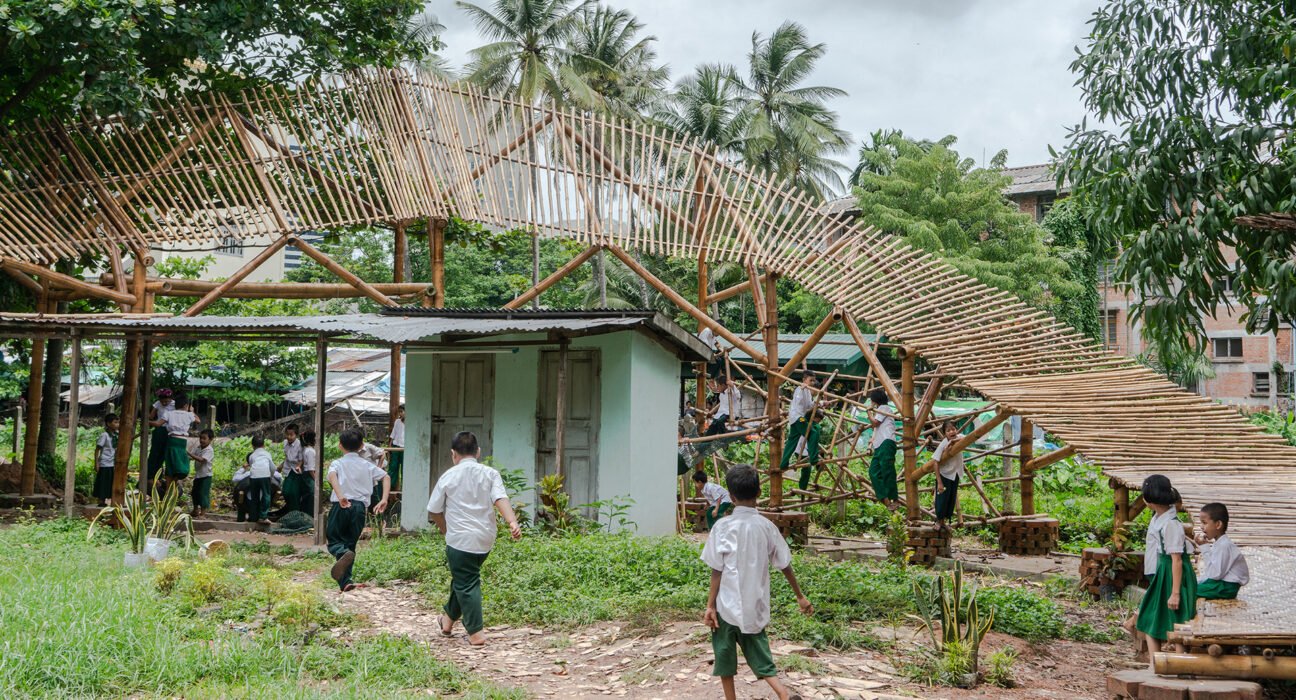
One of the most compelling stories in current Architecture news comes from Myanmar, where Housing NOW has developed an affordable bamboo-based construction system for people affected by conflict, poverty, displacement, and natural disasters.
The organization combines:
- Locally sourced bamboo
- Traditional building knowledge
- Prefabricated components
- Portable construction guides for on-site assembly
This system has been used not only for homes, but also for schools, preschools, medical facilities, and community centers, including post-earthquake recovery efforts after the 2025 disaster. Its broader value lies in local empowerment: community members are employed in the building process, and illustrated manuals help transfer skills directly to residents and local builders.
For the design world, this is a powerful reminder that innovation is not always high-tech. Sometimes it is intelligent, adaptable, low-cost construction rooted in local materials and human knowledge.
2. Tekoa Ara Hovy, Brazil: An Indigenous Village Built with Participation and Permanence
In Maricá, Brazil, Aldeia do Espraiado – Tekoa Ara Hovy was recognized as the country’s first Indigenous village established by a municipality. Developed for a Guarani Mbyá community, the settlement gave 13 families a permanent home after years of insecure tenure and limited access to essential services.
The project includes:
- Traditional homes
- A bilingual school
- A health post
- A cultural center
- A community kitchen
- Water infrastructure
- Solar lighting in shared areas
What makes this standout Architecture news is the project’s balance of public investment and cultural respect. Rather than imposing a generic housing model, the development was shaped with community participation and traditional building practices, preserving identity while expanding access to infrastructure.
3. Punjab Housing and Town Planning Agency, Pakistan: Scaling Affordable Homeownership
Pakistan’s Punjab Housing and Town Planning Agency was honored for implementing the Apni Chhat Apna Ghar program, a major affordable housing initiative designed for low-income households that already own land but cannot afford to build.
Launched in 2024, the program aims to support 100,000 affordable houses and apartments across Punjab. Eligible households receive interest-free financing, with digital systems helping manage applications and implementation.
This entry in Architecture news matters because it addresses a core challenge often overlooked in design circles: financing. Even the best housing plan fails without accessible capital. By linking land ownership, digital administration, and public-private financial support, the program demonstrates how policy and systems design can expand safe housing at scale.
4. Abdelmalek Ghannem, Tunisia: Building Materials from Local and Industrial Residues
In Tunisia, sustainable construction specialist Abdelmalek Ghannem was recognized for creating building systems that use locally available materials and residues from quarries and mining. Through his company, Société Industrielle de Blocs, he has developed compressed stabilized earth blocks and interlocking systems with lower cement and mortar requirements than conventional masonry.
These materials offer several advantages:
- Reduced reliance on resource-intensive construction methods
- Use of local and waste-derived inputs
- Improved thermal performance in hot climates
- Training opportunities for architects, engineers, and builders
Used in more than 100 projects across Tunisia, this is the kind of Architecture news that signals where future luxury and mainstream construction may converge: beautiful, high-performance materials that are also environmentally responsible.
5. Mayor Sadiq Khan, London: Housing Policy as Urban Design
UN-Habitat also recognized London Mayor Sadiq Khan for advancing affordable and sustainable housing alongside inclusive, climate-resilient urban development. His housing agenda has included support for new council homes, affordable housing delivery, and policies aimed at key workers.
In early 2026, Khan launched the Key Worker Living Rent initiative, targeting at least 6,000 rent-controlled homes by 2030. These homes are designed for workers such as nurses, teachers, carers, and bus drivers, with rents linked to income levels.
This form of Architecture news expands the definition of design impact. Cities are not shaped by buildings alone, but by the policies that determine who gets to live in them. In that sense, affordability is as much a design issue as form, façade, or finish.
Why These Housing Models Matter Beyond Social Policy
For professionals and enthusiasts in luxury home, luxury decor, and luxury design, these five winners may seem outside the traditional aspirational market. Yet they point to the values increasingly defining design leadership worldwide:
- Resilience through local materials
- Craft and cultural authenticity
- Climate-sensitive construction
- Human-centered planning
- Scalable sustainability
The best Architecture news today is not only about striking aesthetics. It is about systems that improve daily life, respect context, and respond intelligently to scarcity, displacement, and urban pressure.
Conclusion
The 2026 UN-Habitat Scroll of Honour recipients show that the future of housing will be shaped by collaboration, material innovation, community participation, and policy reform. More importantly, this Architecture news reveals that adequate housing is not a niche concern—it is one of the defining design challenges of our time.
From bamboo homes in Myanmar to Indigenous planning in Brazil, affordable finance in Pakistan, low-carbon blocks in Tunisia, and rent-linked housing in London, these five approaches offer a clear takeaway: the most meaningful architecture is the kind that creates dignity, stability, and lasting urban resilience.