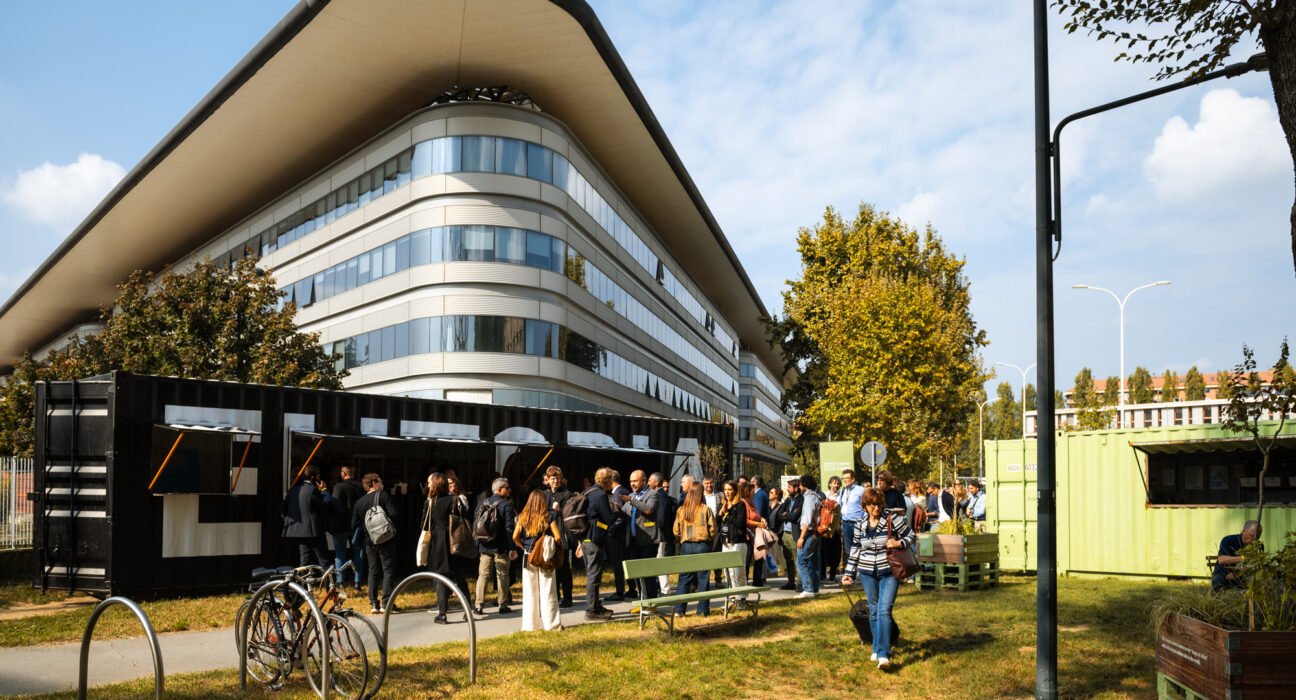
Architecture news rarely captures the imagination quite like a festival devoted to the future of cities. With Utopian Hours 2026 returning to Turin and featuring Sir Peter Cook, the event is shaping up to be a major moment for designers, urban thinkers, and luxury architecture audiences watching how visionary ideas influence the places we inhabit.
More than a conference, Utopian Hours has become a platform for asking ambitious questions about city-making, culture, design, and public life. The striking phrase “cities are mental weapons” suggests that urban environments do far more than organize movement and infrastructure. They shape perception, ambition, identity, and the emotional experience of everyday living—an idea that resonates across luxury design, high-end residential trends, and the future of sophisticated urban lifestyles.
Architecture News Spotlight: Why Utopian Hours 2026 Matters
In the current landscape of architecture news, city-focused events stand out because they bridge theory and lived experience. Turin, long known for its layered architectural heritage and evolving design culture, offers an ideal setting for a program centered on the future of urban life. By welcoming Sir Peter Cook—one of architecture’s most inventive voices—the 2026 edition signals a conversation that will likely be both intellectually provocative and visually ambitious.
For readers interested in luxury architecture and luxury home trends, this matters because major urban ideas often trickle down into residential design. Concepts first explored in city planning forums frequently influence:
- High-end mixed-use developments
- Luxury home layouts that prioritize flexibility
- Wellness-oriented interiors
- Public-private spatial relationships
- Sustainable and design-forward material choices
That makes this piece of architecture news more than an event announcement. It is a signal of where premium design conversations are heading next.
The Meaning Behind “Cities Are Mental Weapons”
The phrase attached to the Turin program is powerful because it reframes the city as a psychological and cultural instrument. In practical terms, architecture and urban design influence how people feel, connect, consume, and dream. Streets, squares, towers, parks, transit systems, and housing all contribute to a mental map that affects quality of life.
Within luxury design circles, this idea has growing relevance. Today’s affluent homeowners and developers are not only seeking beauty; they are also investing in environments that deliver calm, prestige, efficiency, and a sense of belonging. This is where architecture news intersects with luxury home decor and luxury living. The best spaces are no longer merely decorative—they are immersive and strategic.
Key themes likely connected to this concept include:
- Urban identity: How architecture gives cities their personality
- Social experience: How public space encourages interaction or isolation
- Design psychology: How scale, light, and movement shape emotion
- Future living: How new city models affect housing and luxury residential design
Sir Peter Cook’s Influence on City-Making
Any architecture news involving Sir Peter Cook immediately raises expectations. Known for his experimental thinking and enduring influence on contemporary architecture, Cook has long pushed the discipline beyond conventional building practice. His presence at Utopian Hours 2026 suggests a program willing to explore imaginative, radical, and even playful visions of urban life.
That matters in a luxury context because many of today’s most desirable spaces borrow from visionary architecture. Curved forms, adaptable interiors, expressive facades, sculptural public areas, and hybrid living concepts all reflect a design culture shaped by architects who dared to think beyond the standard city block.
Cook’s participation also reinforces a broader shift in architecture news: audiences increasingly want architecture to be culturally alive, not just technically competent. They want spaces that inspire, challenge assumptions, and create memorable experiences. In luxury real estate and luxury decor, that expectation is especially pronounced.
What This Means for Luxury Architecture and Luxury Homes
Although Utopian Hours is focused on city-making, the ideas discussed in Turin could influence the next chapter of residential design. Luxury architecture does not exist in isolation. It responds to the urban ecosystem around it—transportation, density, green space, climate strategy, and cultural infrastructure all shape what buyers and residents value.
Emerging takeaways from this type of architecture news may include:
- Greater emphasis on wellness: Homes designed around daylight, acoustics, air quality, and mental comfort
- Stronger indoor-outdoor connections: Terraces, courtyards, winter gardens, and biophilic features
- More adaptable luxury interiors: Spaces that can shift between work, leisure, and entertaining
- Community-conscious planning: Residences integrated into walkable, culture-rich neighborhoods
- Elevated material intelligence: Sustainable finishes paired with artisanal craftsmanship
For luxury home decor brands and design professionals, these shifts create opportunities to align aesthetics with urban consciousness. Sophisticated clients increasingly want interiors that reflect not only personal taste but also an awareness of how design supports modern life.
Why Turin Is the Right Stage for the Conversation
Turin has a distinct place in European design culture, combining historical grandeur with contemporary experimentation. That duality makes it an especially compelling setting for architecture news centered on the future city. The city’s architectural texture—from elegant civic spaces to industrial legacies and newer cultural interventions—creates a living backdrop for discussions about reinvention.
In many ways, Turin embodies the same questions Utopian Hours appears ready to explore: How should cities evolve without losing identity? How can architecture support social vitality? What does aspirational urban life look like now? These are essential concerns not only for planners and architects, but also for luxury developers, interior designers, and homeowners looking to invest in timeless yet forward-thinking environments.
Why Utopian Hours 2026 Belongs on the Global Design Radar
Among this year’s most intriguing pieces of architecture news, Utopian Hours 2026 stands out for its intellectual ambition and broad relevance. It connects urban theory with practical design questions, and it does so through a lens that appeals to both cultural observers and luxury market insiders.
As city-making becomes one of the defining topics of contemporary design, events like this help shape the language and priorities of the industry. Whether the focus is public space, experimental architecture, or the future of high-end living, the ideas emerging from Turin are likely to echo across architecture, interiors, and luxury real estate.
In the end, the clearest takeaway from this architecture news story is that cities are not passive settings. They are active forces that shape how we live, feel, and imagine the future. Utopian Hours 2026 in Turin, with Sir Peter Cook at the center of the conversation, is a reminder that the most compelling luxury design begins with a bold vision of the city itself.