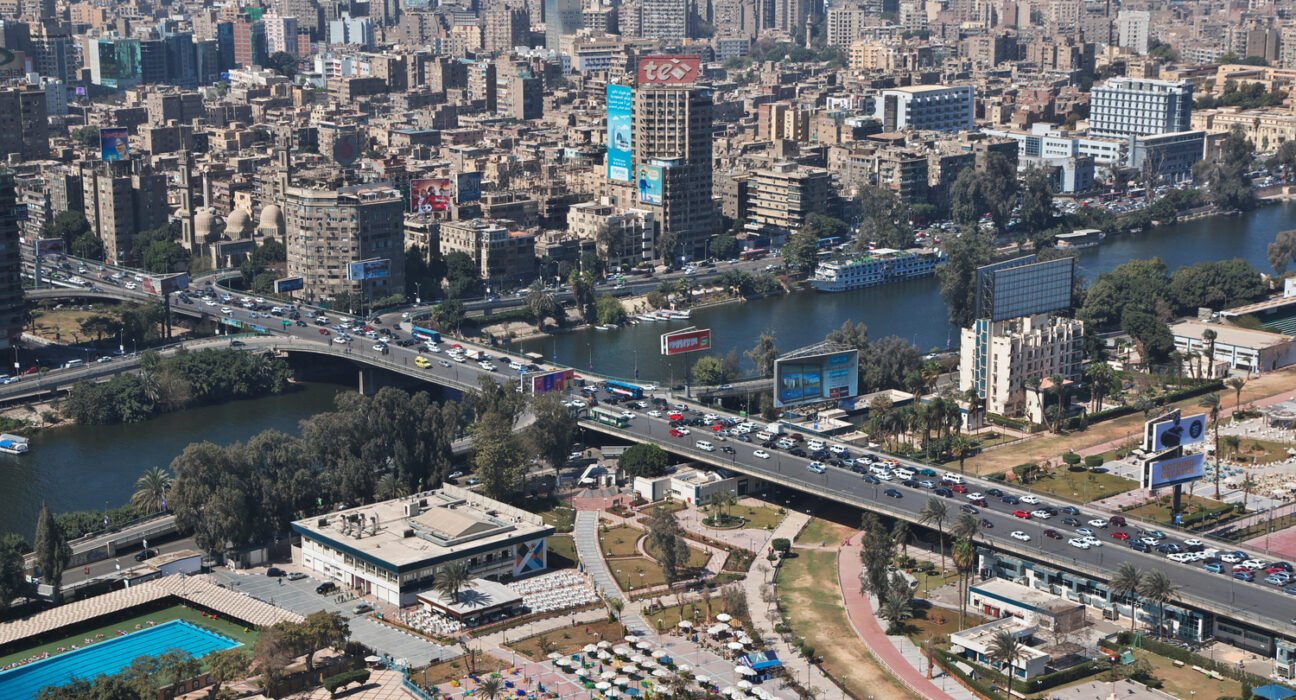
Capital cities have long been symbols of power, prestige, and national identity, but today’s Architecture news reveals a striking shift: governments are no longer moving capitals only for politics or image. Increasingly, these decisions are being driven by overcrowding, climate threats, infrastructure overload, and the search for more resilient, future-ready urban models.
For readers interested in luxury architecture, luxury design, and the future of city-making, the relocation of capital cities offers a compelling lens into how nations imagine their most important civic spaces. From monumental government districts to master-planned urban cores, these projects blend geopolitics, sustainability, and ambitious design at an extraordinary scale.
Architecture News and the New Logic of Capital Relocation
Historically, new capitals such as Brasília or Islamabad were conceived as expressions of centralized authority and nation-building. Today, however, Architecture news increasingly frames capital relocation as a practical urban response to systemic pressures.
Several factors are reshaping the debate:
- Population concentration in overloaded metropolitan regions
- Transport and housing strain in existing capitals
- Environmental risk including flooding, drought, and land subsidence
- Regional inequality between dominant urban centers and underdeveloped territories
- Long-term resource management, especially water security
In this context, capitals are being reconsidered not just as symbolic places, but as operational systems that must remain functional under mounting ecological and demographic stress.
Master-Planned Capitals as Tools of National Rebalancing
One of the most prominent themes in recent Architecture news is the rise of purpose-built capitals designed to redistribute growth and political power. These projects often feature grand civic axes, monumental government buildings, and large-scale infrastructure intended to reshape national geography.
Egypt’s New Administrative Capital
Egypt’s New Administrative Capital, launched east of Cairo, is among the most ambitious examples. Rather than replacing Cairo outright, the new city is intended to absorb administrative functions and reduce pressure on one of the world’s most congested metropolitan areas. Ministries, embassies, and presidential facilities are being consolidated into a carefully planned governmental district.
For architecture and luxury design observers, the project stands out for its scale, formal urban planning, and emphasis on prestige architecture. Cairo remains the country’s cultural and economic heart, while the new capital acts as an administrative extension designed for order, access, and modern infrastructure.
Equatorial Guinea’s Ciudad de la Paz
Equatorial Guinea offers a smaller but equally strategic case. The official move from island-based Malabo to Ciudad de la Paz on the mainland reflects a desire to redirect governance inward and reduce territorial imbalance. In design terms, this approach reinforces how architecture can serve statecraft, using a new capital to reorganize national priorities and improve geographic cohesion.
Administrative Decentralization Without a Full Move
Not every country chooses a total capital transfer. Another major trend covered in Architecture news is partial decentralization, where symbolic functions remain in the historic capital while administrative operations move elsewhere.
South Korea’s Sejong City Model
South Korea’s long-term development of Sejong City is a leading example. Since its creation, ministries and public agencies have gradually relocated from Seoul to Sejong, with the transition expected to continue through the end of the decade. Seoul still retains core symbolic institutions, including the presidency and national assembly.
This dual-city arrangement highlights a sophisticated planning model:
- Preserve the identity and global stature of the existing capital
- Reduce congestion and regional imbalance
- Improve governance efficiency through purpose-built administrative infrastructure
- Add a layer of strategic resilience tied to geography and security
For urbanists and designers, Sejong demonstrates that the future of governance may not always lie in a single dominant city.
Environmental Stress Is Redefining the Capital City
Perhaps the most urgent development in Architecture news is the growing role of environmental necessity. In several countries, the question is no longer whether a capital is prestigious enough, but whether it is physically sustainable.
Indonesia’s Move From Jakarta to Nusantara
Indonesia’s decision to move its capital from Jakarta to Nusantara is one of the clearest examples of climate-responsive planning. Jakarta faces chronic flooding, severe land subsidence, and rising sea levels, making long-term governance increasingly precarious. Nusantara, planned in Borneo, is envisioned as a greener, more compact political center integrated with the surrounding landscape.
The project reflects a new design language in capital planning, one shaped by environmental performance, spatial efficiency, and separation between political administration and economic concentration.
Iran and the Pressure of Water Scarcity
In Iran, no replacement capital has been finalized, but renewed debate around Tehran underscores how water scarcity can destabilize even long-established centers of power. Prolonged drought, groundwater depletion, and land subsidence are not abstract concerns; they directly affect the viability of large urban regions.
This is where Architecture news intersects with resource planning. Water stress is emerging as a critical threshold in decisions about urban growth, governance, and future capital development.
Why Water May Become the Ultimate Planning Constraint
Behind many relocation debates lies a quieter but more decisive issue: water availability. A growing number of major cities now operate under high or extremely high water stress, where demand approaches or exceeds reliable supply. This has major implications for luxury home development, infrastructure investment, and civic architecture alike.
Capital cities require enormous and continuous support systems, including:
- Public water supply
- Cooling and energy systems
- Transportation networks
- Housing for workers and officials
- Landscape and public realm maintenance
When those systems are threatened by drought or mismanaged resources, relocation or decentralization can become less of a political choice and more of a planning necessity. That reality is increasingly central to global Architecture news.
What These Capital Moves Mean for Luxury Architecture and Design
Beyond policy, capital relocations are also design laboratories. They create opportunities for iconic civic buildings, ceremonial landscapes, premium residential districts, and integrated smart-city infrastructure. For the luxury architecture world, these projects are important not only because of their scale, but because they test how prestige and sustainability can coexist.
Expect future capital projects to place greater emphasis on:
- Climate-adaptive urban design
- Low-impact infrastructure
- Transit-oriented planning
- Water-sensitive landscapes
- Flexible mixed-use districts
- High-design government and diplomatic quarters
In that sense, today’s most important capital projects are not just administrative exercises. They are prototypes for how elite, high-performance cities may be built in the decades ahead.
Conclusion
The latest Architecture news makes one thing clear: moving a capital is no longer only about symbolism. It is increasingly about resilience, livability, and survival in a world defined by rapid urbanization and environmental uncertainty. Whether through full relocation, partial decentralization, or climate-driven planning, nations are rethinking where power should sit and how cities must function to endure.
For architects, designers, and anyone tracking the future of luxury urban development, these capital shifts are more than political events. They are some of the most revealing design stories of our time.