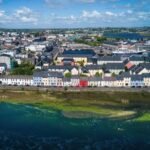
Architecture news rarely feels more urgent than it does on World Cities Day 2026. This year’s theme, “Regenerating the City: Adequate Housing for All,” brings global attention to a defining challenge of our era: how to create cities that are more beautiful, resilient, equitable, and livable at every scale.
Hosted in Fuzhou, China, the 2026 observance highlights a stark reality identified by the United Nations: billions of people still lack adequate housing, secure tenure, reliable services, or affordable living conditions. For architects, designers, planners, and luxury real estate observers alike, the message is clear. Housing cannot be treated as an isolated product. It is inseparable from infrastructure, public space, climate adaptation, mobility, and the everyday quality of neighborhood life.
Architecture News and the New Meaning of Adequate Housing
In today’s architecture news, adequate housing is no longer defined simply by shelter. It includes where a home is located, how well it performs in extreme weather, how connected it is to essential services, and whether it supports dignity, safety, and long-term belonging.
This broader lens matters across all market segments, from social housing to high-end residential design. In luxury architecture and luxury home planning, the same principles increasingly shape value:
- Climate resilience and flood-aware siting
- Access to transit, schools, healthcare, and culture
- Walkable surroundings and high-quality public realm
- Energy efficiency and durable construction
- Connection to green space and community infrastructure
As cities face heat waves, storms, flooding, and displacement pressures, the future of residential design depends on integrating architecture with urban systems. That shift is one of the most important stories in global architecture news today.
Why Urban Regeneration Matters More Than Expansion
Rather than focusing only on building outward, World Cities Day 2026 emphasizes regeneration: improving existing neighborhoods, upgrading infrastructure, and transforming underused land into places that serve residents better. This approach is especially relevant in mature global cities where land is limited and inequality is often embedded in the urban fabric.
Urban regeneration can include:
- Retrofitting housing stock for climate resilience
- Reclaiming grey infrastructure as public landscape
- Improving access to transit and daily services
- Converting fragmented spaces into civic assets
- Encouraging mixed-use, mixed-income neighborhood growth
For the luxury design sector, this is a notable evolution. Prestige is increasingly tied not just to private amenities, but to the quality of the wider district. A luxury home now derives significant value from its surrounding streetscape, mobility options, environmental performance, and neighborhood livability.
Public Space as Essential Urban Infrastructure
One of the clearest themes emerging from this cycle of architecture news is that public space is far more than visual enhancement. Parks, waterfronts, urban gardens, and open civic spaces function as active infrastructure.
Well-designed landscapes can:
- Absorb stormwater and reduce flood risk
- Lower surface temperatures during extreme heat
- Support biodiversity in dense urban settings
- Create social spaces for recreation and interaction
- Reduce pressure on conventional drainage systems
This is where luxury decor and luxury home decor trends intersect with city-scale thinking. The same biophilic and wellness-driven ideas shaping refined interiors are influencing urban landscapes, from planted courtyards to restored riverfronts and shaded pedestrian networks. Increasingly, the most desirable residential environments are those embedded in greener, cooler, healthier districts.
Mobility, Access, and the Value of Connection
Another major takeaway from World Cities Day 2026 is that housing quality depends on mobility. A beautifully designed residence loses practical and social value if its occupants are cut off from work, education, healthcare, or public life.
Current architecture news points to a growing rejection of purely car-oriented planning in favor of more connected, human-centered systems. Walkability, cycling infrastructure, public transit, and layered transportation networks are now central to the conversation about urban quality.
What better mobility looks like
Stronger urban mobility strategies often include:
- Safer pedestrian routes and traffic-calmed streets
- Integrated cycling corridors
- Transit-oriented development near housing
- Better links between urban and regional networks
- Universal design for people of different ages and abilities
For luxury home buyers and developers, connectivity has become a premium feature. Proximity alone is no longer enough; seamless movement through the city is part of what defines contemporary urban excellence.
Neighborhood Livability Is the Real Luxury
Perhaps the most compelling lesson in this year’s architecture news cycle is that livability happens at the neighborhood level. Broad city rankings can be useful, but daily life is shaped by local realities: whether streets feel safe, whether parks are nearby, whether schools and services are accessible, and whether residents have a voice in shaping change.
A livable neighborhood typically offers:
- Green space within easy reach
- Healthcare, schools, and daily retail nearby
- Comfortable public seating and shade
- Inclusive design for families, elders, and children
- Community participation in planning decisions
This perspective aligns strongly with luxury architecture and luxury design today. The most sought-after addresses are increasingly those that combine elegant private spaces with vibrant public life. In other words, true luxury is no longer only inside the home; it extends into the block, the park, the street, and the social fabric of the city itself.
What World Cities Day 2026 Means for Designers and Developers
World Cities Day 2026 offers an important framework for architects, interior designers, landscape professionals, and developers. It suggests that the future of residential excellence lies in integration rather than isolation.
The strongest projects moving forward will likely be those that:
- Link housing to climate resilience strategies
- Prioritize adaptive reuse and urban regeneration
- Invest in public-realm quality as a value driver
- Support mixed mobility and everyday accessibility
- Design for community health, comfort, and belonging
That makes this moment especially significant in architecture news. The conversation is expanding beyond iconic buildings toward systems thinking, neighborhood repair, and long-term urban stewardship.
Conclusion
World Cities Day 2026 shows why architecture news must pay close attention to housing, public space, mobility, and livability as one interconnected story. Adequate housing for all is not only a social imperative; it is also a design challenge that will shape the future of cities, from affordable districts to the world of luxury homes. The clearest takeaway is simple: the best cities will be those that regenerate what already exists, design for resilience, and treat neighborhood quality as the foundation of urban life.