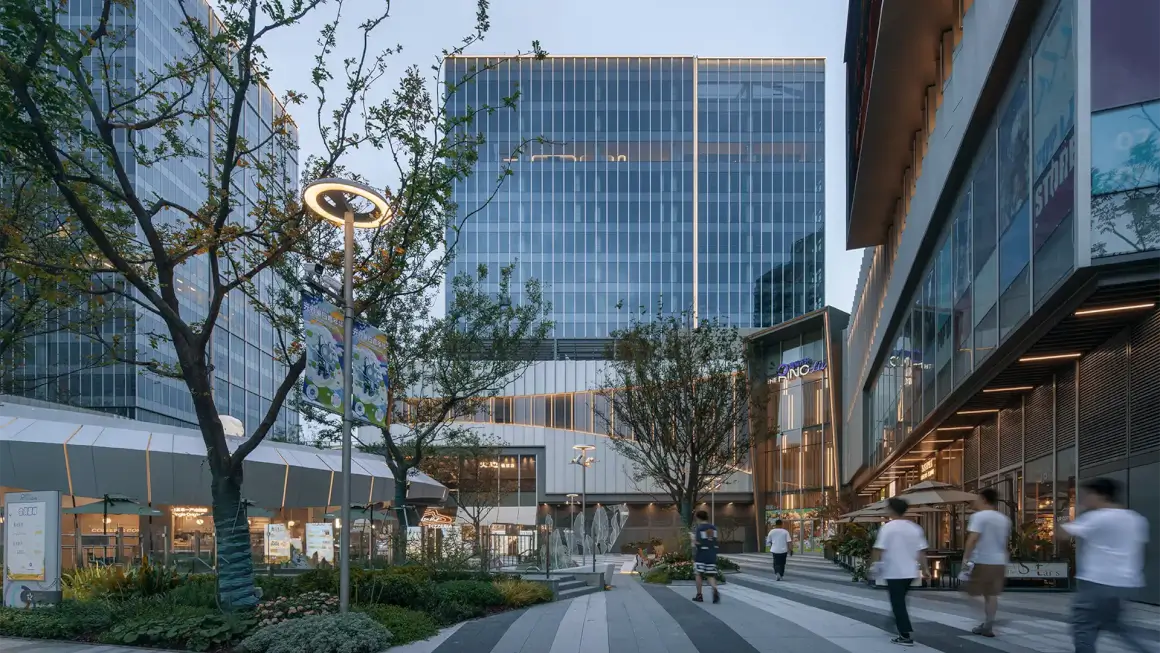
In a crowded global landscape of mixed-use developments, few projects manage to feel genuinely new. The Ring·Live Shanghai stands out as iconic architecture because it rethinks what an urban hub can be: not just a place to shop or pass through, but a living community destination shaped by design, movement, and social connection.
Created by DP Architects, this Shanghai flagship reflects a broader shift in luxury architecture toward people-first environments that blend retail, leisure, culture, and public life. Rather than relying on spectacle alone, the project appears to embrace a more sophisticated design philosophy—one where form, experience, and city-making work together. For readers exploring the future of luxury architecture, luxury design, and luxury home inspiration, The Ring·Live Shanghai offers a compelling case study in how landmark developments can shape the way cities feel and function.
The Rise of Iconic Architecture That Serves Community
For years, the most talked-about buildings were often judged by silhouette alone. Today, iconic architecture is increasingly measured by something deeper: how well it creates value for everyday life. The Ring·Live Shanghai reflects that evolution by positioning itself as a community flagship rather than a purely commercial center.
This matters because modern cities demand more from large-scale developments. People want places that are flexible, walkable, emotionally engaging, and socially useful. In that sense, The Ring·Live is not simply an architectural object; it is an urban experience designed to attract repeat visitation and sustained local relevance.
- Mixed-use integration: combining multiple lifestyle functions in one destination
- Community orientation: encouraging gathering, lingering, and shared experiences
- Design-led identity: using architecture to build cultural and commercial distinction
- Urban connectivity: strengthening how people move through and interact with the district
This is where iconic architecture becomes more than a visual statement. It becomes an active framework for community life.
How DP Architects Reimagines the Urban Hub
DP Architects has built a reputation for large, complex environments that merge placemaking with strong architectural identity. In The Ring·Live Shanghai, that approach appears focused on redefining the urban hub as a layered destination—part retail center, part lifestyle venue, part civic anchor.
Instead of treating the project as an inward-looking mall, the design language suggests openness, engagement, and flow. That is a crucial distinction in contemporary urban development. The best city destinations no longer isolate activity behind sealed facades; they create porous environments that invite the public in and encourage exploration across levels, programs, and social zones.
A Shift From Transactional Space to Experiential Space
One of the most important lessons from The Ring·Live Shanghai is that successful developments are no longer built around transactions alone. They are built around experiences.
That experience-first model typically includes:
- Spaces that support events, leisure, and informal gathering
- Circulation paths that feel intuitive and visually engaging
- A strong relationship between interior atmosphere and exterior urban context
- Architectural features that create memorable identity without sacrificing usability
In luxury design, this balance is essential. A project can be bold and refined at the same time, especially when the user journey is considered as carefully as the facade.
Why the Community Flagship Model Matters
The term “community flagship” signals a notable change in design priorities. Rather than chasing attention through size alone, The Ring·Live suggests a model centered on relevance, belonging, and return visits. That makes it especially interesting within luxury architecture, where the most enduring projects often deliver both prestige and everyday appeal.
For developers, designers, and urban planners, this model offers several strategic advantages:
- It builds stronger emotional loyalty than conventional retail-led schemes
- It supports multi-generational and multi-purpose use
- It creates resilience in changing consumer and social patterns
- It allows iconic architecture to remain active beyond first impressions
Design Signals That Make The Ring·Live Shanghai Stand Out
Although every major project operates within its own site conditions and market goals, certain qualities help explain why The Ring·Live Shanghai resonates as iconic architecture. It appears to combine strong visual identity with spatial intelligence—an increasingly rare combination in high-traffic urban developments.
Key design signals likely contributing to its impact include:
- Landmark presence: a memorable architectural expression that distinguishes the development within Shanghai’s competitive design scene
- Human-centered planning: spaces organized around comfort, movement, and interaction
- Lifestyle programming: an emphasis on contemporary urban living rather than single-purpose retail
- Integrated placemaking: architecture used to shape atmosphere, brand value, and local identity
This approach aligns with broader global trends in luxury decor and lifestyle-oriented environments, where users increasingly expect immersive settings rather than standard commercial layouts.
What Luxury Home and Design Audiences Can Learn
Even readers focused on residential spaces can take valuable cues from The Ring·Live Shanghai. The best iconic architecture often influences private design by demonstrating how atmosphere, materiality, and flow can elevate everyday life.
Lessons that translate from urban flagship projects to luxury home design include:
- Design for movement: circulation shapes experience as much as decoration does
- Create layered destinations: homes benefit from zones for gathering, retreat, and transition
- Blend beauty with purpose: visual drama works best when paired with clear functionality
- Prioritize emotional resonance: memorable spaces are those that people want to return to
These principles also apply to luxury decor, where curated environments rely on cohesion, rhythm, and sensory appeal rather than isolated statement pieces.
The Future of Iconic Architecture in Global Cities
The Ring·Live Shanghai points toward a future in which iconic architecture is judged not only by image value, but by social usefulness and urban intelligence. As cities become denser and expectations rise, the most successful destinations will be those that blend architectural ambition with authentic public relevance.
That is why this project matters beyond Shanghai. It captures a wider industry movement toward destination design that is flexible, community-driven, and deeply experiential. In a time when cities compete for attention, investment, and loyalty, developments like The Ring·Live show that the most powerful landmarks are the ones people actively use—not just photograph.
For anyone tracking the future of luxury architecture and design, the takeaway is clear: iconic architecture now means creating places that connect people as effectively as they impress them. The Ring·Live Shanghai demonstrates how a thoughtfully designed urban hub can do both.