

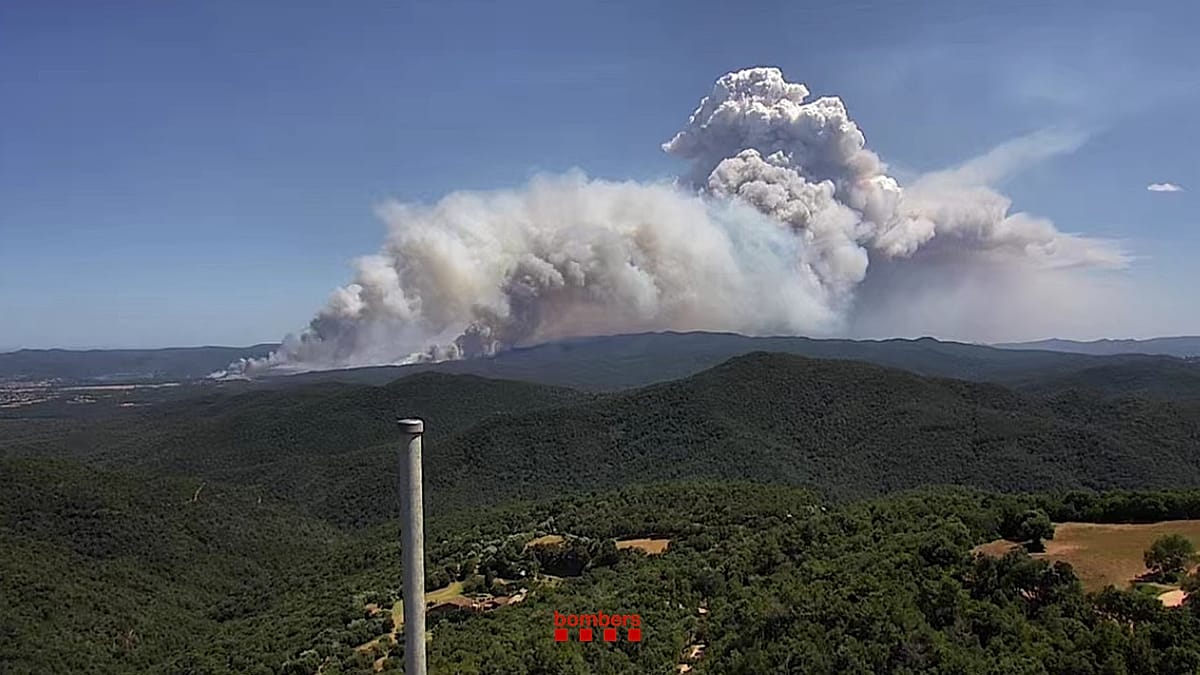
The Costa Brava wildfire has turned one of Spain’s most refined coastal regions into a scene of disruption, smoke and urgent emergency response. Known for its elegant villas, design-led retreats and Mediterranean natural beauty, the Costa Brava now faces a stark reminder that climate-driven fire risk is no longer a distant concern for luxury destinations.
Authorities in Catalonia say the fast-moving blaze in the Girona area has burned roughly 1,280 hectares and forced around 12,000 residents to remain indoors. The fire, reportedly linked to roadside mechanical work involving an angle grinder, has spread under powerful tramontana winds, creating dangerous conditions across the Empordà area and raising new questions about resilience in high-value coastal regions.
Costa Brava Wildfire Puts a Luxury Destination Under Pressure
The Costa Brava wildfire is affecting far more than forest land. This stretch of northeastern Spain is globally associated with upscale tourism, architect-designed homes, boutique hospitality and protected natural scenery that forms the backdrop to a premium lifestyle market. When a wildfire reaches this scale, the impact moves beyond immediate safety concerns and into property risk, travel disruption and long-term regional perception.
The fire broke out near La Bisbal d’Empordà and remains difficult to contain after advancing into the Gavarres massif. Officials have warned that changing wind conditions could push flames or smoke closer to built-up coastal zones, making the situation especially sensitive for communities and businesses near the shoreline.
Why this matters for luxury property and design
- High-end homes in wooded or hillside settings face increased exposure to wildfire danger.
- Landscape-focused architecture becomes more vulnerable when drought and wind intensify fire behavior.
- Luxury hotels and holiday estates may need stronger evacuation, air-filtration and fire-buffer planning.
- Regional branding tied to pristine nature can be damaged by recurring climate disasters.
Emergency Response Across Girona
Fire crews have mounted a major operation to contain the Costa Brava wildfire, deploying more than 50 units, including aerial resources. Catalonia’s regional government has also requested support from Spain’s Military Emergency Unit, underlining the seriousness of the incident.
Preventive confinement orders have affected multiple municipalities, while tens of thousands of mobile alerts have been issued because phone mast coverage extends beyond the immediate fire zone. Authorities have also urged people in the wider Barcelona area to avoid travel into Baix Empordà, Gironès and Pla de l’Estany so emergency teams can move freely.
At the same time, a separate wildfire in Vilavenut has forced additional residents to stay indoors. That blaze is moving through farmland and is being fought with both aerial support and ground crews, including tractors ploughing the land to slow the flames.
Key developments reported by authorities
- A man has been arrested on suspicion of accidentally starting the main fire during roadside work.
- About 12,000 people have been told to remain indoors in affected areas.
- Road closures have disrupted movement across parts of Girona province.
- Emergency services are monitoring the fire’s spread toward possible coastal and built-up zones.
What a “Sixth-Generation” Fire Means
One of the most alarming aspects of the Costa Brava wildfire is the warning from Catalan fire officials that it behaves like a sixth-generation wildfire. This term is used for fires that spread rapidly, create extreme heat, generate their own atmospheric effects and become highly unpredictable.
In this case, firefighters are closely watching the pyrocumulus cloud associated with the blaze. Such clouds can signal intense fire activity and can complicate suppression efforts by altering wind patterns and fire movement. Combined with the tramontana wind, this creates a volatile environment where containment strategies must adapt quickly.
For luxury regions built around dense vegetation, scenic hills and secluded estates, this kind of wildfire risk changes the design conversation. Fire resilience is becoming as essential as aesthetics, privacy and views.
Lessons for Luxury Design, Decor and Coastal Living
The Costa Brava wildfire highlights a shift already underway across premium real estate and hospitality: environmental resilience is becoming a defining feature of modern luxury. In fire-prone Mediterranean destinations, good design can no longer focus only on beauty, craftsmanship and exclusivity. It must also account for survivability.
Design strategies gaining importance
- Using fire-resistant exterior materials such as stone, treated metal and specialized glazing
- Creating defensible space around villas, estates and resorts
- Reducing highly flammable ornamental planting near structures
- Installing advanced ventilation and filtration systems for smoke events
- Planning discreet water storage and emergency access routes into landscaped properties
Luxury decor trends may also evolve in response. Outdoor living remains central to Mediterranean high-end design, but furnishings, pergolas and soft landscaping may increasingly be selected with heat and fire resistance in mind. For designers, architects and brand-led developers, sustainability now overlaps directly with safety.
Travel, Lifestyle and the Future of the Costa Brava
For visitors and second-home owners, the Costa Brava wildfire is an immediate safety story, but it is also part of a broader climate narrative shaping Europe’s elite leisure markets. Wildfires in southern Europe are becoming more frequent, more destructive and more disruptive to summer travel patterns.
That does not diminish Costa Brava’s appeal. The region still holds extraordinary cultural, architectural and natural value. But preserving that value will increasingly depend on better land management, stricter prevention rules, faster emergency coordination and smarter development in vulnerable areas.
Luxury destinations are often judged by how seamlessly they deliver comfort, security and experience. In the years ahead, the most successful coastal enclaves will be those that integrate climate adaptation into every layer of planning, from infrastructure to interiors.
Conclusion: The Costa Brava Wildfire Is a Warning for Luxury Regions
The Costa Brava wildfire is more than a regional emergency; it is a warning sign for luxury coastal areas across Europe. As flames threaten landscapes, homes and mobility in Girona, the lesson is clear: prestige alone does not protect a destination from climate risk.
For property owners, designers, developers and travelers, the takeaway is simple. The future of luxury on the Mediterranean will depend not just on elegance and exclusivity, but on resilience, preparedness and respect for an increasingly volatile natural environment.