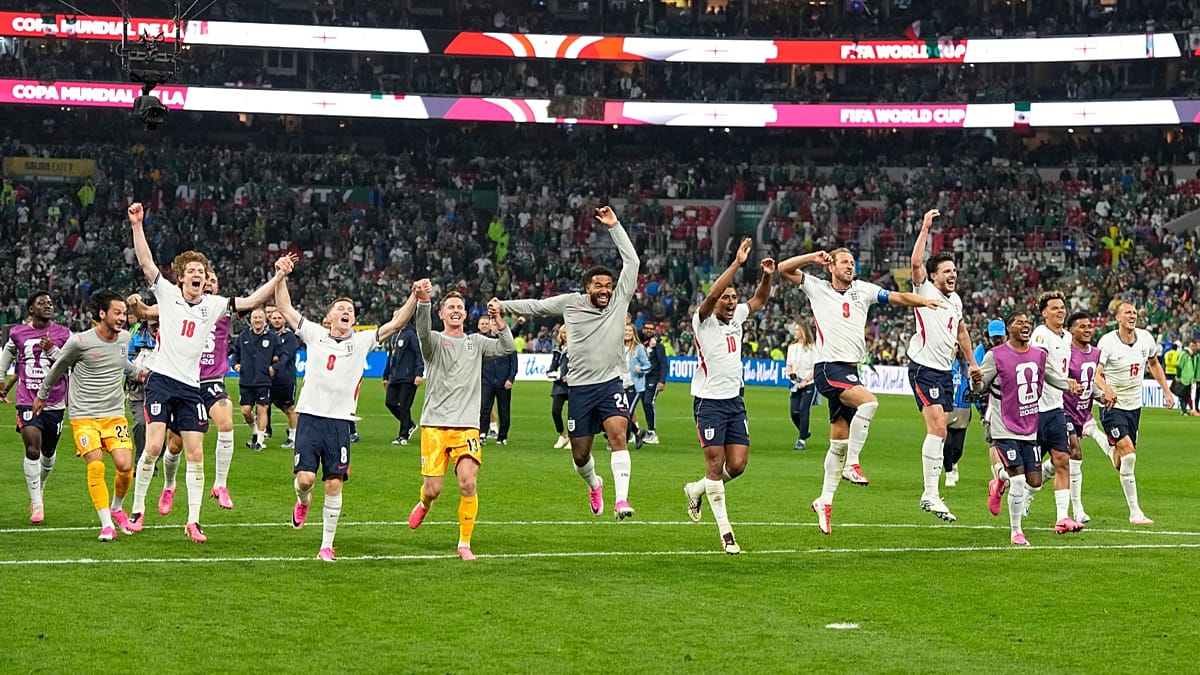
Few venues in world sport feel as emotionally charged as the Estadio Azteca. England at the Azteca was more than a dramatic 3-2 World Cup win over Mexico—it was a spectacle of pressure, legacy and atmosphere that showed how iconic arenas can rival the finest names in luxury brands, luxury decor and luxury design for pure cultural prestige.
Played amid altitude, noise, delay and mounting tension, England’s victory carried all the ingredients of a final: a hostile crowd, momentum swings, penalties, a red card and a late defensive stand. Jude Bellingham’s first-half brace and Harry Kane’s penalty proved decisive, but the real story was the setting. England at the Azteca instantly entered the conversation as one of the national team’s most memorable World Cup nights.
England at the Azteca: A World Cup Night Framed by Grandeur
The scoreline alone suggests chaos, but the broader picture reveals why this match resonated so deeply. England led 2-0 through two quick Bellingham goals before Mexico responded just before half-time. After Jarell Quansah was sent off early in the second half, Kane restored England’s cushion from the spot. Mexico then struck again via a penalty, turning the final stages into a test of nerve and structure.
What made England at the Azteca so compelling was the contrast between technical quality and emotional survival. Thomas Tuchel’s side had to adapt to:
- Mexico City’s demanding altitude
- An hour-long delay to kick-off
- Relentless pressure from the home crowd
- Playing with 10 men for much of the second half
- Extended stoppage time in a feverish stadium
That combination transformed a knockout match into an endurance piece—part football contest, part psychological trial.
Why the Azteca Feels Like the Luxury Design Icon of Football
For readers interested in luxury brands, luxury decor and luxury design, the Azteca offers a fascinating comparison. Some spaces become valuable not because they are polished, but because they possess heritage, scale and unmistakable identity. The Azteca is one of those rare places.
In design terms, iconic environments share several traits:
- Historical depth: they carry memory as part of their appeal
- Architectural authority: their silhouette and structure are instantly recognizable
- Sensory power: sound, light, tension and movement define the experience
- Cultural exclusivity: not everyone gets to perform successfully within them
That is why England at the Azteca felt bigger than a routine quarterfinal qualifier. Winning there is not simply about defeating an opponent; it is about mastering an arena with myth attached to every tier and touchline. In the same way a landmark interior can elevate a luxury experience, the Azteca magnified every moment of this match.
The Key Moments That Defined England’s Victory
Bellingham’s burst of control
Jude Bellingham changed the rhythm of the game in a matter of minutes. His two first-half goals gave England a platform and briefly quieted a crowd expecting Mexico to dictate the occasion. His finishing was vital, but so was his authority under pressure.
Kane’s composure from the spot
Harry Kane’s penalty, his sixth goal of the tournament, arrived at a crucial point. With England reduced to 10 men and Mexico building momentum, the strike re-established breathing room, even if only temporarily.
The defensive stand
After Mexico reduced the deficit to 3-2, England had to abandon comfort and embrace resilience. Their final half-hour was built on concentration, organisation and sacrifice. England at the Azteca became a story of defending with discipline as much as attacking with quality.
A Result Loaded With History
The Azteca has long held a special place in England’s football memory, not least because of the 1986 World Cup quarterfinal against Argentina, forever linked to Diego Maradona’s “Hand of God” and his extraordinary solo goal. That history meant this latest chapter carried symbolic weight.
Seen through that lens, England at the Azteca was about more than progression. It felt like a rewriting of the stadium’s meaning for English supporters. Instead of ghosts and regrets, there was resistance, belief and celebration. The post-match scenes, with players and fans singing together, underlined how quickly a stadium can change from intimidating monument to treasured memory.
What Luxury Audiences Can Learn From Sporting Cathedrals
There is a reason luxury design increasingly borrows from stadium thinking: emotion matters as much as aesthetics. Elite spaces are not only visually impressive; they are carefully built to create feeling, anticipation and status.
England at the Azteca highlights several principles relevant beyond sport:
- Legacy creates value. Heritage can be as powerful as innovation.
- Atmosphere is a design asset. The best spaces orchestrate mood, not just appearance.
- Pressure reveals quality. True excellence stands out in difficult conditions.
- Iconic settings amplify stories. Achievement feels greater in a venue with cultural meaning.
For brands, designers and tastemakers, the lesson is simple: prestige is rarely accidental. It is built through narrative, architecture, memory and performance over time.
What Comes Next for England
The immediate reward for England at the Azteca is a quarterfinal against Norway. Yet regardless of what follows, this match has already secured its place in the modern World Cup conversation. Tuchel praised his team’s mentality afterward, emphasizing belief, persistence and the willingness to leave everything on the pitch.
That message fits the evidence. England did not win because the night was comfortable; they won because they adapted when control disappeared. In tournament football, that trait often matters more than style.
Conclusion
England at the Azteca will be remembered as a World Cup classic because it combined elite talent with one of sport’s grandest stages. In a venue that functions almost like a monument to luxury design—historic, dramatic and unforgettable—England produced a result built on courage as much as craft. The clear takeaway is that iconic settings demand more than skill: they demand composure, identity and belief. On this remarkable night, England had all three.