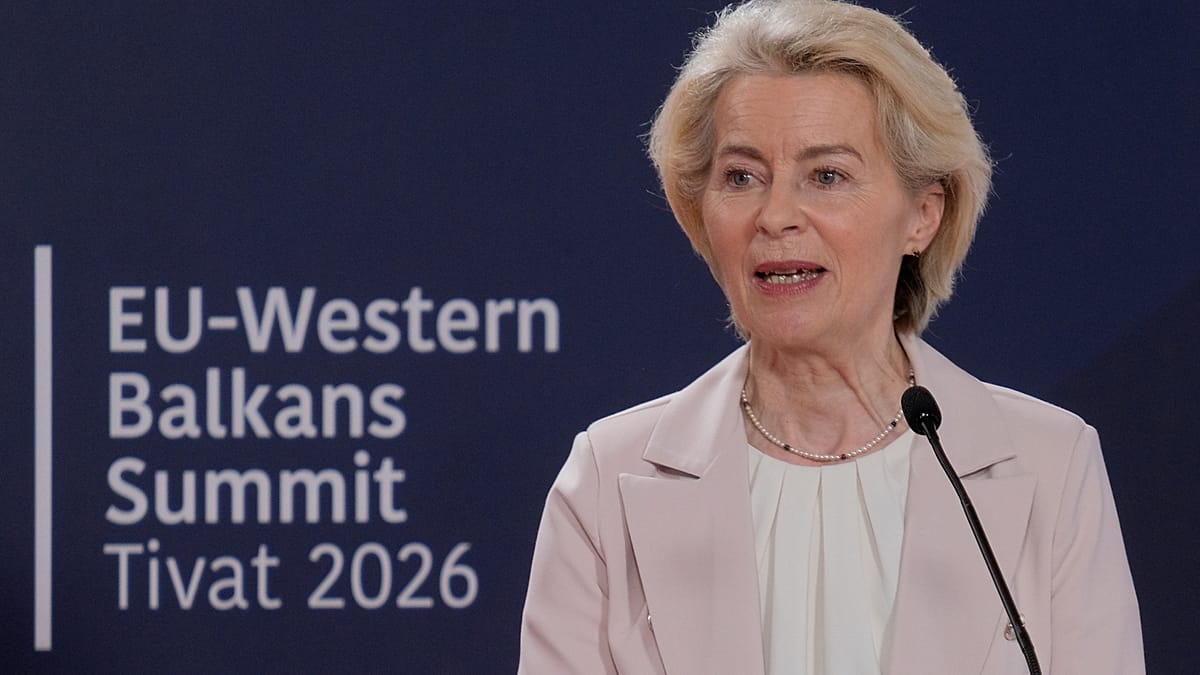
The EU reallocates Western Balkans funding in a move that could reshape the region’s economic trajectory and accelerate the path to membership for its strongest performers. For investors, policy watchers, and design-led luxury businesses tracking Europe’s next growth markets, this is more than a budget story—it is a clear signal about which countries are building the credibility, stability, and reform momentum that attract long-term capital.
According to EU officials cited by Euronews, the European Commission is preparing to redirect portions of its Western Balkans reform money toward the countries making the fastest progress on accession-linked reforms: Montenegro, Albania, and North Macedonia. The shift follows missed deadlines by other beneficiaries under the bloc’s Reform and Growth Facility, a mechanism created to reward measurable reform progress between 2024 and 2027.
Why the EU Reallocates Western Balkans Funding
The Reform and Growth Facility for the Western Balkans was launched to support candidate countries financially while pushing them to implement reforms required for EU accession. The total envelope stands at €6 billion, yet only a relatively small share has been disbursed so far. That gap matters because the facility is performance-based: money is tied to reform milestones, not automatically granted.
In practical terms, if a country fails to complete agreed reforms by the deadline, the Commission can withhold the corresponding funds. After a grace period, those funds may be redirected elsewhere. This is why the latest assessment is so significant. The first major deadline has now passed, and the Commission is evaluating which governments met their obligations and which did not.
The logic is straightforward:
- Reforms unlock funding
- Missed milestones delay or cancel payments
- Unused allocations can be reassigned to stronger performers
- The process is meant to reward execution, not promises
EU officials have emphasized that this is not a punitive confiscation of promised money. Rather, countries only receive support when they complete the work attached to each tranche.
Which Countries Stand to Gain the Most?
As the EU reallocates Western Balkans funding, three countries are emerging as the main beneficiaries.
Montenegro
Montenegro is widely seen as one of the most advanced candidates in the enlargement process. Its relatively consistent reform track record has helped it maintain momentum, making it a natural destination for additional funding if others fall behind.
Albania
Albania has strengthened its standing through sustained efforts on accession-related reforms. That progress is likely to improve its share of available support and reinforce its image as a serious EU candidate.
North Macedonia
North Macedonia is also expected to benefit thanks to its generally positive reform performance. While often discussed slightly behind the two top frontrunners, it remains well-positioned in the current review.
For these countries, extra funding could enhance infrastructure, public administration, market modernization, and investor confidence—all factors that matter well beyond politics.
Who Risks Losing Out?
If the EU reallocates Western Balkans funding toward frontrunners, the biggest setbacks are expected for Bosnia and Herzegovina, Kosovo, and Serbia.
Bosnia and Herzegovina
Bosnia and Herzegovina appears most exposed. It reportedly has not received any funding under the facility so far, largely due to an inability to deliver required reforms. Its complex institutional framework has often slowed decision-making and implementation.
Kosovo and Serbia
Kosovo and Serbia may also lose relative ground. Although both have received some disbursements, they are considered to be lagging behind the best-performing candidates. If reform pace does not improve, their access to future tranches could weaken.
This creates a sharper competitive dynamic across the region: accession is still a political process, but funding is increasingly becoming a test of administrative competence and policy discipline.
What This Means for Business, Property, and Luxury-Led Growth
At first glance, this may seem far removed from luxury brands, luxury decor, and luxury design. In reality, the connection is stronger than it appears. When the EU reallocates Western Balkans funding toward reform leaders, it sends a message to international businesses that these markets may offer greater predictability, stronger institutions, and better long-term growth potential.
That matters in sectors shaped by confidence and capital, including:
- High-end real estate and hospitality
- Boutique retail and premium consumer brands
- Luxury interiors and bespoke home decor
- Architecture, urban regeneration, and design services
- Tourism-led investment in coastal and cultural destinations
Montenegro, for example, already has visibility in luxury travel and waterfront development. Albania is increasingly attracting interest for hospitality, lifestyle property, and modern infrastructure. North Macedonia, while less associated with luxury today, could gain relevance as reform progress improves its investment climate.
For design-conscious investors, stable governance and EU-aligned standards often influence everything from construction quality and procurement transparency to financing conditions and consumer demand. In that sense, reform funding can indirectly shape the physical and commercial environments where premium brands operate.
What Happens Next?
The Commission is expected to provide member states with more detail later this month, including how much money may be redistributed. Several outcomes remain possible:
- Additional funds are directed mainly to Montenegro, Albania, and North Macedonia
- Some resources are spread more broadly for technical assistance
- Part of the funding is redirected beyond the Western Balkans
- Unused amounts return to the broader EU budget
Still, the central message is already clear. The facility is designed to reward countries that deliver on reforms within agreed timelines. As the EU reallocates Western Balkans funding, it is reinforcing a performance-based approach to enlargement that could define the region’s next phase.
Conclusion: Reform Progress Is Becoming the Region’s Real Currency
The fact that the EU reallocates Western Balkans funding to stronger performers is a decisive reminder that accession is no longer driven by rhetoric alone. Delivery matters, deadlines matter, and reform credibility now carries direct financial consequences. For Montenegro, Albania, and North Macedonia, this could mean faster momentum and stronger investor appeal. For lagging candidates, it is a warning that missed reforms come at a real cost. The takeaway is simple: in the Western Balkans, progress is increasingly being measured not by ambition, but by execution.