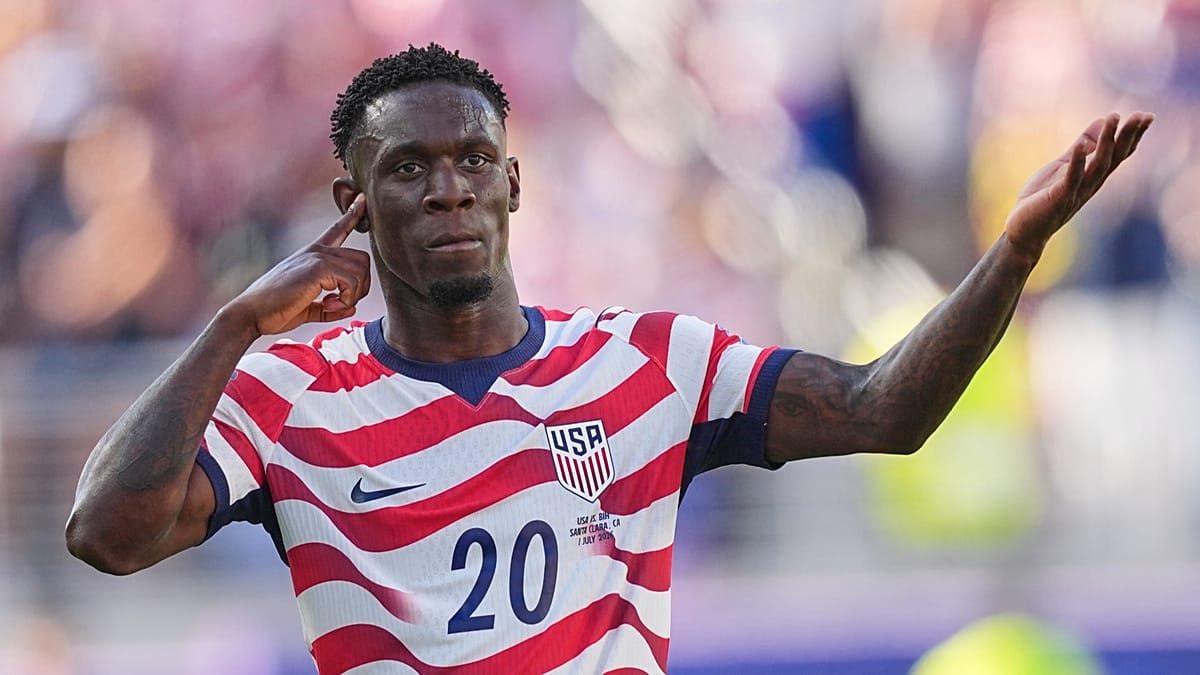
Luxury is built on trust: trust in craft, trust in standards and trust that the rules apply equally to everyone. That is why the latest FIFA fairness controversy, triggered by the reversal of Folarin Balogun’s red-card suspension after reported political intervention, has resonated far beyond football and into wider conversations about influence, governance and elite institutions.
The dispute has drawn criticism from the European Commission, UEFA and the Belgian Football Federation, all of which have raised concerns about whether global sport can preserve its credibility when decisions appear to shift under pressure. For audiences interested in luxury brands, luxury decor and luxury design, the episode is a powerful reminder that prestige means little without transparency.
Why the FIFA fairness controversy matters
At the heart of the FIFA fairness controversy is a simple question: can an elite organisation remain respected if its rules seem flexible for the powerful? According to reports, Balogun’s automatic one-match ban following a straight red card was unexpectedly suspended for a year, allowing him to feature in the United States’ knockout tie against Belgium.
The backlash was immediate because FIFA’s own framework typically treats a straight red card as an automatic suspension. European officials did not directly rule on the player’s case, but their language was unmistakable. The European Commission stressed support for “fair play” and “transparent competition,” underlining that sports bodies should rely on objective criteria when making competitive decisions.
That message matters. In premium sectors, from haute interiors to heritage fashion houses, reputation depends on consistency. The same principle applies in global sport: when governance appears selective, brand value can erode quickly.
European criticism puts sports governance under the spotlight
The FIFA fairness controversy intensified when Commissioner Glenn Micaleff publicly criticised the reversal, calling it the “wrong decision” and warning against political influence over sporting matters. His comments reinforced a longstanding European view that sport should retain institutional autonomy, free from direct interference by state leaders.
This is notable because the European Commission rarely comments so forcefully on football controversies. Its intervention signals that this was not seen as a routine disciplinary adjustment, but as a governance issue with symbolic consequences.
Key concerns raised by European institutions include:
- Objectivity: disciplinary decisions should follow published rules.
- Transparency: stakeholders should understand how reversals are justified.
- Autonomy: sporting bodies should not appear to bend to political requests.
- Competitive integrity: all teams must feel they are judged by the same standard.
In the luxury world, these same principles define enduring desirability. Whether the subject is a couture maison or a governing body, opacity can damage exclusivity by replacing admiration with suspicion.
The Belgium reaction and the optics of elite influence
Belgium’s response has been especially sharp, partly because the suspended ban directly affects a knockout match against the United States. UEFA reportedly described the reversal as unprecedented and unjustifiable, while the Belgian Football Federation launched a formal challenge to Balogun’s eligibility.
The optics have amplified the FIFA fairness controversy. Even if a governing body believes it acted within its discretion, public trust is shaped by appearances as much as procedure. A sudden reversal after a high-profile intervention from a political leader creates an impression of unequal access, and that impression is often hard to reverse.
For luxury-oriented audiences, this is familiar terrain. In luxury design and luxury brands, perception is part of the product. A single poorly explained decision can weaken years of carefully cultivated authority. The same is true for major sports institutions that market themselves as guardians of excellence.
What luxury brands can learn from the FIFA fairness controversy
Although the story comes from football, the wider lesson reaches boardrooms far outside sport. The FIFA fairness controversy highlights how premium institutions must protect not just outcomes, but decision-making processes.
1. Transparency is part of prestige
Luxury businesses often focus on storytelling, rarity and heritage. Yet modern consumers also want clarity. If rules are changed, exceptions are made or access is granted, stakeholders expect a credible explanation.
2. Consistency protects brand equity
Brands at the top of the market succeed because they make their standards feel immutable. Inconsistent enforcement can create the sense that values are performative rather than real.
3. Power must not overshadow process
When elite institutions appear vulnerable to outside influence, trust declines. Whether in sport, design or luxury retail, governance must look independent to be believed.
4. Reputation now moves at news-cycle speed
The global reaction shows how quickly a controversy can dominate headlines and social platforms. In an age of instant scrutiny, organisations need robust governance before a crisis emerges, not after.
Fair play, brand integrity and the future of global institutions
The FIFA fairness controversy also reflects a broader cultural shift. Audiences no longer admire prestige alone; they want accountability attached to it. Institutions that once relied on status now face pressure to show how decisions are made, who influences them and why exceptions exist.
That expectation aligns closely with the evolution of luxury itself. Today’s high-end consumer is increasingly attentive to sourcing, ethics, craftsmanship and corporate conduct. In luxury decor and luxury design, authenticity has become as valuable as aesthetics. In global sport, authenticity takes the form of fair competition and visible procedural integrity.
If FIFA wants to protect its image as the steward of the world’s biggest game, it will need more than formal authority. It will need trust, and trust is built through clear rules applied evenly, especially under political pressure.
Conclusion
The FIFA fairness controversy is about more than one player or one match. It is a defining test of whether elite institutions can preserve legitimacy when power, politics and public scrutiny collide. For sports bodies and luxury brands alike, the lesson is clear: prestige without transparency is fragile. In the end, the FIFA fairness controversy shows that true excellence depends not only on spectacle, but on fairness everyone can see.