Luxury design is often discussed through materials, craftsmanship and exclusivity, but its deepest currency is perception. The FIFA decision to lift Folarin Balogun’s World Cup suspension after reported political intervention offers an unexpected case study in how prestige institutions operate like luxury brands: every ruling, reversal and public statement shapes the aura of authority that audiences buy into.
At first glance, football controversy may seem far removed from luxury interiors or high-end branding. Yet for readers in luxury brands, luxury decor and luxury design, this story reveals something essential: elite institutions depend on trust, symbolism and meticulous image management in much the same way as heritage maisons, collectible furniture labels and global design houses.
Why the Balogun FIFA controversy matters to luxury design
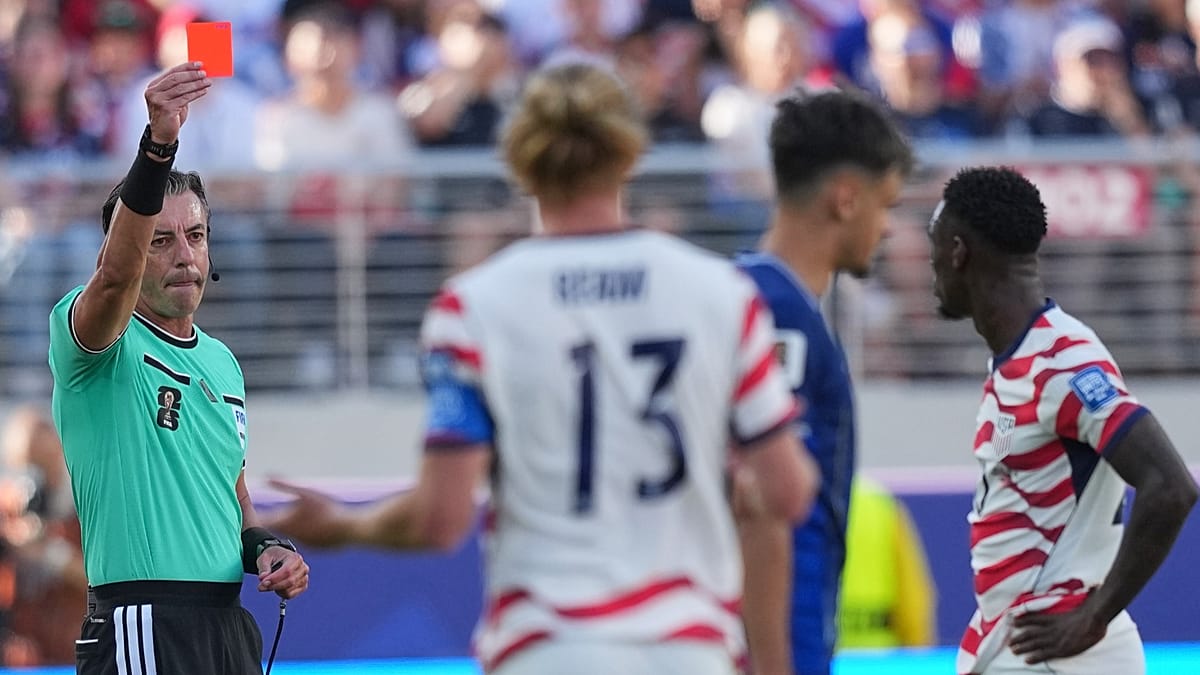
The Balogun FIFA controversy centers on a red card shown to US striker Folarin Balogun during the World Cup and the later suspension of his automatic one-match ban. FIFA cited article 27 of its disciplinary code, allowing the sanction to be suspended for a one-year probationary period. Reports that US President Donald Trump personally called FIFA President Gianni Infantino before the reversal intensified backlash and raised questions about fairness, consistency and governance.
For luxury observers, this is not just a sports headline. It is a branding event. In luxury design, a brand’s value is built not merely on what it creates, but on whether its decisions feel rare, rigorous and above influence. When a top institution appears flexible under pressure, the central issue becomes perception.
- Authority must look impartial to retain prestige.
- Exclusivity loses value if rules appear negotiable.
- Heritage is weakened when process seems secondary to access.
- Desirability depends on belief in the system behind the label.
Prestige institutions and luxury brands share the same fragile asset: credibility
The reason the Balogun FIFA controversy resonates beyond sport is that FIFA functions, in many ways, like a luxury megabrand. It presides over a scarce, globally coveted experience. Access is limited. Visual identity is carefully managed. Ceremonial power matters. And every public act contributes to a larger mythology.
Luxury brands operate under similar conditions. A maison cannot simply sell a chair, watch or textile; it must sell conviction. Buyers are paying for narrative discipline as much as physical product. That is why a reputational wobble, even if technically explainable, can trigger outsized reaction.
Belgian officials criticized the move as contradictory to the spirit of FIFA’s own rules, while the US side welcomed the outcome as fair. Those polarized readings mirror what happens when luxury houses make abrupt creative or commercial shifts: one audience sees agility, another sees compromise.
What luxury leaders can learn from high-stakes governance
Whether you run a luxury showroom, a collectible design studio or a premium hospitality brand, the lesson is clear. The public rarely judges institutions only on legality. They judge on coherence.
- Consistency beats explanation. A technically valid decision can still damage confidence if it feels selective.
- Timing shapes trust. Last-minute reversals create uncertainty, even when they are rule-based.
- Transparency matters. If stakeholders do not understand why a decision changed, they fill in the gaps themselves.
- Prestige amplifies scrutiny. The more elite the platform, the more exacting the audience.
The Balogun FIFA controversy as a masterclass in symbolic value
Symbolic value is the lifeblood of luxury design. A sculptural lamp, a rare stone table or a couture wall covering can command extraordinary pricing because it signals taste, access and cultural literacy. FIFA’s authority works similarly. Its rulings are not just functional decisions; they are symbols of order in a global spectacle.
That is why the Balogun FIFA controversy has broader relevance. The issue is not only whether the suspension mechanism exists in the code. It is whether the use of that mechanism under these circumstances preserves or dilutes the symbolic power of the institution. In design terms, this is the equivalent of a heritage house releasing a supposedly limited object under opaque conditions. The product may remain beautiful, but the aura changes.
Luxury decor and the aesthetics of control
In luxury decor, control is everything. The finest environments feel effortless, but they are meticulously edited. Scale, finish, lighting and negative space are all coordinated to create confidence. The same principle applies to brand governance.
When an organization projects complete command, audiences read it as premium. When it appears reactive, pressured or inconsistent, the visual and emotional architecture begins to crack. The Balogun FIFA controversy illustrates how quickly a prestige narrative can move from confidence to confusion.
This is especially relevant in today’s luxury market, where consumers are not just buying objects. They are buying institutional integrity, creative authorship and cultural standing.
What this means for luxury branding in 2026
The luxury world in 2026 is more interconnected than ever. Sports, politics, design, fashion and media no longer sit in separate cultural lanes. A governance controversy in football can offer direct lessons for a luxury hospitality group, a bespoke interiors practice or a premium furniture label.
Brands at the top end of the market should treat this moment as a reminder to strengthen the following:
- Clear decision-making frameworks
- Public-facing transparency in sensitive moments
- Consistent application of policy across clients and collaborators
- Reputation strategies built around fairness, not just glamour
The strongest luxury brands know that mystique is powerful, but credibility is indispensable. You can recover from a design misstep more easily than from a trust deficit.
In that sense, the Balogun FIFA controversy is about far more than one striker, one ban or one match. It is a live demonstration of how prestige systems maintain value, and how quickly that value can be tested when influence, access and optics collide.
Conclusion: the real luxury signal is integrity
The Balogun FIFA controversy may belong to the World Cup, but its core lesson belongs to every prestige-driven industry. Luxury design, luxury decor and luxury brands all rely on the same invisible foundation: belief in the integrity of the institution behind the experience. Once audiences begin to question whether rules are applied evenly, the aura of exclusivity becomes harder to sustain.
For designers, brand founders and luxury executives, the takeaway is simple. Craft matters, image matters and storytelling matters, but in the long run, integrity is the highest form of luxury.