

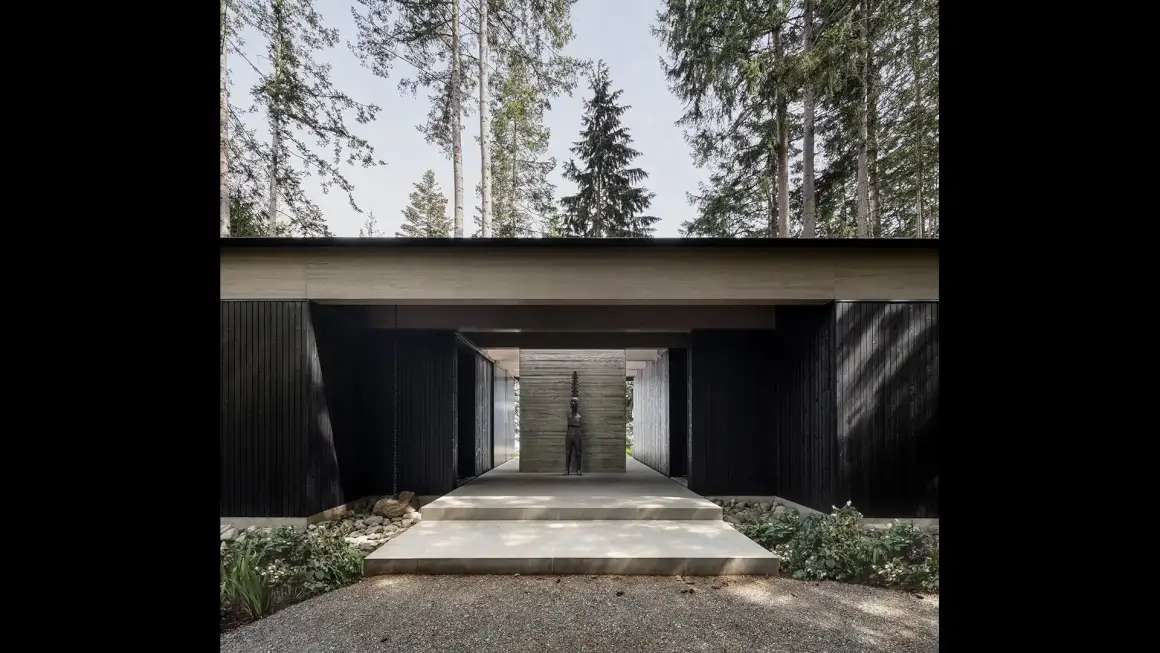
Set deep within a coastal woodland, the Hornby Island Retreat shows how iconic architecture does not need spectacle to feel unforgettable. Designed by Leckie Studio, this refined home uses one sweeping roof, restrained materials, and a close relationship with the landscape to create a luxury residence that feels both protective and profoundly open to nature.
In an era when high-end homes often compete for attention, this project takes a quieter path. The result is a forest retreat where architecture frames daily life, elevates simple rituals, and demonstrates how luxury design can emerge from clarity, craft, and environmental sensitivity.
Hornby Island Retreat and the Power of Iconic Architecture
The defining move in this home is simple yet memorable: a single roof unifies the residence beneath one continuous sheltering form. That decision gives the project its identity and makes it a compelling example of iconic architecture rooted in restraint rather than excess.
Instead of breaking the program into competing gestures, the design uses a strong architectural canopy to organize space, circulation, and atmosphere. The roof acts as more than a formal statement. It creates a sense of refuge in the forest, softens the transition between indoors and outdoors, and visually ties the house to the land around it.
This is the kind of move that often defines lasting residential design:
- A clear, singular concept
- A form that responds to place
- Spaces that feel calm and legible
- Materials that age gracefully over time
For readers interested in luxury architecture, the home offers a valuable lesson: truly iconic architecture often comes from disciplined editing, not visual noise.
A Luxury Home Designed for Life in the Forest
At its core, the Hornby Island Retreat is a luxury home shaped by its wooded setting. Rather than dominate the site, the residence appears to settle into it. The architecture acknowledges the surrounding trees, changing light, and seasonal rhythms, creating a living experience that is immersive rather than detached.
The single-roof concept helps define protected exterior zones as well as interior rooms, allowing the home to function as a series of connected environments. Covered thresholds, framed views, and sheltered outdoor areas likely make the forest feel like an extension of the house itself.
That connection to site is increasingly important in contemporary residential architecture. Today’s clients are not only seeking square footage and premium finishes; they also want homes that support wellness, privacy, and a meaningful relationship with the landscape.
Why the setting matters
Forest homes require a careful balance between exposure and protection. Too much transparency can feel vulnerable, while too much enclosure can disconnect occupants from the very environment they came to enjoy. This retreat appears to resolve that tension through:
- Strategic shelter beneath a unified roof
- Visual openness directed toward nature
- Material restraint that complements the site
- A plan that supports quiet, daily living
These qualities help explain why the project resonates so strongly within conversations around iconic architecture and elevated residential design.
Luxury Design Through Restraint, Materiality, and Form
One of the most compelling aspects of the project is how it expresses luxury design without relying on overt display. The visual language is likely pared back, but that simplicity should not be mistaken for plainness. In high-end architecture, restraint can be the ultimate marker of confidence.
Projects like this often succeed through the careful calibration of proportion, texture, and light. A controlled palette allows the roof form and spatial sequence to take center stage, while natural materials help the building feel grounded and enduring. This approach aligns with the best of modern residential architecture, where experience matters more than ornament.
For those exploring luxury design trends, the retreat reflects several enduring priorities:
- Minimal but expressive forms
- Seamless indoor-outdoor living
- Architecture that supports slower, intentional routines
- Natural finishes with tactile warmth
- Long-term sustainability through thoughtful planning
That combination is exactly what gives iconic architecture its staying power. It is not merely photogenic; it remains livable, adaptable, and emotionally resonant.
Luxury Decor and Interior Atmosphere
Although the architectural form leads the story, the interior atmosphere is equally important. In a residence like this, luxury decor would ideally support the architecture rather than compete with it. Clean lines, organic textures, and understated furnishings can reinforce the calm established by the building envelope.
In forest retreats, the most successful interiors often draw from the landscape itself. Wood tones, stone surfaces, soft textiles, and muted palettes help maintain continuity between inside and outside. The effect is serene and sophisticated, a hallmark of contemporary luxury home design.
Interior principles that suit this retreat
- Low-profile furniture that preserves sightlines
- Layered natural materials for warmth and depth
- Carefully framed lighting that enhances mood
- Functional built-ins that reduce visual clutter
- Decor choices that highlight, rather than obscure, the architecture
Readers interested in luxury decor inspiration can look to homes like this for a more nuanced understanding of elegance. Here, comfort and sophistication are delivered through atmosphere, craftsmanship, and quiet detail.
What Hornby Island Retreat Says About Contemporary Residential Architecture
The broader significance of this project lies in what it says about where premium home design is headed. More clients and designers are embracing houses that are environmentally attuned, emotionally grounding, and formally clear. That shift is helping redefine iconic architecture for a new era.
Rather than treat architecture as an isolated object, projects like the Hornby Island Retreat position the home as a mediator between people and place. The residence becomes a shelter, a viewing instrument, and a framework for living well.
This is especially relevant in the luxury sector, where expectations are evolving. Today’s benchmark for excellence includes:
- Strong conceptual design
- Authentic connection to the site
- Material longevity
- Functional calm and privacy
- A timeless rather than trend-driven aesthetic
By these standards, the retreat stands out as a sophisticated example of iconic architecture with lasting relevance.
Conclusion: A Quiet Masterclass in Iconic Architecture
The Hornby Island Retreat proves that iconic architecture can be subtle, site-sensitive, and deeply livable. Through its singular roof, forest setting, and disciplined architectural language, the home transforms a simple idea into a memorable luxury experience.
For anyone following the future of luxury home design, this project offers a clear takeaway: the most powerful residences are not always the loudest. Sometimes the most enduring iconic architecture is the kind that shelters life beautifully, frames nature with precision, and leaves a lasting impression through quiet confidence.


