
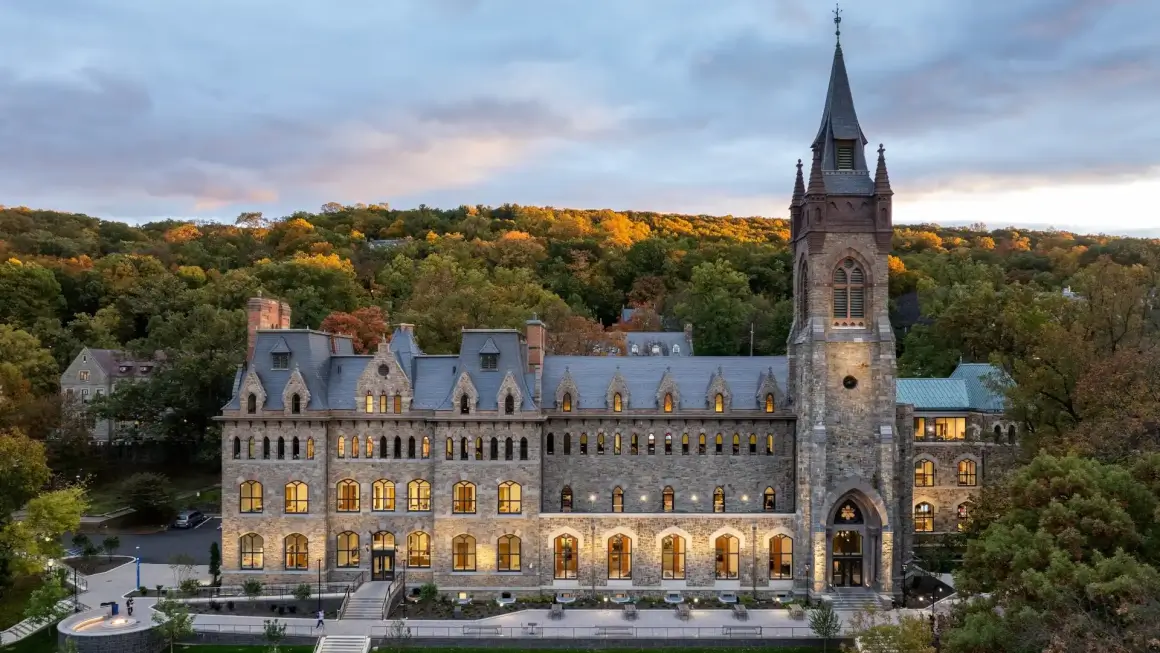
Great campuses are remembered as much for their atmosphere as for their academics, and few places embody that truth better than a well-loved student center. At Lehigh University, the renewal of the Clayton University Center shows how iconic architecture can be preserved, refined, and reactivated for a new generation without losing the spirit that made it a landmark in the first place.
The project, led by Shepley Bulfinch, reimagines a central gathering place on campus as a more open, welcoming, and highly functional hub for student life. Rather than treating the building as a relic, the redesign appears to embrace its historic identity while updating circulation, interiors, and programming to better serve contemporary needs. For readers interested in luxury architecture, luxury decor, and elevated campus design, the transformation offers a compelling case study in how heritage spaces can gain renewed relevance through thoughtful intervention.
Why Iconic Architecture Still Matters on Campus
University buildings often do more than house programs. They create rituals, shape memory, and communicate institutional values. That is why iconic architecture holds such power in academic settings: it anchors the emotional and visual identity of a campus.
When a student center falls out of sync with current expectations, the challenge is not simply aesthetic. It becomes a question of experience. Students today expect flexible lounges, inclusive social spaces, intuitive wayfinding, and environments that support everything from informal study to large-scale events. A successful renovation must answer those demands while protecting the qualities that made the building meaningful in the first place.
In this case, the renewed Clayton University Center appears to do exactly that by reclaiming a campus landmark as a vibrant daily destination rather than a nostalgic backdrop.
Reclaiming a Landmark Through Sensitive Renewal
The most impressive renovations understand that preservation is not about freezing a building in time. It is about revealing its strengths and making them useful again. This approach to iconic architecture often includes restoring key architectural gestures, clarifying public spaces, and introducing contemporary materials or systems that improve comfort and performance without overwhelming the original character.
For the Clayton University Center, the design strategy centers on renewal rather than replacement. That distinction matters. Reuse is increasingly valued across the architecture and design world not only for sustainability reasons, but because existing buildings carry cultural weight that new construction cannot easily replicate.
Key goals in a project like this typically include:
- Improving social connectivity across the building
- Opening interior spaces to bring in more light and energy
- Supporting a wider range of student activities
- Enhancing accessibility and navigation
- Preserving historic design elements that define the building’s identity
These moves help transform a legacy structure into an active, future-ready destination.
Designing a More Vibrant Student Hub
A student center succeeds when it feels alive throughout the day. That requires more than a visual refresh. It depends on programming, flexibility, and spatial flow. In renewed iconic architecture, designers often focus on how people move through the building, where they gather, and which spaces encourage lingering.
Openness and circulation
One of the hallmarks of contemporary campus design is the removal of friction. Better circulation patterns can make a building feel larger, more intuitive, and more social. Clear sightlines, visible destinations, and connected common areas turn separate rooms into a cohesive experience.
Multi-use environments
Today’s student life is hybrid and constantly shifting. A lounge may function as a study zone in the morning, an event venue in the afternoon, and a casual social setting at night. Updating iconic architecture for this reality means designing for adaptability without sacrificing elegance or comfort.
Atmosphere and materiality
Luxury design is not only about opulence; it is about quality, tactility, and emotional resonance. In a university setting, that can translate into warm finishes, durable yet refined materials, layered lighting, and furnishings that balance performance with visual appeal. These choices elevate the everyday student experience and help a campus landmark feel both distinguished and approachable.
Lessons for Luxury Architecture and Interior Renewal
The Clayton University Center story resonates beyond higher education because it reflects a larger movement in luxury architecture: the desire to restore significance rather than erase it. Renovation projects are increasingly judged by how well they blend legacy and innovation.
Design professionals and property owners can draw several lessons from this example of iconic architecture:
- Honor the original narrative. Buildings with strong identities should not be stripped of character in pursuit of trend-driven minimalism.
- Design for people first. The most beautiful spaces fail if they do not support real behavior and daily use.
- Use restraint strategically. Not every surface needs reinvention; often, editing and refinement create the strongest result.
- Think long-term. Adaptive reuse and restoration can extend a building’s cultural and operational life while supporting sustainability goals.
For readers exploring related projects, this is also an ideal point for internal linking to features on adaptive reuse, heritage interiors, campus planning, and sustainable luxury design.
The Broader Value of Iconic Architecture in a Changing Design Culture
As institutions and homeowners alike look for ways to balance sustainability, identity, and elevated living, iconic architecture has become more relevant, not less. People increasingly value spaces that feel rooted, memorable, and authentic. In a market saturated with novelty, enduring design stands out.
That is especially true in environments meant to foster community. Whether in a university center, a private residence, or a hospitality setting, the best projects create a sense of belonging. They invite repeated use and deepen over time. This is where architecture moves beyond image and becomes part of daily life.
The Lehigh renewal reflects this design philosophy clearly. It shows how a landmark can evolve without losing its soul, and how strategic updates can turn a beloved building into a more inclusive and dynamic destination.
Conclusion: A Model for Renewing Iconic Architecture
The renewed Clayton University Center demonstrates that iconic architecture does not need to be preserved behind glass to remain valuable. It can be adapted, re-energized, and tuned to contemporary expectations while still honoring the history that gives it meaning.
For architects, designers, and anyone passionate about luxury spaces, the takeaway is simple: the most successful transformations are not about starting over. They are about seeing the potential already there and shaping it into something even more relevant, beautiful, and alive.